Radical Road
Edinburgh, United Kingdom
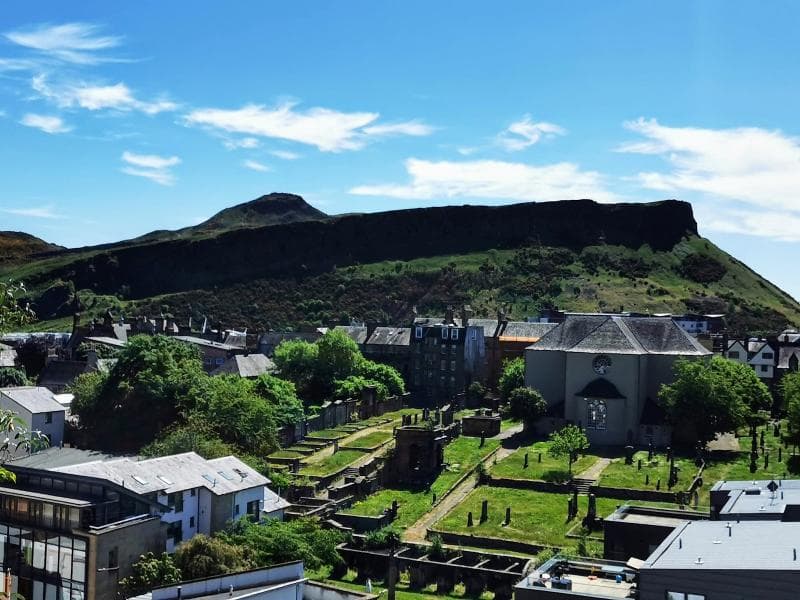
Explore Edinburgh's historic Radical Road at Arthur's Seat, a path with tales of social change and geological wonders, offering stunning city views.
Overview
Nestled within the ancient volcanic landscape of Arthur's Seat in Edinburgh, United Kingdom, lies the historically and geologically significant path known as the Radical Road. This iconic track winds its way along the base of the dramatic Salisbury Crags, offering unparalleled views of the city and its surroundings. For centuries, it has served as a cherished route for both locals and curious travelers, providing a tangible connection to Edinburgh's deep past and raw natural beauty. Originally conceived as a relief project, its story is woven into the social fabric of Scotland. While currently undergoing extensive safety works due to rockfalls, parts of this storied pathway are anticipated to reopen, allowing visitors once again to explore a place where natural grandeur meets profound human history.
History & Cultural Background
The Radical Road owes its evocative name to a pivotal moment in Scottish social history: the Radical War of 1820. This period saw widespread social unrest as workers, particularly weavers in the west of Scotland, protested against dire living and working conditions. Following the suppression of these protests and a national strike, many were left unemployed. In a remarkable turn of events, the celebrated author Sir Walter Scott suggested a project to alleviate this hardship and simultaneously improve Holyrood Park. Unemployed weavers were put to work constructing this pathway around the Salisbury Crags in 1822, effectively creating a symbol of both hardship and resilience. This work relief project gave the path its enduring name, marking it as a 'radical' undertaking both in its origins and its connection to the working classes. Beyond its social history, the area surrounding the Radical Road is steeped in deeper antiquity. Arthur's Seat itself is the remnant of a volcano that erupted some 340 to 341 million years ago, making it a geological marvel. Evidence of human activity dates back to at least 1900 BC, with Bronze Age weapons and Iron Age hill forts found on Arthur's Seat, highlighting millennia of human interaction with this dramatic landscape.
What Makes It Special
What truly sets the Radical Road apart is its unique blend of geological wonder and profound historical narrative. It offers an intimate encounter with the Salisbury Crags, which are not merely cliffs but massive sills where molten rock forced its way through sedimentary layers millions of years ago. This geological exposure is particularly significant as it was here that James Hutton, often revered as 'the father of modern geology', made groundbreaking observations in the late 18th century. His studies of the rock formations visible from and along the Radical Road, notably at 'Hutton's Section' and 'Hutton's Rock', helped him formulate his revolutionary theory about the immense age of the Earth and its continuous geological processes. The path also provides breathtaking panoramic views that stretch across the historic city of Edinburgh, the glistening Firth of Forth, and towards the distant Pentland Hills. This combination of geological drama, scientific importance, and stunning vistas, all within a short distance of a bustling capital, makes it an exceptionally special place. Holyrood Park, encompassing the Radical Road, is recognized as a Scheduled Monument and a Site of Special Scientific Interest (SSSI), underscoring its dual importance to heritage and natural science.
Stories, Fun Facts & Local Details
The Radical Road and its surroundings are rich with intriguing tales and local lore. One of the most curious stories connected to the Salisbury Crags occurred in 1836, when five boys hunting for rabbits discovered 17 miniature coffins containing tiny wooden figures in a cave. The mystery of their origin and purpose continues to intrigue historians and locals alike, with theories ranging from witchcraft to a connection with a famous Edinburgh crime. The path's very construction was a direct result of political and social upheaval, a stark reminder that even seemingly natural landscapes can bear the imprints of human struggle and enterprise. The efforts to preserve and reopen the Radical Road reflect its enduring importance to the community. After being closed since 2018 due to significant rockfalls, Historic Environment Scotland has been working on safety measures. There are plans for a partial reopening in early 2026, specifically to allow access to areas like Hutton's Section, coinciding with the 300th anniversary of James Hutton's birth. This anticipated reopening highlights the path's role as a site for both recreation and education, particularly for geological enthusiasts.
Visitor Perspective
For the curious traveler, the Radical Road offers a unique perspective on Edinburgh, one that blends urban views with raw, ancient wilderness. While the full length of the path has been closed for safety reasons since 2018, the ongoing efforts to reinstate access are a testament to its value. Visitors in 2026 can look forward to a partial reopening, potentially allowing them to explore key geological sites through either general access to certain sections or ranger-guided tours. Even when fully accessible, it is a path that demands respect for its natural environment, with sturdy footwear recommended due to its uneven and sometimes steep terrain. The experience is one of stepping back in time, both geologically and historically, offering a glimpse into the forces that shaped the Earth and the social movements that shaped a nation. It's an opportunity to walk in the footsteps of those who built it, and those who studied the very rocks beneath their feet, all while soaking in some of the most iconic views Edinburgh has to offer. The path's journey, much like the geological processes it showcases, is one of continuous change and eventual re-emergence.
Coordinates: -3.1652, 55.9445
View on Google Maps💬 How Travelers Describe This Place
Based on community votes
Beautiful
799Interesting
424Photogenic
234Must See
181Unique
30
Traveler Stories
Discover memorable experiences shared by travelers who have visited this place.
No traveler stories yet.
Be the first traveler to share what made this place memorable.

Tour
By
Spot
Discover amazing places around the world. Your journey starts here.
Explore
© 2026 TourBySpot. All rights reserved.