Pyramid Exterior Steps
Tirana, Albania
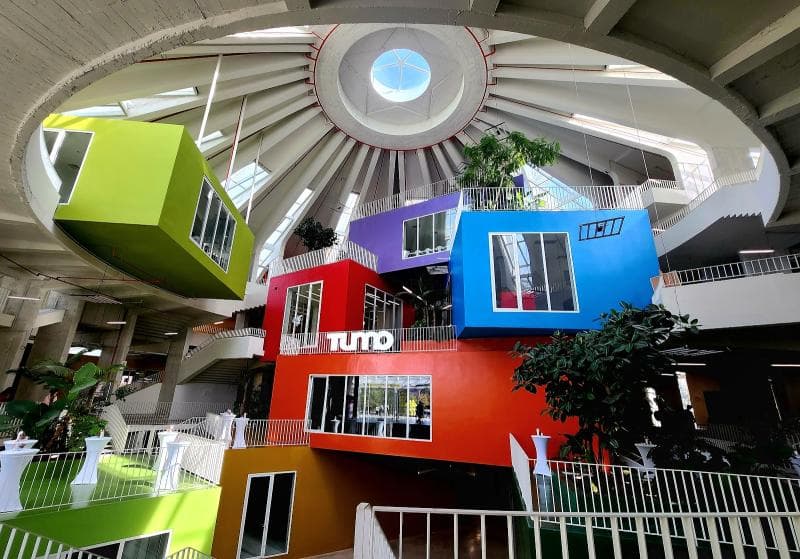
Explore the unique exterior steps of the Pyramid of Tirana, Albania. Climb this transformed communist monument now a vibrant cultural and tech education hub.
Overview
The exterior steps of the Pyramid of Tirana in Albania are far more than mere architectural features; they embody a profound transformation from a symbol of a totalitarian past to a vibrant emblem of public engagement and forward-looking education. Once a controversial monument, this brutalist structure now invites visitors to literally ascend its slopes, offering panoramic views of the city and a unique perspective on Albania's journey.
Situated prominently in Tirana, the Pyramid, with its accessible exterior, has become a dynamic urban space, reinvented as a cultural and educational hub. Its steps represent a physical and metaphorical reclamation, inviting people from all walks of life to interact directly with a piece of history that has been reimagined for the future.
History & Cultural Background
The Pyramid of Tirana opened on October 14, 1988, originally conceived as a museum dedicated to the legacy of Enver Hoxha, Albania's long-time communist leader who had died three years prior. Designed by a team including Hoxha's daughter, Pranvera Hoxha, and her husband Klement Kolaneci, alongside Pirro Vaso and Vladimir Bregu, it was reportedly the most expensive individual structure ever built in Albania at the time. The interior initially housed a 22-tonne statue of Hoxha and exhibits glorifying his life, reflecting the personality cult of the communist regime.
Following the collapse of communism in 1991, the Pyramid's purpose shifted dramatically. It served various roles, including a conference center, exhibition venue, and even a base for NATO forces during the 1999 Kosovo War. For many years, parts of the building fell into disrepair, becoming a dilapidated, graffiti-covered ruin. Despite proposals for demolition, the structure persisted, evolving into an unofficial gathering spot for Tirana's youth who would daringly climb its smooth, sloping facades.
What Makes It Special
The recent transformation of the Pyramid, spearheaded by Dutch architecture firm MVRDV and completed in 2023, is what truly makes its exterior steps special. Rather than demolishing the controversial structure, the design preserved its brutalist concrete shell, embedding a new purpose within its original form. The most striking addition is the series of steps integrated along the Pyramid's sloping facades, effectively converting its inaccessible surfaces into a monumental public walkway.
This innovative architectural intervention allows the public to 'literally walk all over the showpiece of the former dictator,' turning a monument of oppression into a symbol of freedom and public ownership. Inside and around the structure, colorful modular boxes now house the TUMO Tirana educational center, offering free technology-focused education for youth, along with cafes, studios, and workshops. The exterior steps are thus integral to this new identity, providing access to different levels of the building and integrating it seamlessly with the surrounding park.
Stories, Fun Facts & Local Details
Before its official renovation, the Pyramid had already been unofficially 'reclaimed' by local youth. They developed a unique tradition of climbing the slippery, sloped concrete sides and sliding back down, an act that was both a rite of passage and a quiet, casual defiance against the monument's original symbolism. This organic, unauthorized use deeply inspired the architects of the renovation project, MVRDV, to incorporate accessible steps into their design.
As a playful nod to its past, one section of the Pyramid's newly stepped facade retains a smooth, sloped surface, inviting visitors to experience the thrill of sliding down, much like the generations before them. This thoughtful detail bridges the old with the new, honoring the building's informal history while providing a safe, designated space for recreation. The transformation of the Pyramid, including its new exterior steps, reflects Albania's broader effort to reconcile with its communist past by repurposing its monuments for a democratic future.
Visitor Perspective
Today, visiting the Pyramid's exterior steps offers an engaging and often reflective experience. As you ascend the wide, terraced steps, you can pause at various levels, taking in evolving views of Tirana's cityscape. The climb itself is accessible to people of all ages and fitness levels, with sturdy railings providing safety. For those unable to use the stairs, a lift is available on the western side, ensuring inclusivity.
Reaching the summit provides a rewarding panoramic vista, allowing visitors to see how Tirana has grown and changed. It's a place where locals and tourists mingle, where children play, and where the past and future of Albania converge on a single, climbable structure. The exterior steps serve not just as a pathway but as a monumental public square, inviting contemplation of the building's complex history and its optimistic new chapter as a hub for innovation and learning.
Coordinates: 19.82139, 41.32306
View on Google Maps💬 How Travelers Describe This Place
Based on community votes
Unique
898Interesting
667Must See
618Beautiful
308Photogenic
32
Traveler Stories
Discover memorable experiences shared by travelers who have visited this place.
No traveler stories yet.
Be the first traveler to share what made this place memorable.

Tour
By
Spot
Discover amazing places around the world. Your journey starts here.
Explore
© 2026 TourBySpot. All rights reserved.