Public Plaza
Ulaanbaatar, Mongolia
Explore Sükhbaatar Square, Ulaanbaatar's central public plaza. Discover its rich history, iconic monuments, and cultural significance in Mongolia.
Overview
Sükhbaatar Square, often considered the pulsating heart of Ulaanbaatar, Mongolia, serves as the capital city's foremost public plaza and a vibrant testament to the nation's rich history and ongoing evolution. This expansive central square is more than just an open space; it is a convergence point for civic life, historical memory, and contemporary culture. Surrounded by imposing government buildings and significant cultural institutions, the square offers a unique window into Mongolia's past and present. Visitors stepping onto its vast expanse can immediately feel the weight of history underfoot, alongside the rhythm of modern daily life. It is a place where locals and travelers alike gather for national celebrations, leisurely strolls, and to simply take in the grandeur of this symbolic site.
Dominated by iconic monuments and framed by architectural landmarks, Sükhbaatar Square is a crucial starting point for exploring Ulaanbaatar. Its strategic location makes it easily accessible and a natural hub for understanding the city's layout and its most important institutions. The square's open-air ambiance encourages visitors to pause and appreciate the harmonious blend of history, architecture, and community spirit that defines this unique Mongolian space.
History & Cultural Background
The history of Sükhbaatar Square is deeply intertwined with the narrative of modern Mongolia. The square is named after Damdin Sükhbaatar, the revered leader of the Mongolian People's Revolution of 1921. It was in the center of Ulaanbaatar, in July 1921, that Damdin Sükhbaatar famously declared Mongolia's final independence from China, a pivotal moment commemorated by the square's name and its central equestrian statue.
Before becoming the national symbol it is today, the area where the Government Palace now stands, along with the public square, was largely occupied by a complex of temples, monasteries, and palaces, notably the Yellow Palace, during the late 19th and early 20th centuries. Following the 1921 revolution, the square transformed into a state ceremonial space. Throughout Mongolia's socialist period, until 1989, it was the site of annual civil, youth, and military parades, with party and government leaders observing from a mausoleum dedicated to Sükhbaatar, which stood on the square until its removal in 2005.
The square also played a critical role in Mongolia's transition to democracy. It was the focal point of the Democratic Revolution of 1990, witnessing massive peaceful anti-communism protests and hunger strikes that ultimately ushered in a new era for the country. More recently, it was also the scene of intense rioting in 2008 following parliamentary election results, highlighting its continued significance as a space for public expression and political discourse.
What Makes It Special
Sükhbaatar Square is distinguished by its iconic monuments and the array of significant buildings that frame its perimeter. At its very heart stands the striking equestrian statue of Damdin Sükhbaatar, a bronze depiction of the revolutionary leader atop a charging horse, pointing skyward to rally his people. This monument, originally built in 1946 and later renovated in bronze, commemorates the 25th anniversary of the revolution.
Dominating the northern edge of the square is the Government Palace, an imposing structure that houses the offices of the Mongolian government, including the President's official residence. In front of the Government Palace is a grand colonnade monument dedicated to Genghis Khan. This impressive complex features a large seated bronze statue of Genghis Khan at its center, flanked by statues of his son Ögedei Khan and grandson Kublai Khan. Two famed Mongol warriors, Bo'orchu and Muqali, stand guard, further enhancing the monument's regal presence.
The square is also encircled by other key institutions that contribute to its vibrant atmosphere and cultural significance. These include the elegant State Opera & Ballet Theatre, the historic Central Post Office, the Cultural Palace (which houses the Mongolian National Modern Art Gallery), and the Mongolian Stock Exchange building.
Stories, Fun Facts & Local Details
One fascinating anecdote connected to the central Sükhbaatar statue concerns its placement. Local legend suggests the equestrian monument stands precisely on the spot where Sükhbaatar's horse famously urinated during the victory rally on July 8, 1921, a moment symbolically interpreted as auspicious for the newly independent nation.
The square has experienced a notable identity shift in recent years. In 2013, the city authorities officially changed its name to Chinggis Khaan Square in honor of Mongolia's founding father. However, strong public sentiment and a successful court battle initiated by Sükhbaatar's descendants led to the restoration of the original Sükhbaatar Square name in 2016. This controversy vividly illustrates the ongoing dialogue within Mongolia regarding its national identity and the heroes it chooses to venerate.
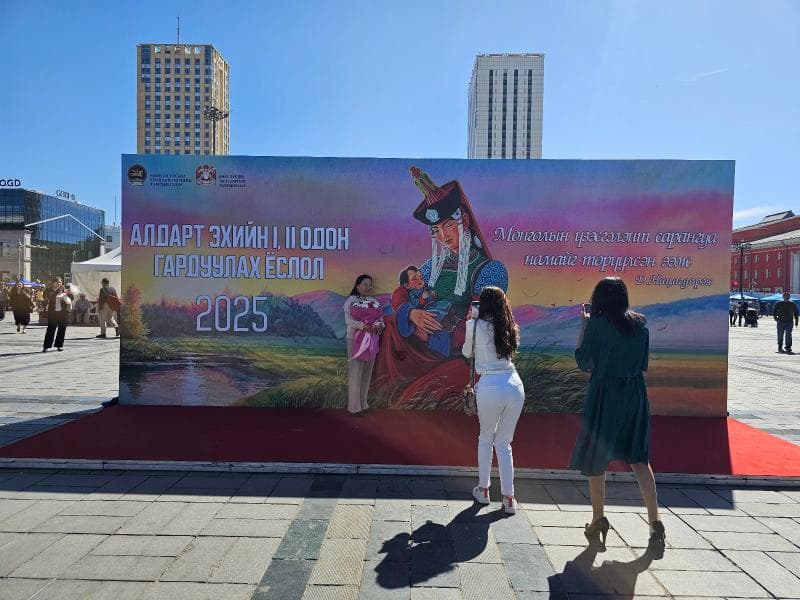
Beyond its historical gravitas, the square is a dynamic public space. While it continues to host major state ceremonies, national holidays, and official parades, it also embraces more contemporary gatherings, including rock concerts, cultural festivals, and exhibitions. On any given day, you might observe children playfully driving toy cars or teenagers zipping around on bikes, adding a relaxed, community feel to this grand historical setting. Foreign heads of state and important visitors often begin their official visits by paying homage in front of the statue of Damdin Sükhbaatar, underscoring its enduring national importance.
Visitor Perspective
For a curious traveler, Sükhbaatar Square serves as an ideal introduction to Ulaanbaatar and Mongolia as a whole. It offers a comprehensive, free-to-enter experience, typically requiring 20 to 45 minutes to appreciate fully, though longer if events are underway. The plaza is mostly flat, making it easily navigable for all visitors.
To capture the square's monuments in the best light, an early morning visit is recommended for clear photos of the Government Palace. Alternatively, returning at dusk can provide softer lighting for the statues and surrounding skyline, creating a different, equally captivating atmosphere. While the square is pedestrian-friendly, visitors should be mindful of busy roads around its perimeter and utilize marked crossings. It's also important to note that while the summer sun can be intense with little shade, winter winds can be severe, so dressing appropriately for the weather is crucial for a comfortable visit.
Coordinates: 106.9175, 47.9189
View on Google Maps💬 How Travelers Describe This Place
Based on community votes
Unique
639Interesting
526Must See
421Beautiful
366Photogenic
181
Traveler Stories
Discover memorable experiences shared by travelers who have visited this place.
No traveler stories yet.
Be the first traveler to share what made this place memorable.

Tour
By
Spot
Discover amazing places around the world. Your journey starts here.
Explore
© 2026 TourBySpot. All rights reserved.