Primorsky Boulevard Entrance
Odessa, Ukraine
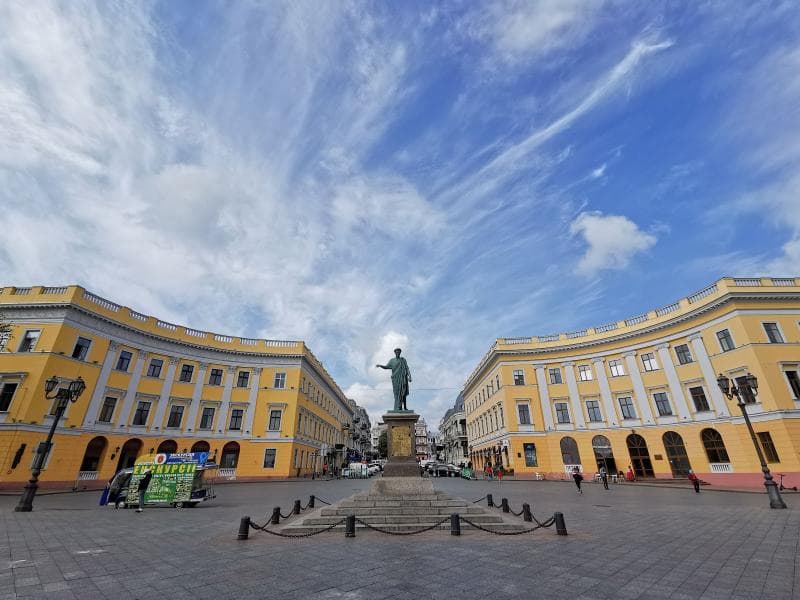
Discover the historic Primorsky Boulevard Entrance in Odessa, Ukraine, at the top of the iconic Potemkin Stairs. Explore its rich history, unique optical illusion, and stunning Black Sea views.
Overview
The Primorsky Boulevard Entrance in Odessa, Ukraine, marks the majestic summit of the renowned Potemkin Stairs, serving as a grand gateway to the city from the Black Sea. This iconic location is where history, architecture, and breathtaking panoramic views converge, offering visitors an unforgettable introduction to Odessa's charm. Here, the elegant Primorsky Boulevard unfurls, and the distinguished Monument to Duke de Richelieu stands guard, overseeing the sweeping descent towards the harbor. It's a place designed not just for passage, but for pause and appreciation, embodying the spirit of this vibrant port city.
History & Cultural Background
The history of this entrance is inextricably linked with the development of Odessa itself. The Potemkin Stairs, originally known by various names such as the Boulevard Steps or the Giant Staircase, were constructed between 1837 and 1841. This ambitious project was commissioned by Prince Mikhail Semyonovich Vorontsov, the regional governor-general, to provide direct and convenient access from the high steppe plateau of Odessa to its bustling harbor below. Prior to this, only winding paths and crude wooden stairs connected the two. [4, 18, 20]
Standing proudly at the top is the bronze Monument to Duke de Richelieu, unveiled in 1828. Armand-Emmanuel du Plessis, Duke de Richelieu, a French nobleman, played a pivotal role in the early 19th century as Odessa's governor, transforming it from a small settlement into a significant port city. His statue, depicted in a Roman toga holding a scroll, is a tribute to his contributions and was the first monument erected in Odessa. [10, 12, 14, 15]
The broader Primorsky Boulevard, which the entrance seamlessly integrates with, also boasts a rich past. It has undergone several name changes throughout its existence, reflecting different historical eras. Intriguingly, archaeological discoveries during boulevard reconstructions have unearthed remnants of ancient Greek settlements dating back to the 6th-5th centuries BC, indicating human presence in this picturesque locale for millennia. [9, 17, 24]
What Makes It Special
What truly sets the Primorsky Boulevard Entrance and the Potemkin Stairs apart is their masterful architectural design and the ingenious optical illusion they create. Conceived by Italian architect Francesco Boffo, alongside Russian architects Avraam Melnikov and Pot'e, the stairs are constructed in such a way that when viewed from the top, only the landings are visible, making the staircase appear shorter. Conversely, from the bottom, only the steps are seen, creating the illusion of immense length and a singular, imposing structure. This optical trick adds to their grandeur and unique appeal. [4, 18, 19, 20]
The entrance is not merely a functional connection between the city and the port; it's a profound symbol of Odessa. It represents the city's aspirations, its connection to the sea, and its welcoming nature. The presence of a funicular running alongside the stairs offers a convenient alternative for ascending or descending, blending modern accessibility with historical grandeur. [4, 13, 18]
Stories, Fun Facts & Local Details
Perhaps the most famous story associated with the Potemkin Stairs, and by extension its entrance, comes from Sergei Eisenstein's iconic 1925 silent film, 'Battleship Potemkin.' The movie's dramatic and fictionalized scene of a massacre on the stairs solidified their place in cinematic history and global consciousness, leading to their popular, albeit unofficial, renaming. [19, 20]
The Monument to Duke de Richelieu also holds its share of local lore. One fun fact suggests that touching the monument can bring good fortune in business, success, and richness. Another intriguing detail is a cast-iron patch on the monument's base, stylized as a cannonball, which is said to commemorate a hit sustained during the Crimean War—a moment that highlights the city's resilience and unique humor, given that French forces were reportedly shelling a monument to a former French prime minister. [12]
Moreover, the Primorsky Boulevard itself contributes to the area's special ambiance. Its ancient trees, including centuries-old chestnuts and plane trees, are adorned with multi-colored luminous garlands, transforming the boulevard into a magical promenade every evening, a tradition that was initially meant for holidays but became permanent due to its popularity. [5, 17]
Visitor Perspective
For any traveler, arriving at the Primorsky Boulevard Entrance is an experience that immediately immerses them in Odessa's distinctive atmosphere. From this vantage point, you are greeted by sweeping views of the Black Sea, the bustling port, and the seemingly endless cascade of the Potemkin Stairs below. It's a perfect spot for reflection, photography, and simply soaking in the city's coastal beauty. [7, 9, 15]
Whether you choose to embrace the challenge of descending and then ascending the 192 steps, or opt for a leisurely ride on the funicular, the journey offers different perspectives of this architectural marvel. The area around the entrance, part of Primorsky Boulevard, invites visitors to stroll amidst its historic palaces and architectural ensembles, making it a natural gathering place for both locals and tourists. It's an essential starting point for exploring Odessa, promising a blend of historical depth, architectural wonder, and vibrant city life. [13, 18, 22]
Coordinates: 30.74333, 46.48917
View on Google Maps💬 How Travelers Describe This Place
Based on community votes
Photogenic
954Beautiful
946Must See
439Unique
92Interesting
66
Traveler Stories
Discover memorable experiences shared by travelers who have visited this place.
No traveler stories yet.
Be the first traveler to share what made this place memorable.

Tour
By
Spot
Discover amazing places around the world. Your journey starts here.
Explore
© 2026 TourBySpot. All rights reserved.