Presidential Palace Area
Tirana, Albania
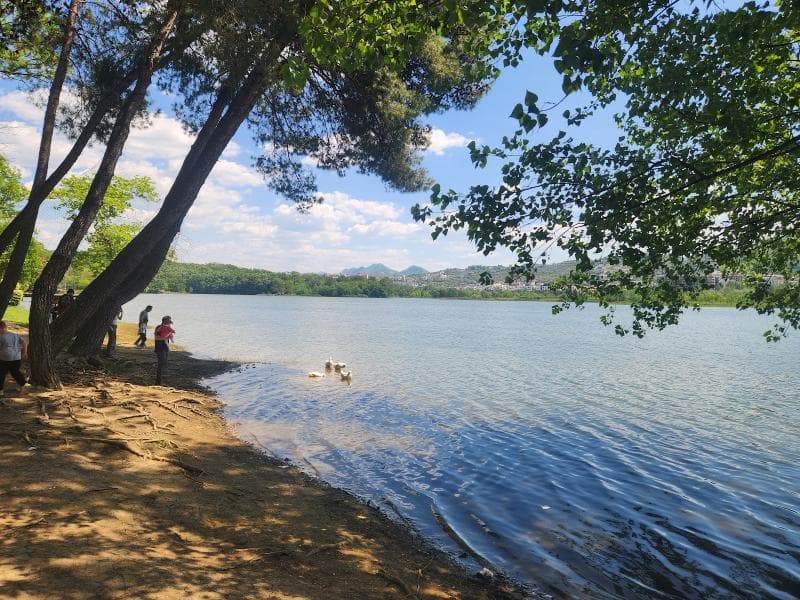
Explore the Presidential Palace Area in Tirana, Albania, within the Grand Park. Discover its rationalist architecture, royal history, and beautiful gardens.
Overview
Nestled gracefully within the expansive Grand Park of Tirana, the Presidential Palace Area offers a serene escape and a profound connection to Albania's rich history. This significant landmark, also widely known as the Palace of Brigades or the Royal Palace, serves as the official residence of the President of Albania. It is a striking three-story structure characterized by its rationalist architectural style, standing as a testament to various epochs of the nation's past. Surrounded by meticulously maintained gardens, the area provides a peaceful buffer from the city's vibrant urban pulse, inviting visitors to explore its historical grandeur and natural beauty.
History & Cultural Background
The story of the Presidential Palace begins in the 1930s when King Zog I of Albania commissioned its construction as his royal residence. Italian architects, including Giulio Berte, initiated the project in 1936. However, due to the Italian invasion of Albania in 1939, King Zog I fled the country and never had the opportunity to inhabit his grand palace. The construction was ultimately completed in 1941 by the Florentine architect Gherardo Bosio. For a brief period, it served as a royal palace for King Vittorio Emanuele III of Italy during his single visit to Albania in May 1941.
Following the end of World War II and the establishment of a Communist government in 1945, the palace ceased its role as a royal residence. It was then repurposed as a venue for official state ceremonies and receptions, a function it largely maintained from 1946 onwards. During this era, it gained its popular moniker, the 'Palace of Brigades,' a name that still resonates today. A notable cultural detail from this period is that the palace's bas-reliefs were covered, rather than destroyed, during the cultural revolution of the 1970s, preserving a part of its original artistic integrity. In a significant return to its residential purpose, the palace once again became an official residence in 2013 when President Bujar Nishani and his family moved into a reconstructed villa within its extensive grounds. Today, it continues its dual role as the President's residence and a prestigious site for state events.
What Makes It Special
The Presidential Palace stands out for its distinctive rationalist architectural style, a design that is unique not only within Albania but also in the broader context of Fascist architecture, including that of Italy itself. This architectural singularity makes it a fascinating subject for those interested in 20th-century design. Beyond its structural significance, the palace is a powerful symbol of Albania's complex political and cultural evolution, having witnessed and adapted to various governmental changes throughout its existence.
Equally captivating are its extensive and beautifully landscaped gardens, often referred to as the Royal Garden. These gardens are adorned with diverse patterns and shapes, housing mature trees, vibrant flowers, and various sculptures. The interiors of the palace are enriched with traditional Albanian artwork and furnishings, providing visitors with a glimpse into the nation's cultural identity within a formal setting. The palace's enduring role as one of Albania's most prestigious venues for high-level national and international events further underscores its unique status.
Stories, Fun Facts & Local Details
A poignant detail of the palace's history is that King Zog I, who envisioned it as his grand royal abode, never actually resided within its walls due to the unforeseen turn of historical events. This adds a touch of bittersweet irony to its stately presence. The palace has hosted many significant gatherings, including the memorable wedding reception of Prince Leka II in October 2016, adding a modern chapter to its storied past.
Locals and visitors alike often refer to it by its various historical names, reflecting the different eras it has endured. The Royal Garden, situated near the Grand Park of Tirana, is quite expansive, covering an area of 74 hectares. These gardens are a treasure trove, featuring not only fountains and tree-lined pathways but also intriguing sculpture galleries and even labyrinths, offering a diverse landscape for exploration. Some of the sculptures within the garden are aged and currently await restoration, hinting at ongoing efforts to preserve its heritage. The surrounding Grand Park itself is affectionately known as the 'Lung of the City' due to its rich biodiversity and the variety of plants it harbors, offering fresh air and a natural haven to Tirana's inhabitants.
Visitor Perspective
For the curious traveler, the Presidential Palace and its magnificent gardens are generally accessible on weekends, and often without an entry fee, making it a wonderful opportunity for exploration. While interior access for guided tours may be occasionally available, the exterior and surrounding grounds are easily viewable and offer ample photographic opportunities. Strolling through the extensive gardens, visitors can experience a profound sense of tranquility and grandeur. The serene and majestic setting offers a striking contrast to the formal significance of the palace, providing a unique blend of history, architecture, and natural beauty. It's a place where one can connect with Albania's past, appreciate its architectural heritage, and enjoy a peaceful moment amidst the bustling capital.
Coordinates: 19.83359, 41.31165
View on Google Maps💬 How Travelers Describe This Place
Based on community votes
Interesting
915Must See
211Unique
123Beautiful
74Photogenic
53
Traveler Stories
Discover memorable experiences shared by travelers who have visited this place.
No traveler stories yet.
Be the first traveler to share what made this place memorable.

Tour
By
Spot
Discover amazing places around the world. Your journey starts here.
Explore
© 2026 TourBySpot. All rights reserved.