Presidential Office
Ho Chi Minh City, Vietnam
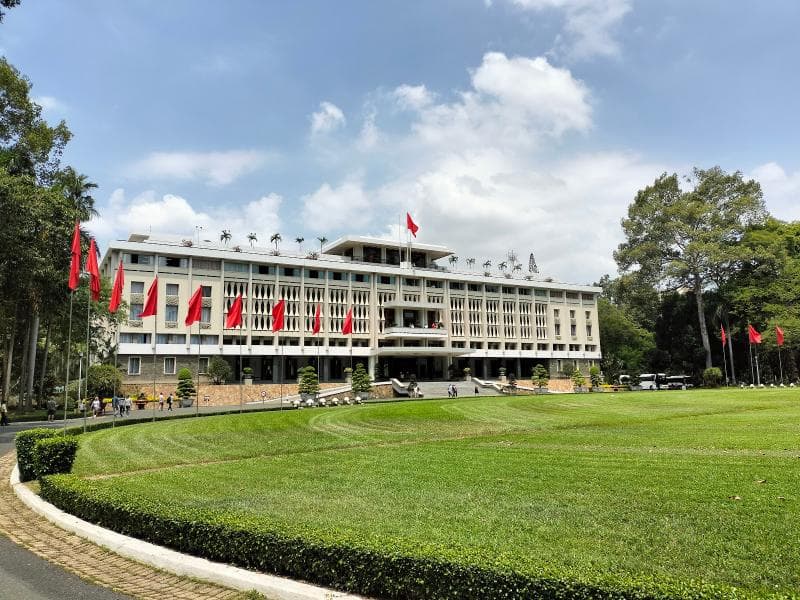
Explore the Presidential Office inside Independence Palace in Ho Chi Minh City, Vietnam. Discover its rich history, unique architecture, and pivotal role in Vietnam's reunification.
Overview
The Presidential Office, nestled within the iconic Independence Palace in Ho Chi Minh City, Vietnam, stands as a poignant historical landmark. Also widely known as the Reunification Palace or Dinh Độc Lập, this site was once the nerve center and official residence of the President of South Vietnam. Its historical significance is immense, particularly as it was the location where the Vietnam War officially concluded on April 30, 1975, marking a pivotal moment of national reunification. Today, the Independence Palace is preserved as a Special National Relic, serving both as a museum and a venue for important government events.
Located centrally at 135 Nam Ky Khoi Nghia Street in District 1, the palace is easily accessible and a focal point for visitors seeking to understand Vietnam's modern history.
History & Cultural Background
The story of the Independence Palace is deeply interwoven with Vietnam's tumultuous past. The current structure stands on the site of the former Norodom Palace, which was completed in 1873 by the French colonial authorities and served as the residence for French Governors-General.
Following the Geneva Accords of 1954, authority over the site was transferred to the government of South Vietnam, and Prime Minister Ngo Dinh Diem renamed it the Independence Palace.
In 1962, an aerial bombing attack severely damaged the original building, necessitating its complete reconstruction. The modernist masterpiece visible today was designed by the acclaimed Vietnamese architect Ngo Viet Thu and inaugurated on October 31, 1966. Ngo Viet Thu was the first Vietnamese architect to win the prestigious Grand Prix de Rome, and his design harmoniously blends clean lines and symbolic geometry with traditional Eastern philosophy and Vietnamese aesthetics.
The palace then became the official workplace and residence for successive Presidents of South Vietnam, including Nguyen Van Thieu, who resided and worked there for the longest period from 1967 to 1975.
The palace's most iconic historical event occurred on April 30, 1975, when a North Vietnamese tank dramatically crashed through its gates, symbolizing the fall of Saigon and the definitive end of the Vietnam War.
What Makes It Special
The Presidential Office and its surrounding Grand Halls, located primarily on the first and second floors, were the political heart of the former South Vietnamese government. These areas have been meticulously preserved, offering a unique window into the political framework and daily operations of the nation's leadership during a critical period in its history.
Visitors can explore the President's Office, the Cabinet Room where ministers met, and various reception and ceremonial rooms that hosted official events and diplomatic meetings. The interiors are adorned with exquisite Vietnamese art, intricate lacquerware, and traditional furnishings, reflecting the grandeur and sophistication intended to project the image of the South Vietnamese government.
The building's architecture itself is remarkable, with its design reflecting traditional Vietnamese culture blended with modernism, featuring open courtyards and large halls that create a peaceful and sophisticated atmosphere. The combination of Eastern feng shui principles with mid-century modern aesthetics makes it a truly distinctive structure.
Stories, Fun Facts & Local Details
Beyond its historical gravitas, the Independence Palace holds several fascinating details. The design incorporates symbolic geometry and Eastern philosophy; for instance, the building's overall shape, when viewed from certain angles, is said to resemble the Chinese character for 'good fortune' (吉).
Despite its auspicious design, the palace has a 'rocky history,' having been bombed twice and witnessing several presidential terms cut short. Interestingly, two replica tanks are displayed on the lawn outside the palace, representing the actual tanks—Tank 843 and Tank 390—that breached its gates in 1975. The original Tank 843 is preserved in a museum in Hanoi, while Tank 390 is also held in a museum.
The palace boasts over 100 rooms, each designed for a specific purpose, including a luxurious banquet hall, a strategic underground command bunker, and even a helipad on the rooftop. A unique architectural feature includes the 'Stone Screens' (Rèm Hoa Đá) encircling the second floor. These elegant screens resemble bamboo segments, a design inspired by the Hue Citadel, allowing natural light to filter in while adding aesthetic beauty.
Visitor Perspective
For any curious traveler, a visit to the Presidential Office within Independence Palace offers a profoundly immersive experience. You can walk through the preserved reception halls, presidential offices, and living quarters, gaining a tangible connection to the past.
To enhance your understanding, renting an audio guide, available in multiple languages, is highly recommended. These guides provide rich context and anecdotes for each room and exhibit, bringing the palace's history to life. The palace is open daily, and visiting earlier in the morning is often advised to experience the serene atmosphere with fewer crowds. Allow approximately 1.5 to 2.5 hours to fully explore the palace and its exhibits.
Walking through these halls is not merely observing history; it is stepping into a moment frozen in time, inviting reflection on Vietnam's journey through conflict to reunification.
Coordinates: 106.6954, 10.77702
View on Google Maps💬 How Travelers Describe This Place
Based on community votes
Photogenic
980Unique
712Must See
482Interesting
288Beautiful
62
Traveler Stories
Discover memorable experiences shared by travelers who have visited this place.
No traveler stories yet.
Be the first traveler to share what made this place memorable.

Tour
By
Spot
Discover amazing places around the world. Your journey starts here.
Explore
© 2026 TourBySpot. All rights reserved.