Pre-Angkor Displays
Phnom Penh, Cambodia
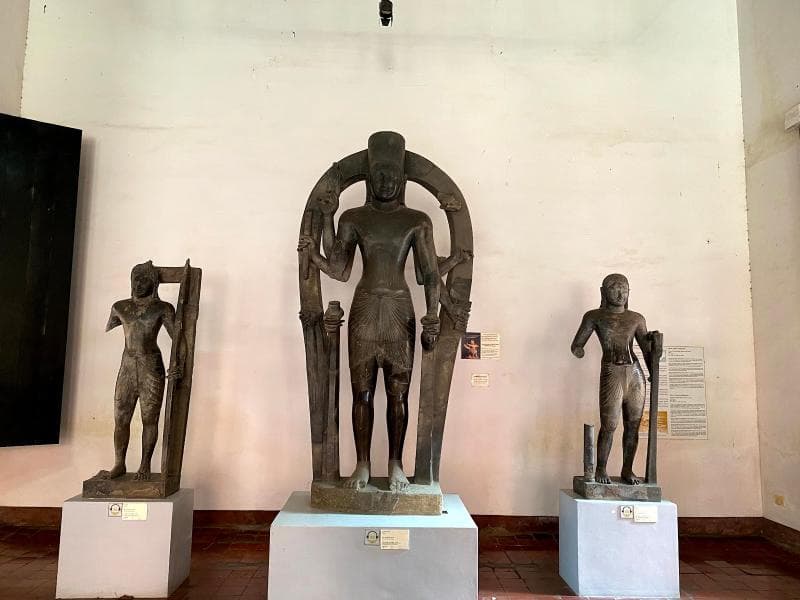
Explore the Pre-Angkor Displays at the National Museum of Cambodia in Phnom Penh, revealing ancient Khmer art from the Funan and Chenla kingdoms.
Overview
Stepping into the Pre-Angkor Displays at the National Museum of Cambodia in Phnom Penh is like journeying back to the very dawn of Khmer civilization. This pivotal section of the museum unveils a magnificent collection of artifacts that predate the grandeur of Angkor Wat, spanning from the 4th to the 9th centuries. It provides a crucial look into the foundational kingdoms of Funan and Chenla, which laid the cultural and artistic groundwork for the later Angkorian Empire. Visitors can explore a rich array of sculptures, ceramics, and bronzes, showcasing the early artistic mastery and religious syncretism that characterized ancient Cambodia.
History & Cultural Background
The Pre-Angkorian period in Cambodia is broadly understood to stretch from the 1st to the 8th or 9th centuries, marked by the rise and influence of powerful states like Funan and Chenla. The Funan kingdom, flourishing from the 1st to the 6th century, was a cosmopolitan maritime state deeply influenced by Indian culture, including Hinduism and Buddhism. During this era, sculptors at sites like Phnom Da began to carve divinities from single blocks of sandstone, showing early Khmer innovation despite Indian stylistic influences. As Funan's power waned, the center shifted inland with the emergence of Chenla, which peaked in the 7th century. Chenla artists continued to refine their own distinct Khmer styles, producing sophisticated stone, bronze, and ceramic works. Hinduism, particularly the worship of Vishnu, Shiva, and Harihara (a composite deity of Vishnu and Shiva), was prominent, alongside early forms of Buddhism. The architectural experiments and artistic styles of these periods, often utilizing brick for temples and developing unique sculptural forms, were the 'cultural DNA' that informed the subsequent Angkorian era.
What Makes It Special
The National Museum of Cambodia boasts one of the world's most extensive and finest collections of ancient Khmer artifacts, with the Pre-Angkor Displays offering a particularly profound insight into a less-explored but equally vital chapter of Cambodian history. This collection is special because it illustrates the crucial evolutionary steps in Khmer art, demonstrating how local artists ingeniously adapted and transformed foreign influences into a uniquely Cambodian aesthetic. It allows visitors to trace the development of artistic techniques and religious iconography from their nascent forms, providing context for the later, more widely known Angkorian masterpieces. Among the celebrated pieces are the monumental eight-armed Vishnu statue from the 6th century and other exquisite works from the Phnom Da style, known for their expressive power and spiritual grace. These artifacts are not merely old objects; they are tangible links to the sophisticated societies that preceded Angkor, revealing the foundational ingenuity and spiritual depth of the early Khmer people.
Stories, Fun Facts & Local Details
One fascinating aspect of Pre-Angkorian art is the way Khmer sculptors, while initially influenced by Indian traditions, began to forge their own path. They moved away from high-relief sculpting to create more freestanding statues, often supported ingeniously by an arch or an attribute of the deity. This artistic evolution reflects a growing confidence and a distinct Khmer identity emerging in stone. The transition from the maritime-focused Funan to the inland-oriented Chenla also brought about changes in building materials, with Chenla becoming known for its brick temples that served as basic architectural units for future grander designs. The religious landscape was rich, with Hinduism and Buddhism coexisting and influencing artistic depictions. For instance, the Harihara statues perfectly embody this syncretism, combining attributes of both Vishnu and Shiva in a single, powerful form. The museum itself, housed in a striking red terracotta building designed in the style of Khmer Buddhist temples, opened its doors in 1920. It faced immense challenges during the Khmer Rouge era, suffering disrepair and loss, but was meticulously restored, standing today as a testament to Cambodia's resilience and dedication to preserving its heritage.
Visitor Perspective
A visit to the Pre-Angkor Displays offers a contemplative and educational experience. As you wander through these galleries, you're invited to slow down and appreciate the intricate details of ancient pottery, the serene expressions on early divine sculptures, and the powerful forms of bronze artifacts. The museum thoughtfully arranges its collection to guide you through these pivotal centuries, offering a clearer understanding of the historical and cultural forces at play before the Angkorian period. While photography is generally not permitted inside the exhibition rooms to protect the artifacts and enhance visitor focus, you are welcome to capture the beauty of the museum's exterior and its tranquil central courtyard. For those seeking a deeper dive, guided tours are available, providing expert insights that can bring the stories behind these ancient treasures to life. The experience is designed to inspire a profound appreciation for Cambodia's enduring artistic legacy and the ingenious hands that shaped its earliest expressions of faith and culture.
Coordinates: 104.930556, 11.566667
View on Google Maps💬 How Travelers Describe This Place
Based on community votes
Unique
585Must See
550Interesting
546Photogenic
92Beautiful
56
Traveler Stories
Discover memorable experiences shared by travelers who have visited this place.
No traveler stories yet.
Be the first traveler to share what made this place memorable.

Tour
By
Spot
Discover amazing places around the world. Your journey starts here.
Explore
© 2026 TourBySpot. All rights reserved.