Prayer Spaces
Podgorica, Montenegro
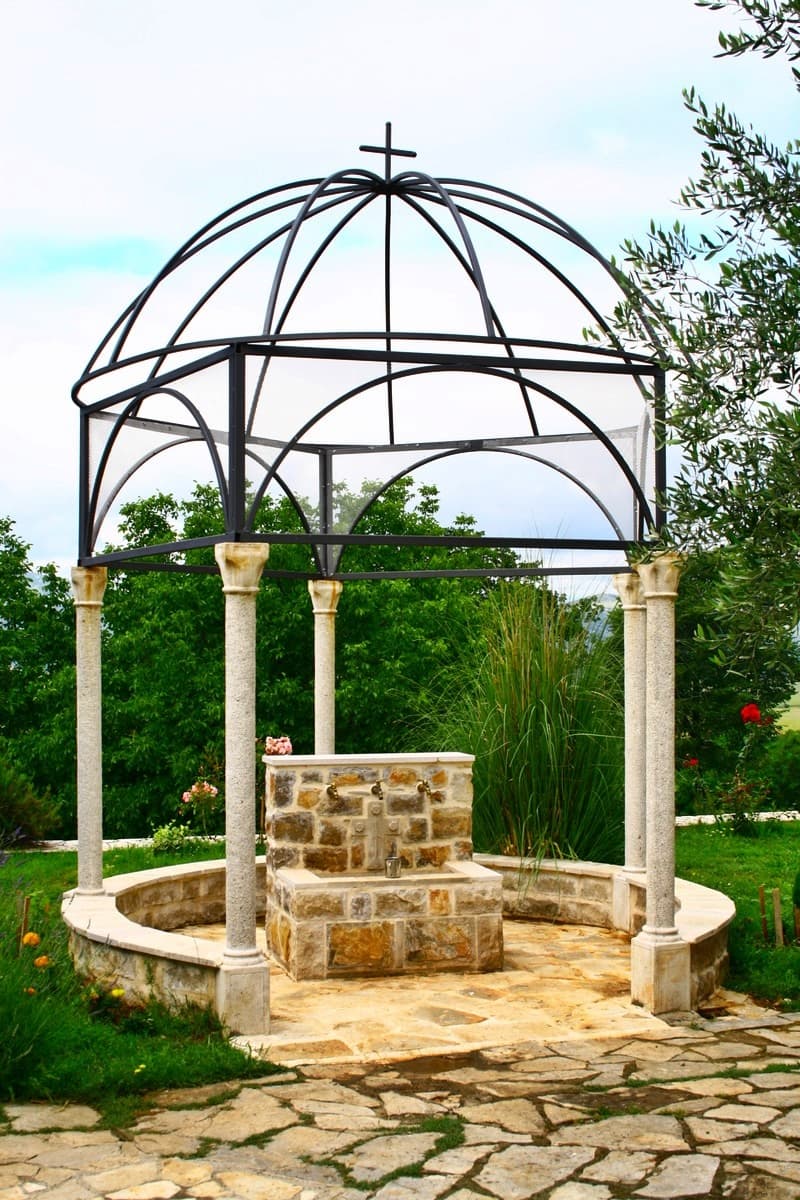
Discover the unique Prayer Spaces within Dajbabe Monastery in Podgorica, Montenegro – a cave church adorned with frescoes by Saint Simeon. Explore its history and spiritual beauty.
Overview
Nestled beneath the Dajbabe Hill, overlooking the scenic Zeta Valley in Podgorica, Montenegro, lies the Dajbabe Monastery. This spiritual sanctuary is renowned for its extraordinary architectural design, as its primary prayer spaces are intricately carved within a natural cave system. Founded in 1897, the monastery offers a profound experience, blending nature's raw beauty with centuries of spiritual devotion and artistic endeavor. It stands as a unique testament to faith, a 'church in the rock' where the sacred and the natural world merge seamlessly.
The monastery's main church, dedicated to the Assumption of the Theotokos, or Uspenje Bogorodice, is not merely built *near* a cave, but *within* it. This creates an intimate and deeply atmospheric environment for prayer and contemplation. Visitors are drawn into a world where the natural contours of the earth form the very walls and ceilings of a holy place, adorned with sacred art.
History & Cultural Background
The Dajbabe Monastery was established in 1897 by the monk Simeon Popovic, who would later be canonized as Saint Simeon Dajbabski. His vision transformed a simple cave into a vibrant center of Orthodox Christian worship. Initially, the cave itself served as the sanctuary, a raw and humble beginning for what would become a significant spiritual landmark. Over time, the cave space was expanded, evolving into a cross-shaped design that incorporated additional chapels, all while respecting and utilizing the existing natural formations.
Saint Simeon Dajbabski himself was not only the founder but also the prodigious artist responsible for the monastery's captivating interior. He meticulously painted frescoes directly onto the uneven, organic surfaces of the cave walls, working on this monumental task until his passing in 1941. His artistic devotion brought the narratives and figures of Orthodox iconography to life within the earthy confines of the cave, adapting his art to the unique, bumpy textures of the rock. This blend of natural artistry and spiritual dedication makes the Dajbabe Monastery a site of immense cultural and historical importance.
What Makes It Special
What truly sets the Dajbabe Monastery apart are its extraordinary prayer spaces – the cave church itself. Unlike conventional churches constructed with stone and mortar, this monastery's interior is a living, breathing part of the earth. The low, undulating walls and ceilings of the cave serve as the canvas for the remarkable frescoes created by Saint Simeon Dajbabski. These paintings are not merely affixed to flat surfaces but skillfully adapted to the natural rock shapes, making each icon and scene uniquely integrated into its environment.
The cave church, measuring approximately 21.5 meters long and 2.5 meters wide, offers an intimate and enclosed spiritual experience. Within these sacred confines, the Dajbabe Monastery also safeguards a reliquary containing the relics of Saint Simeon Dajbabe, adding another layer of sanctity and pilgrimage significance for believers. The visible exterior of the monastery, featuring a spacious entrance porch and two belfries, gives little hint of the profound, subterranean world of devotion that lies within. It is this unexpected journey from the light of the Montenegrin landscape into the cool, frescoed depths of the earth that makes the prayer spaces at Dajbabe an unparalleled spiritual marvel.
Stories, Fun Facts & Local Details
Local lore surrounding the Dajbabe Monastery adds to its mystique. One captivating legend tells of a young shepherd boy named Petko Ivezic, who, in the 1890s, was miraculously warned by a saint to move his sheep from a particular spot, as he stood on holy ground. The saint revealed that his relics lay in a nearby cave and instructed the boy to build a church there. Though Petko felt unable to undertake such a task, his story eventually reached the monk Simeon, who, believing the tale, came to Dajbabe in 1896. Within six months, Simeon established the monastery, fulfilling the saint's prophecy. While the saint's bones were never explicitly found, it is said that he later instructed Simeon not to search for them, promising to reveal their resting place when the time was right. This foundational story imbues the monastery with a sense of divine purpose and miraculous origin.
A fun detail for visitors is the naturally cool temperature inside the cave, offering a welcome respite during Montenegro's warm summer days. This makes a visit not only spiritually enriching but also physically refreshing. The monastery remains a working religious site, contributing to the living cultural heritage of Podgorica and Montenegro.
Visitor Perspective
For any traveler, stepping into the prayer spaces of the Dajbabe Monastery is an unforgettable journey. The transition from the sunny Montenegrin exterior to the hushed, cool interior of the cave church creates an immediate sense of entering a different realm. The low, earthy ceiling and walls, adorned with the vibrant frescoes of Saint Simeon, envelop visitors in an atmosphere of deep tranquility and spiritual resonance. It is a place where one can feel disconnected from the outside world, allowing for quiet reflection and a profound connection to history and faith.
The sheer artistry of the frescoes, painted directly onto the rough rock, is a visual marvel that inspires awe. The unique blend of natural geology and human devotion makes the Dajbabe Monastery a compelling destination, whether one is seeking spiritual enlightenment, historical insight, or simply a remarkable travel experience. It is often described as a hidden gem, offering a serene and peaceful atmosphere away from the bustling city, leaving a lasting impression of a place where nature and spirituality are harmoniously intertwined.
Coordinates: 19.2324632, 42.4038876
View on Google Maps💬 How Travelers Describe This Place
Based on community votes
Unique
703Must See
521Photogenic
380Interesting
291Beautiful
28
Traveler Stories
Discover memorable experiences shared by travelers who have visited this place.
No traveler stories yet.
Be the first traveler to share what made this place memorable.

Tour
By
Spot
Discover amazing places around the world. Your journey starts here.
Explore
© 2026 TourBySpot. All rights reserved.