Prayer Halls
Yangon, Myanmar
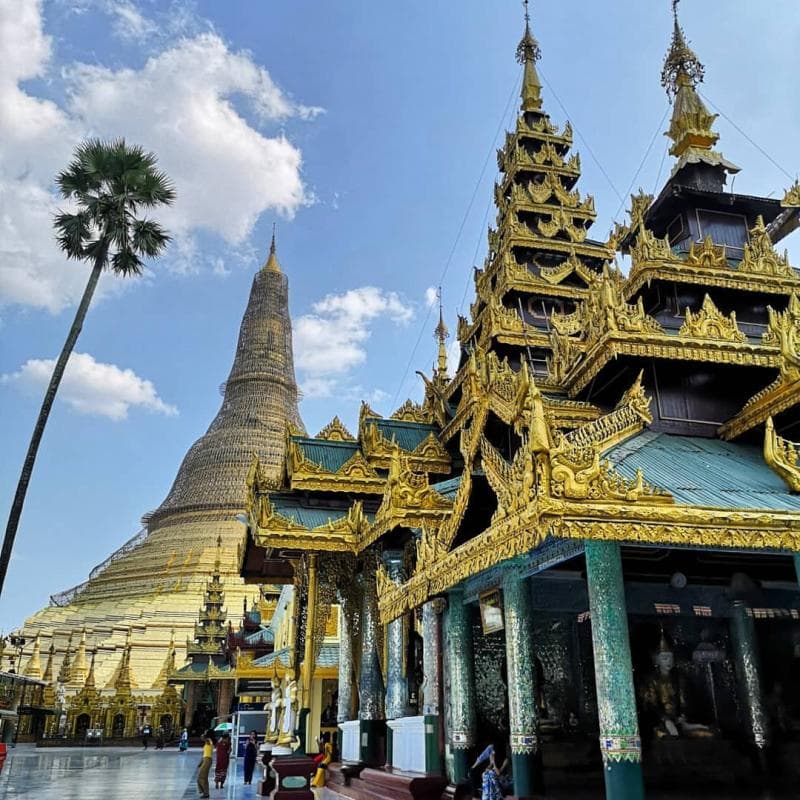
Explore the serene prayer halls of Shwedagon Pagoda in Yangon, Myanmar. Discover ancient Buddhist traditions, cultural significance, and the peaceful atmosphere within this iconic golden shrine.
Overview
Within the breathtaking golden embrace of the Shwedagon Pagoda in Yangon, Myanmar, lie numerous serene and spiritually vibrant prayer halls, shrines, and worship areas. These spaces, integral to the pagoda's vast complex, serve as sacred sanctuaries for Buddhist devotees and offer curious travelers a profound glimpse into Myanmar's rich spiritual life. While the magnificent main stupa often captures immediate attention, it is within these quieter, yet equally significant, prayer halls that much of the pagoda's daily religious devotion unfolds. Here, the air is often thick with the scent of incense and the soft murmur of prayers, creating an atmosphere of deep reverence and tranquility.
These halls are not merely architectural features but living centers of Buddhist practice. They are adorned with countless Buddha images, intricate carvings, and glittering decorations, each contributing to the spiritual ambiance. Visitors can observe monks, nuns, and lay practitioners engaged in various rituals, from silent meditation to chanting and making offerings. The collective experience within these halls fosters a powerful sense of community and shared faith, making them an indispensable part of any visit to the Shwedagon Pagoda.
History & Cultural Background
The Shwedagon Pagoda itself boasts a history stretching back over two millennia, believed to enshrine relics of four past Buddhas, including eight strands of hair from Gautama Buddha. This ancient heritage imbues every part of the complex, including its prayer halls, with immense spiritual significance. Over centuries, various kings, queens, and devoted followers have contributed to the pagoda's expansion and embellishment, adding numerous stupas, shrines, and halls for worship.
These prayer halls have evolved alongside the pagoda, serving as enduring spaces for the practice and transmission of Theravada Buddhism. They reflect the architectural and artistic styles that have flourished in Myanmar over different historical periods, often featuring gilded columns, elaborate motifs, and meticulously crafted Buddha statues. Historically, these halls have also been places where communities gathered, not only for spiritual purposes but sometimes even for political and social discourse, reflecting the pagoda's central role in Burmese identity.
What Makes It Special
What sets the prayer halls of Shwedagon Pagoda apart is their palpable sense of living devotion. Unlike static museum exhibits, these are active spaces where faith is expressed openly and continuously. Each hall, though unique in its specific adornments and resident Buddha images, shares a common purpose: to facilitate worship, meditation, and offerings. Many feature dedicated areas for planetary posts, where devotees pray at the post corresponding to their day of birth, pouring water and making wishes—a practice deeply rooted in Myanmar's astrological traditions.
The sheer number and variety of these halls, nestled around the central stupa, create a labyrinth of spiritual discovery. Some are open-sided pavilions offering panoramic views of the main pagoda, while others are more enclosed and intimate, ideal for quiet contemplation. The consistent flow of worshippers, from robed monks to families with offerings of flowers and incense, brings these spaces to life, making them feel less like monuments and more like vibrant, spiritual homes.
Stories, Fun Facts & Local Details
Within the Shwedagon's prayer halls, visitors might encounter unique Buddha images, such as the Kakusandha Buddha image in the Eastern Devotion Hall, famously depicted with its right hand turned upwards, known as the Latpetlet Buddha or Shwe Let Pyan Buddha. This particular posture is a fascinating detail that sets it apart from more common depictions.
Another endearing aspect is observing local customs. Devotees often light candles and incense, lay fresh flowers, and gently wash Buddha images as part of their prayer rituals, a symbolic act of purification and reverence. The atmosphere is generally one of quiet respect, with visitors often sitting in meditative poses or engaged in hushed conversations. It's common to see elderly women offering prayers with incense in their hands, their faces often adorned with traditional thanaka paste, a natural cosmetic and sun protection. These small, authentic details contribute significantly to the immersive cultural experience.
Visitor Perspective
Visiting the prayer halls at Shwedagon offers an unparalleled opportunity for cultural immersion. To fully appreciate these sacred spaces, it's essential to adopt a respectful and observant demeanor. Modest dress is required: shoulders and knees should be covered, and all visitors must remove their shoes and socks before entering the pagoda complex. Early mornings or late evenings are often the best times to visit, when the light is softer, the marble floors are cooler underfoot, and the pagoda is particularly active with local worshippers.
As you wander through the various halls, take time to sit, observe, and absorb the spiritual energy. You might witness a monk chanting, a family making merit, or an individual deep in meditation. Remember that while you are a visitor, this is a living religious site for the local community. Maintaining a quiet voice and moving mindfully will ensure a respectful experience for everyone, allowing you to connect more deeply with the profound spirituality that permeates every corner of Shwedagon Pagoda's prayer halls.
Coordinates: 96.149705, 16.798354
View on Google Maps💬 How Travelers Describe This Place
Based on community votes
Interesting
934Beautiful
879Unique
741Must See
396Photogenic
276
Traveler Stories
Discover memorable experiences shared by travelers who have visited this place.
No traveler stories yet.
Be the first traveler to share what made this place memorable.

Tour
By
Spot
Discover amazing places around the world. Your journey starts here.
Explore
© 2026 TourBySpot. All rights reserved.