Prayer Halls
Vientiane, Laos
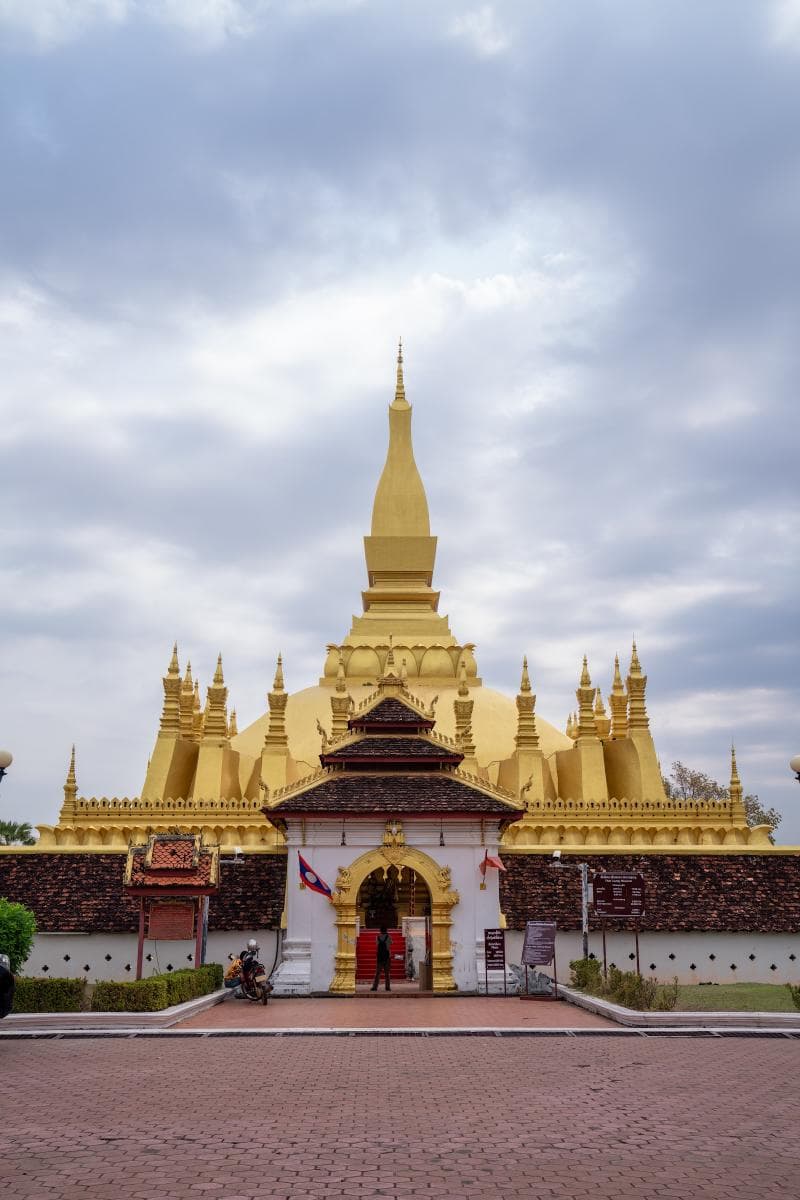
Explore the sacred Prayer Halls within Pha That Luang, Vientiane, Laos. Discover their history, cultural significance, and unique architectural details.
Overview
Deep within the revered grounds of Pha That Luang in Vientiane, Laos, lies a series of sacred spaces known as the Prayer Halls. These vaulted halls are integral to the monument's lowest tier, which symbolically represents the material world. As part of the national symbol of Laos and a paramount Buddhist stupa, Pha That Luang itself is a gold-covered marvel, signifying both spiritual devotion and national sovereignty. The Prayer Halls offer a tangible entry point for visitors to engage with the spiritual essence of this ancient site, providing a quiet sanctuary for devotion and reflection amidst the grand architecture of the Great Stupa.
History & Cultural Background
The history of Pha That Luang, and by extension its Prayer Halls, stretches back centuries, intertwined with the very origins of Buddhism in Laos. Legend suggests that the site was first established as early as the 3rd century AD as a Hindu temple, believed to enshrine a breastbone relic of the Buddha, brought by missionaries sent by Emperor Ashoka. Over time, it was rebuilt, notably as a Khmer temple in the 13th century, before falling into disrepair. The current grand structure, featuring these distinctive Prayer Halls, owes its existence to King Setthathirat, who ordered its construction in 1566 after relocating the capital of the Lan Xang Kingdom to Vientiane.
Throughout its long history, Pha That Luang endured numerous invasions and periods of destruction, particularly during the Siamese invasions of the early 19th century. Each time, the stupa, including its surrounding structures, suffered damage, only to be meticulously reconstructed. The most significant restoration efforts, aimed at preserving its original design, occurred in the 1930s under French direction, ensuring that the monument's spiritual and architectural integrity, including its Prayer Halls, was maintained for future generations.
What Makes It Special
The Prayer Halls of Pha That Luang are a crucial architectural and spiritual component of this national treasure. There are four such vaulted halls, strategically positioned on the outer, first level of the stupa, each featuring stairs that lead upwards to the second tier. These structures are not merely architectural features but active places of worship, known as Haw Wai, each crowned with a double roof and housing sacred Buddha images. Devotees approach these halls to offer prayers, light incense, and present flowers, creating a vibrant atmosphere of spiritual reverence.
Adding to their mystique, the staircases leading into these sacred spaces are often guarded by intricate carvings of Naga snakes, mythical multi-headed serpents revered in Buddhist and Hindu traditions as protectors of sacred sites and water. The eastern Prayer Hall holds particular significance, featuring an exquisitely designed smaller stupa on its upper level, which is itself encased within a beautifully adorned structure containing individual Buddha images. This thoughtful arrangement underscores the profound spiritual journey that Pha That Luang represents, with each level and every hall guiding the worshipper towards greater enlightenment.
Stories, Fun Facts & Local Details
The spiritual significance of Pha That Luang permeates every corner of its complex, including its Prayer Halls. It's a place where the air is often thick with the scent of incense, a testament to the continuous devotion of its visitors. The act of placing incense and offering lotus buds within these halls is a centuries-old tradition, reflecting personal prayers for merit, fortune, and peace. The monument itself is famously gilded, with some sources claiming up to 500 kilograms of gold leaf adorn its surfaces, making it a shimmering spectacle, especially at sunrise or sunset.
Beyond daily worship, the entire Pha That Luang complex becomes the focal point of the annual Boun That Luang Festival, typically held during the full moon of the twelfth lunar month (around November). During this vibrant festival, the Prayer Halls witness an influx of thousands of pilgrims, monks, and visitors from across Laos and beyond. Colorful candlelight processions, traditional music, and ceremonies fill the grounds, creating an unforgettable experience that highlights the deep cultural and religious importance of this site to the Lao people.
Visitor Perspective
For a curious traveler, stepping into the grounds of Pha That Luang and approaching its Prayer Halls offers a deeply immersive cultural and spiritual experience. The complex is generally open from 8:00 AM to 12:00 PM and again from 1:00 PM to 4:00 PM (some sources say 5:00 PM), though it's often closed on Mondays. An entrance fee, typically around 30,000 LAK (approximately $1.50 USD) for international visitors, grants access to the inner courtyard where the Prayer Halls are situated. It is advisable to wear modest attire, covering shoulders and knees, out of respect for the sacred nature of the site.
Visiting early in the morning is highly recommended. The cooler temperatures, fewer crowds, and the soft, golden light of dawn illuminating the stupa provide a serene backdrop for reflection and photography. During these quieter hours, you might observe monks performing their morning rituals or locals offering their prayers in the Prayer Halls, offering a glimpse into the daily spiritual life of Vientiane. While visitors cannot enter the main stupa itself, the opportunity to walk around its base, observe the intricate details of the Prayer Halls, and soak in the peaceful ambiance is a profound encounter with Laos's rich heritage.
Coordinates: 102.63425, 17.976167
View on Google Maps💬 How Travelers Describe This Place
Based on community votes
Must See
710Unique
102Interesting
102Photogenic
95Beautiful
87
Traveler Stories
Discover memorable experiences shared by travelers who have visited this place.
No traveler stories yet.
Be the first traveler to share what made this place memorable.

Tour
By
Spot
Discover amazing places around the world. Your journey starts here.
Explore
© 2026 TourBySpot. All rights reserved.