Prayer Halls
Yangon, Myanmar
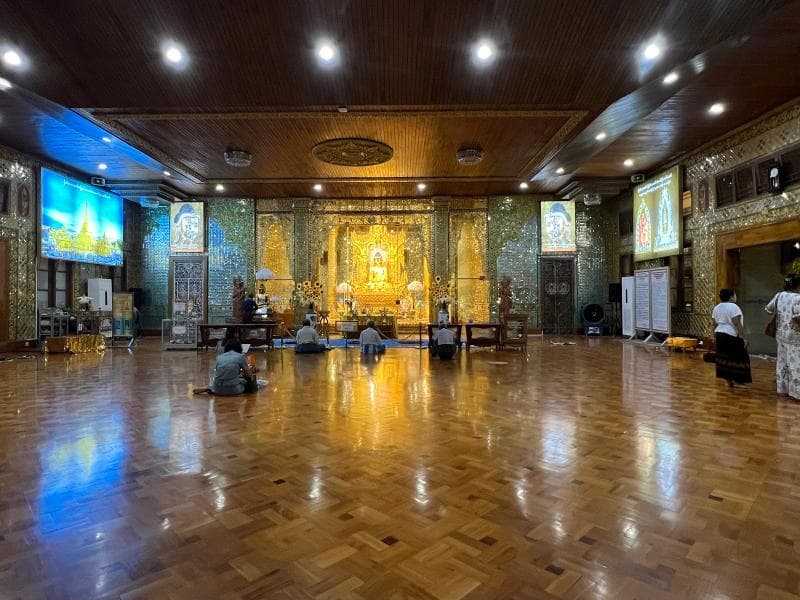
Discover the serene Prayer Halls of Botataung Pagoda in Yangon, Myanmar. Experience ancient Buddhist rituals and spiritual devotion.
Overview
The Prayer Halls within Botataung Pagoda in Yangon, Myanmar, serve as profound spaces for spiritual contemplation and ritual. While the pagoda complex is renowned for its central, hollow stupa that enshrines a sacred hair relic of the Buddha, the surrounding prayer halls and pavilions offer a mosaic of devotion. Visitors and local devotees alike find solace and spiritual connection in these areas, engaging in traditional Buddhist practices amidst the pagoda's golden splendor. These halls are an integral part of the Botataung experience, reflecting the deep-rooted faith that permeates daily life in Myanmar. The pagoda itself stands proudly along the Yangon River, a prominent landmark in the city's downtown area.
Built over 2,500 years ago, the Botataung Pagoda complex is a testament to ancient Burmese architectural and spiritual traditions. The Prayer Halls are not confined to a single, named structure but encompass various open-door halls and dedicated spaces where individuals gather to pray, meditate, and offer their respects. The atmosphere within these halls is typically serene, providing a peaceful escape from the bustling city outside.
History & Cultural Background
The history of Botataung Pagoda, and by extension its Prayer Halls, dates back more than two millennia, making it one of Myanmar's oldest Buddhist sites, constructed around the same time as the famous Shwedagon Pagoda. According to ancient tradition, the pagoda was built to enshrine sacred hair relics of Gautama Buddha, which were brought from India by two merchant brothers, Tapussa and Bhallika. The name 'Botataung' itself translates to 'one thousand military officers,' honoring the legion of soldiers who reputedly escorted these precious relics upon their arrival in ancient Myanmar.
Tragically, the original pagoda was completely destroyed during Allied bombing raids in World War II in November 1943. However, its resilience shone through as reconstruction began on January 4, 1948, the very day Myanmar gained independence. During this rebuilding, an astonishing discovery was made: a relic chamber containing the sacred hair relic, along with numerous ancient artifacts, precious stones, and Buddha images. These unearthed treasures now form part of the pagoda's unique interior displays, enriching the spiritual and historical narrative of its prayer spaces. The rebuilding incorporated modern construction techniques while striving to maintain the original form, resulting in the hollow, accessible interior seen today.
What Makes It Special
What makes the Prayer Halls at Botataung Pagoda truly special is their integration into the pagoda's singular design and the rich tapestry of beliefs they embody. Unlike many pagodas with solid interiors, Botataung's central stupa is hollow, allowing visitors to walk through a mesmerizing, mirrored maze of gold-plated corridors. Within this golden labyrinth, glass showcases display the relics and artifacts discovered during the post-war reconstruction, providing a direct connection to ancient history and devotion.
Beyond the main stupa, various pavilions and altars function as dedicated Prayer Halls. These include shrines for the revered Nat spirits, such as Bo Bo Gyi, considered the guardian of the pagoda, and Mya Nan Nwe, often known as the 'Whispering Goddess.' These shrines represent the unique blend of Theravada Buddhism and indigenous animist beliefs that define Burmese spirituality, where devotees offer prayers and wishes to both Buddhist deities and guardian spirits. The presence of day-of-the-week Buddha altars also offers a distinct spiritual practice where visitors can pour water over the Buddha image corresponding to their birth day for good fortune.
Stories, Fun Facts & Local Details
The story of the 'thousand military officers' from which Botataung derives its name is a powerful testament to the pagoda's ancient origins and its role in safeguarding sacred relics. This legend, passed down through generations, imbues the prayer spaces with a sense of historical grandeur and spiritual protection.
A fascinating local detail visible around the pagoda is the practice of releasing doves. For many Buddhists, this act of freeing captive birds symbolizes compassion and is considered a good deed, contributing to positive karma. Visitors often witness flocks of these birds around the pagoda grounds, sustained by the food offered by devotees.
Within the Prayer Halls, especially at the shrines of Bo Bo Gyi and Mya Nan Nwe, there's a strong belief in the granting of wishes. Locals and even some international visitors come specifically to these spots to offer prayers for success, prosperity, and peace of mind, sometimes whispering their desires to the statue of Mya Nan Nwe. This highlights the deeply personal and interactive nature of worship within the pagoda's spiritual environment.
Visitor Perspective
Visiting the Prayer Halls at Botataung Pagoda offers a deeply immersive cultural experience. Travelers are encouraged to observe local customs, dressing modestly by covering their shoulders and knees. It is customary to remove shoes before entering the pagoda grounds, a sign of respect. The serene atmosphere invites quiet contemplation, and visitors often find themselves observing or even participating in the gentle rituals of devotion.
The dazzling interior of the hollow stupa, with its gold-plated walls and ceiling, creates an awe-inspiring setting for prayer and meditation. Throughout the various prayer halls, one can witness the vibrant spiritual practices of the local people – from lighting candles and offering flowers to sitting in silent meditation. The riverside location also offers pleasant views, especially during sunset, adding to the tranquil ambiance. Whether seeking spiritual solace, historical insight, or simply a moment of peace, the Prayer Halls of Botataung Pagoda provide a profound window into Myanmar's rich Buddhist heritage.
Coordinates: 96.172, 16.76846
View on Google Maps💬 How Travelers Describe This Place
Based on community votes
Beautiful
963Unique
723Photogenic
482Must See
463Interesting
274
Traveler Stories
Discover memorable experiences shared by travelers who have visited this place.
No traveler stories yet.
Be the first traveler to share what made this place memorable.

Tour
By
Spot
Discover amazing places around the world. Your journey starts here.
Explore
© 2026 TourBySpot. All rights reserved.