Prayer Hall
Tirana, Albania
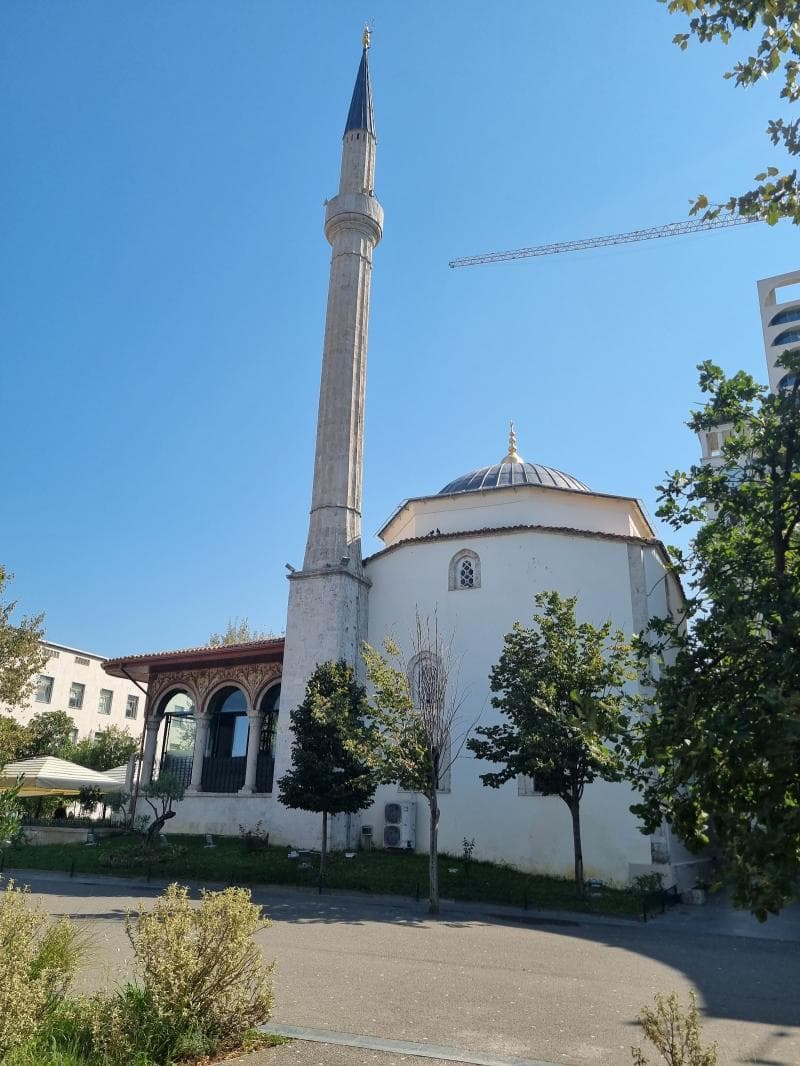
Discover the Prayer Hall of Et'hem Bey Mosque in Tirana, Albania. Explore its unique frescoes, rich history, and cultural significance.
Overview
Nestled in the vibrant heart of Tirana, Albania, the Prayer Hall of the Et'hem Bey Mosque offers a captivating glimpse into centuries of spiritual devotion and artistic heritage. This exquisite sub-spot within the larger mosque structure is celebrated for its unique frescoes and its profound historical significance. Situated prominently on Skanderbeg Square, it stands as a testament to the city's rich past and its enduring spirit, inviting travelers to step into a serene space where art, history, and faith converge.
The Et'hem Bey Mosque itself is a jewel of Ottoman architecture, and its Prayer Hall forms the central, square-planned volume of this sacred building. Covered by a semi-spherical dome without windows, the hall is designed to envelop worshippers in a tranquil ambiance, focusing their attention inward. It represents a rare and precious example of Islamic art, distinguished particularly by its striking interior decorations that defy typical conventions.
History & Cultural Background
The construction of the Et'hem Bey Mosque began in the late 18th century, around 1791 or 1794, initiated by Molla Bey. The work was meticulously carried on and completed by his son, Haxhi Et'hem Bey, between 1819 and 1821. This period saw the mosque become an integral part of Tirana's historical center, surrounded by other significant buildings, including the Old Bazaar and the Clock Tower, which still stands beside it today.
The mosque's survival through Albania's turbulent 20th century is a remarkable story of resilience. During the communist regime, when religious practice was banned, the Et'hem Bey Mosque, like many other religious sites, was closed. However, it was declared a cultural monument, which shielded it from destruction. Its reopening on January 18, 1991, marked a pivotal moment in Albanian history. Despite official restrictions, approximately 10,000 people gathered for public prayer, symbolizing the rebirth of religious freedom in the country and signaling the fall of communism.
What Makes It Special
What truly sets the Prayer Hall of the Et'hem Bey Mosque apart are its remarkable frescoes. Unlike the geometric patterns and calligraphy often found in other Islamic places of worship, the interior of this prayer hall is adorned with intricate paintings depicting natural landscapes. These include cypress trees, waterfalls, bridges, pavilions, and still-life scenes that are exceptionally rare in Islamic art.
These delicate landscapes, with their soft shading and vibrant colors, are found both inside the prayer hall and on the exterior portico. Scholars suggest some of these 'imaginary scenes' may even reference cityscapes like Istanbul's silhouette, including the Süleymaniye Mosque. The prayer hall's architecture features a square plan covered by a dome, constructed with irregular river stones plastered to a smooth finish, while window frames use carefully hewn stones. The dome is supported by a squinch structure, showcasing traditional construction techniques.
Stories, Fun Facts & Local Details
One of the most powerful stories associated with the Prayer Hall is its dramatic reopening in 1991. The sheer act of 10,000 people converging on the mosque for prayer, without official permission, was a courageous act of defiance that resonated deeply throughout Albania and became a symbol of the nation's return to religious freedom. The police, remarkably, did not intervene.
Another fascinating detail is found in one of the chronograms within the mosque, which proclaims that 'the mosque has given eternal beauty to the city, as Hagia Sophia has given to Istanbul'. This verse highlights the perceived grandeur and significance of the Et'hem Bey Mosque within Tirana's cultural landscape. The unique style of the murals, blending Ottoman tradition with Albanian creativity, has led some academics to suggest influences from Persian miniature paintings, reflecting an artistic approach to express nature's beauty while adhering to religious sensibilities.
Visitor Perspective
Visiting the Prayer Hall of the Et'hem Bey Mosque is an immersive experience. As you step inside, you are transported from the bustling Skanderbeg Square into a world of quiet contemplation and unique beauty. The intimate scale of the mosque, despite its grand history, often surprises visitors. The light filtering through the windows subtly illuminates the richly painted walls and the finely carved wooden ceiling, creating a profound visual experience.
As it remains an active place of worship, visitors are kindly asked to show respect for its sacred importance. This includes removing your shoes before entering the inner room and dressing modestly. While tours are generally available, they are not conducted during prayer times. This gives visitors an authentic understanding of the mosque's ongoing role in the community and allows for a moment of peaceful reflection amidst Tirana's vibrant urban life.
Coordinates: 19.81917, 41.32778
View on Google Maps💬 How Travelers Describe This Place
Based on community votes
Photogenic
698Must See
476Beautiful
465Unique
276Interesting
126
Traveler Stories
Discover memorable experiences shared by travelers who have visited this place.
No traveler stories yet.
Be the first traveler to share what made this place memorable.

Tour
By
Spot
Discover amazing places around the world. Your journey starts here.
Explore
© 2026 TourBySpot. All rights reserved.