Prayer Hall and Carpeted Floor
Istanbul, Turkey
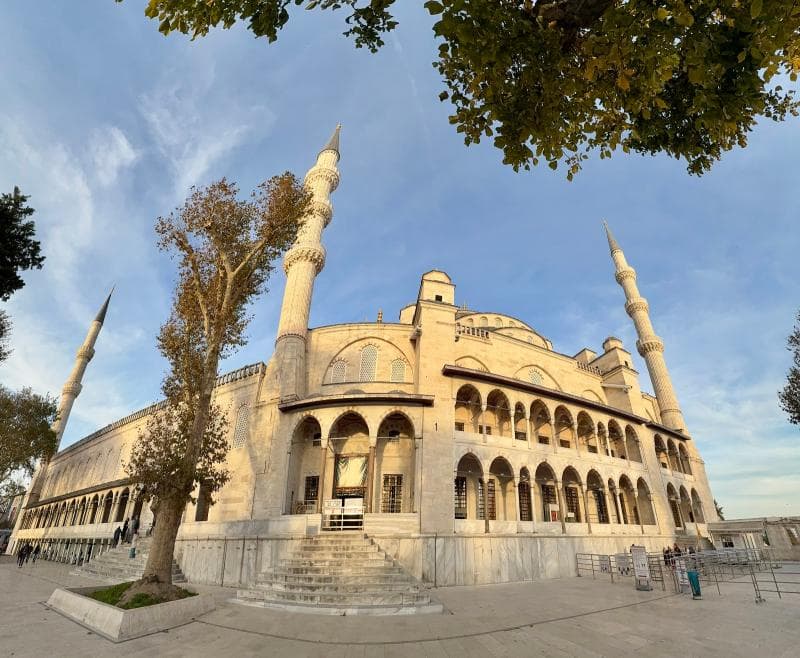
Explore the majestic Prayer Hall and Carpeted Floor of the Blue Mosque in Istanbul, Turkey. Discover its stunning Iznik tiles, rich history, and spiritual ambiance.
Overview
Stepping into the Prayer Hall and onto the Carpeted Floor of Istanbul's Blue Mosque, officially known as the Sultan Ahmed Mosque, is an experience that immediately captivates the senses. This vast interior space serves as the spiritual heart of one of the Ottoman Empire's most magnificent architectural achievements. As you cross the threshold, the sheer scale of the hall, bathed in an ethereal glow, becomes apparent. The space is a harmonious blend of Ottoman artistic tradition and functional design, meant to inspire awe and facilitate contemplation for worshippers and visitors alike. The soft, deep carpets underfoot provide a welcoming tactile sensation, contrasting with the cool marble of the entrance, guiding you into a world of intricate beauty and serene devotion.
History & Cultural Background
The Blue Mosque's prayer hall is a testament to the ambition and piety of Sultan Ahmed I, who commissioned its construction between 1609 and 1617. Designed by the esteemed architect Sedefkar Mehmed Agha, a student of the legendary Mimar Sinan, the mosque was intended to rival and even surpass the grandeur of the nearby Hagia Sophia. Its creation during a period of relative military stagnation for the Ottoman Empire served as a powerful statement of enduring faith and imperial strength. The prayer hall, as the central functional space of the mosque, was meticulously designed to accommodate thousands of worshippers, reflecting the widespread adherence to Islam within the empire. This architectural marvel, including its prayer hall, was inscribed as part of the 'Historic Areas of Istanbul' on the UNESCO World Heritage List in 1985.
What Makes It Special
The prayer hall's distinctive character stems from several remarkable elements. Foremost are the more than 20,000 handmade Iznik ceramic tiles that adorn its walls, pillars, and arches, particularly on the upper levels. These tiles, featuring over 50 distinct tulip, carnation, rose, and cypress tree motifs in shades of blue, turquoise, green, and white, give the mosque its popular 'Blue Mosque' moniker. Above, the magnificent cascading dome system draws the eye upwards. The central dome, which soars 43 meters high and spans 23.5 meters in diameter, is supported by four massive, fluted pillars, affectionately known as 'elephant feet'. Natural light floods the hall through approximately 260 stained-glass windows, casting a soft, colored glow over the interior. The mihrab, a finely carved marble prayer niche indicating the direction of Mecca, and the intricately designed minbar, or pulpit, from which the imam delivers sermons, are focal points at the front of the hall. The extensive carpeted floor, meticulously laid out, defines the sacred space and facilitates communal prayer.
Stories, Fun Facts & Local Details
- The mosque's popular name, the Blue Mosque, comes directly from the mesmerizing blue hues of the Iznik tiles covering its interior.
- A historical tale suggests that the mosque's six minarets, an unusual number for its time, resulted from a misunderstanding between Sultan Ahmed I and his architect; the Sultan asked for 'altın' (gold) minarets, which was misheard as 'altı' (six) minarets. This number initially caused controversy as it rivaled the Great Mosque in Mecca, leading the Sultan to fund a seventh minaret for Mecca.
- Historically, chandeliers in Ottoman mosques like the Blue Mosque were sometimes fitted with ostrich eggs, believed to deter spiders and prevent cobwebs from forming.
- The carpet itself is not merely decorative; it serves as a crucial element in Islamic prayer. Its patterns often help worshippers align themselves in straight rows facing the mihrab and Mecca. Replacing the carpets is a continuous effort, often through donations, as they are central to the daily functions of the mosque.
Visitor Perspective
For visitors, entering the prayer hall is an immersive cultural and spiritual experience. The act of removing shoes before stepping onto the plush carpets is a tradition rooted in both hygiene and reverence, signaling a transition from the secular outside world to a sacred space. Plastic bags are usually provided for convenience. Inside, the atmosphere is one of profound serenity. Despite the presence of other visitors, a quiet reverence often prevails. The soft lighting, the intricate patterns of the tiles, and the gentle hush create a peaceful environment. Visitors are encouraged to move quietly, observe respectfully, and refrain from walking directly in front of those engaged in prayer. Modest dress is required, with women asked to cover their heads, shoulders, and legs, and men to wear long trousers. The prayer hall is a living, active place of worship, and its rhythms are observed throughout the day, closing to visitors during the five daily prayer times.
Coordinates: 28.9768, 41.0054
View on Google Maps💬 How Travelers Describe This Place
Based on community votes
Beautiful
972Unique
787Must See
720Interesting
85Photogenic
73
Traveler Stories
Discover memorable experiences shared by travelers who have visited this place.
No traveler stories yet.
Be the first traveler to share what made this place memorable.

Tour
By
Spot
Discover amazing places around the world. Your journey starts here.
Explore
© 2026 TourBySpot. All rights reserved.