Prater
Vienna, Austria
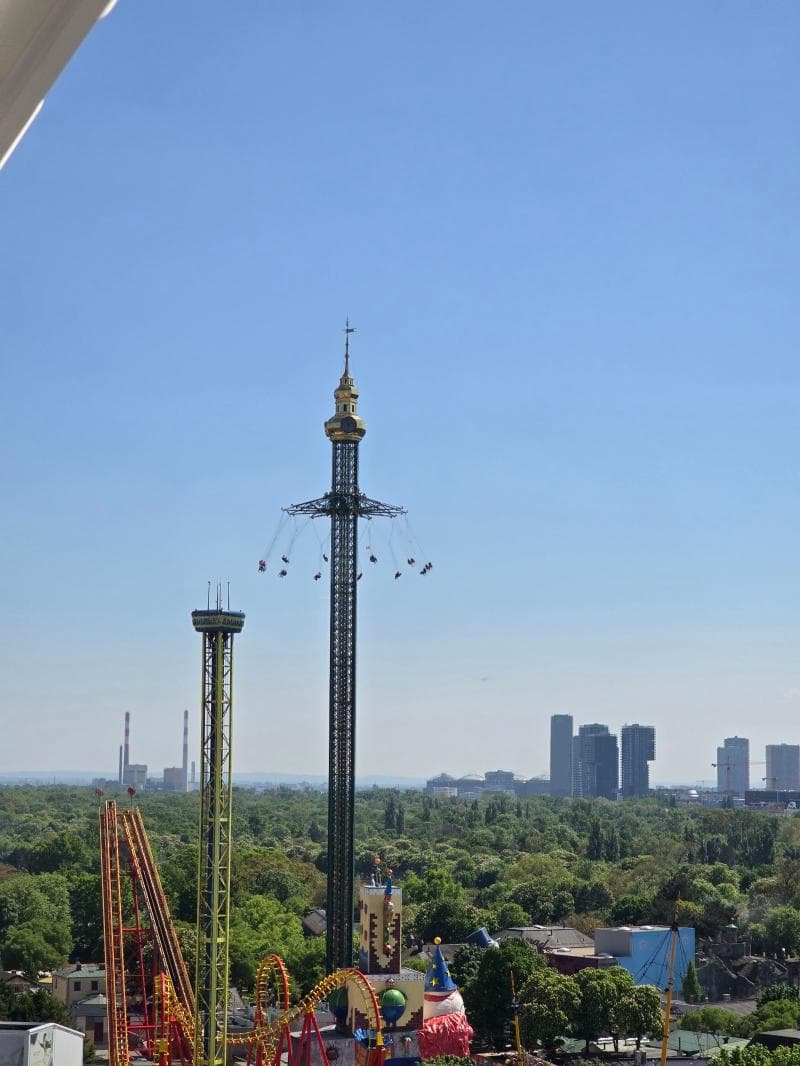
Discover Vienna's Prater, a historic park combining the thrilling Wurstelprater amusement park and the tranquil Green Prater. Home to the iconic Giant Ferris Wheel, it offers unique fun and relaxation in Austria.
Overview
The Prater in Vienna, Austria, is a sprawling recreational area that masterfully blends the exhilaration of a traditional amusement park with the tranquility of expansive natural landscapes. Covering an impressive six square kilometers, it is often considered one of Europe's most beautiful urban green spaces, nearly twice the size of New York's Central Park. [7, 5] The Prater is broadly divided into two main sections: the lively Wurstelprater, home to Vienna's iconic Giant Ferris Wheel (Riesenrad), and the serene Green Prater, offering vast meadows, forests, and walking paths. [8, 5] This unique duality ensures that whether you seek thrilling rides or peaceful contemplation amidst nature, the Prater provides an unforgettable Viennese experience. [7]
History & Cultural Background
The Prater's history stretches back to the 12th century, with its first documented mention in 1162 as 'Pratum', Latin for 'meadow'. [8, 6] For centuries, it served as an imperial hunting ground for the Habsburg monarchy, reserved exclusively for the aristocracy. [7, 10] A significant turning point arrived on April 7, 1766, when Emperor Joseph II, in a revolutionary act, opened the Prater to the general public, transforming it into a recreational area for all Viennese citizens. [7, 6] This momentous decision paved the way for the establishment of early inns, coffee houses, swings, and bowling alleys, marking the nascent stages of the Wurstelprater amusement park. [7, 6] The name 'Wurstelprater' itself originates from 'Hanswurst', a comical character from traditional Austrian folk theater, whose puppet shows were a popular early attraction. [3, 6]
The 19th century saw the Prater flourish further. The 1873 World's Fair, held in the Prater, significantly transformed the area with modern infrastructure and visionary architecture, including the monumental Rotunda, then the world's largest dome, which sadly succumbed to fire in 1937. [7, 4] In 1895, the 'Venice in Vienna' amusement complex was established, and within it, the Wiener Riesenrad, the Giant Ferris Wheel, was constructed in 1897, quickly becoming a defining landmark of Vienna. [3, 10] The Prater faced extensive destruction during World War II, particularly in April 1945, but was rebuilt in the subsequent years, with the Riesenrad turning again by Pentecost 1947. [3, 10, 6]
What Makes It Special
What sets the Prater apart is its harmonious coexistence of exhilarating amusement and serene nature. [7] Unlike many amusement parks, entry to the Prater grounds is entirely free, allowing visitors to stroll freely and soak in the atmosphere, paying only for the individual attractions they choose to experience. [5, 14] The Wurstelprater boasts over 250 attractions, ranging from classic carousels and ghost trains to modern roller coasters and flight simulators, catering to all ages and thrill levels. [5, 11] The historic Wiener Riesenrad, standing at nearly 65 meters, offers breathtaking panoramic views of Vienna and is an absolute must-do, featuring prominently in films like 'The Third Man'. [3, 15] Beyond the rides, the Green Prater provides a vast natural escape, featuring the 4.5-kilometer-long Hauptallee, a car-free boulevard lined with chestnut trees perfect for walking, jogging, cycling, or horseback riding. [8, 5] This blend of historical charm, diverse entertainment, and natural beauty makes it a truly unique destination. [7]
Stories, Fun Facts & Local Details
- Emperor Joseph II's famous retort when questioned about mingling with common people in the Prater: 'If I wanted to walk around solely among my own kind, I would only be allowed to walk in the imperial crypt.' [6]
- The Prater was once home to 'Venice in Vienna,' a themed area complete with canals, gondolas, and replicas of Venetian buildings. [16, 10]
- In 1791, Jean-Pierre Blanchard conducted one of Vienna's first hot air balloon flights from the Prater, landing in Groß-Enzersdorf. [3, 16]
- Historically, the Prater was an egalitarian space where people from all social strata could mingle, observe each other, and enjoy entertainment ranging from puppet theaters to early forms of 'human spectacles.' [16]
- The Giant Ferris Wheel's appearance in the classic film 'The Third Man' cemented its status as an international icon. [3, 15]
- The Wurstelprater amusement park remains a collection of privately run businesses on leased plots of land, giving it a unique, independent character. [3]
Visitor Perspective
Visiting the Prater offers a flexible and diverse experience. The grounds are open 24/7, 365 days a year, with the amusement park attractions typically running from mid-March to the end of October. [5, 19] However, key attractions like the Giant Ferris Wheel and Madame Tussauds often remain open year-round. [5, 19] There is no entrance fee for the Prater itself; visitors pay for each ride or attraction individually, with prices generally ranging from 3.50 to 15.00 EUR. [14, 19] Public transport provides easy access, with the Praterstern station serving as a main entry point for the Wurstelprater. [20] Beyond the thrills, the Green Prater invites relaxation with its expansive areas for picnics, sports, and leisurely strolls. Many visitors enjoy renting a bicycle to explore the Hauptallee or simply finding a quiet spot to unwind, making it an ideal destination for families, couples, and solo travelers alike. [7, 15]
Coordinates: 16.417222, 48.204444
View on Google Maps💬 How Travelers Describe This Place
Based on community votes
Photogenic
951Unique
748Beautiful
499Interesting
427Must See
94
Traveler Stories
Discover memorable experiences shared by travelers who have visited this place.
No traveler stories yet.
Be the first traveler to share what made this place memorable.
Things to see at Prater



Tour
By
Spot
Discover amazing places around the world. Your journey starts here.
Explore
© 2026 TourBySpot. All rights reserved.