Port Observation Area
Odessa, Ukraine
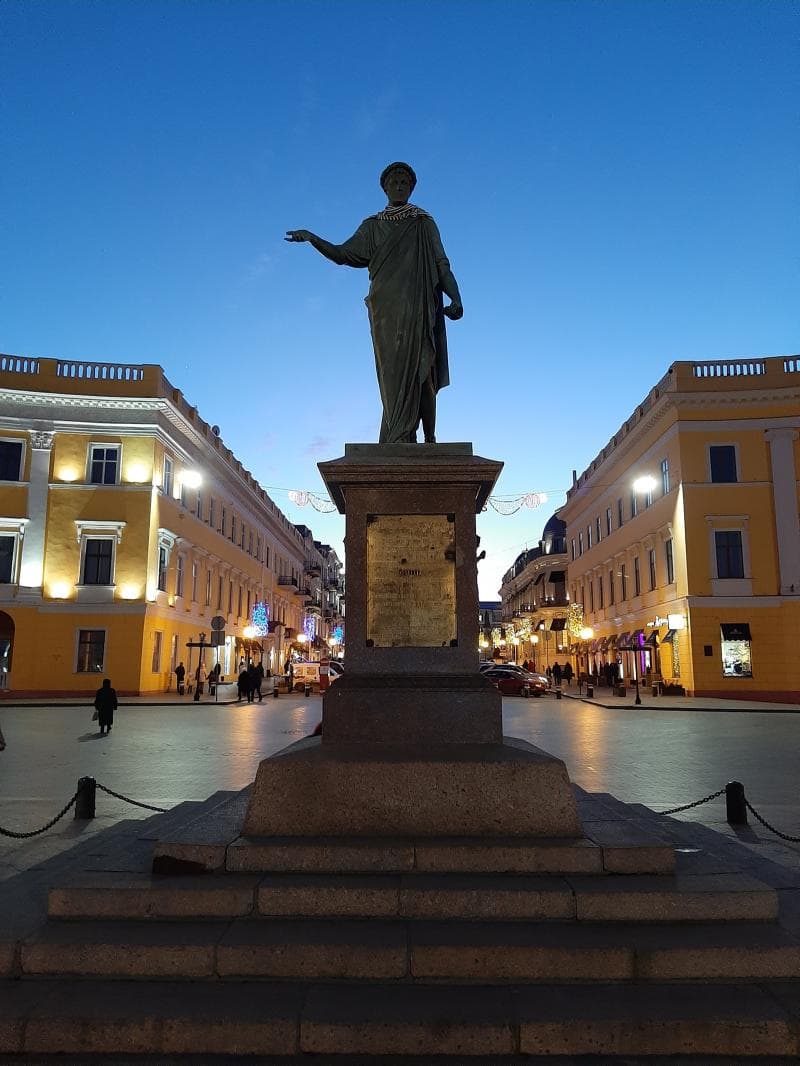
Experience the panoramic Port Observation Area atop the iconic Potemkin Stairs in Odesa, Ukraine. Discover history, optical illusions, and stunning Black Sea views.
Overview
Perched majestically in the heart of Odesa, Ukraine, the Potemkin Stairs offer more than just a historical ascent; they serve as a spectacular Port Observation Area, providing panoramic views that captivate every visitor. Officially known as the Prymorski Stairs, this monumental staircase is a defining symbol of the city and a natural vantage point to witness the bustling activity of the Odesa Commercial Sea Port and the tranquil expanse of the Black Sea. Its ingenious design creates an intriguing optical illusion, making it a landmark of both architectural marvel and historical significance.
History & Cultural Background
The construction of the Potemkin Stairs, an initiative born from the city's need to connect its elevated center with the harbor below, took place between 1837 and 1841. Commissioned by Prince Mikhail Semyonovich Vorontsov, the regional governor-general, the grand staircase was designed by Italian architect Francesco Boffo, with contributions from Russian architects Avraam Melnikov and Potie. Originally comprising 200 steps, erosion and subsequent renovations, such as one in 1933 that replaced the sandstone with rose-grey granite, reduced the number to its current 192 steps, distributed across ten landings. Over its long history, the stairs have borne various names, including the Boulevard Steps, the Giant Staircase, and the Richelieu Steps. Its global fame soared in 1925 with Sergei Eisenstein's iconic silent film, 'Battleship Potemkin,' leading to its renaming as the Potemkin Stairs in 1955 to commemorate the mutiny. While Ukrainian independence saw the official reinstatement of its original name, Prymorski Stairs, the moniker 'Potemkin Stairs' remains widely used and recognized.
What Makes It Special
The Potemkin Stairs are not merely a functional passageway; they are a masterpiece of architectural illusion. When viewed from the top, only the landings are visible, creating a sense of uniform width and seemingly endless descent. Conversely, from the base, only the steps are seen, making the staircase appear much longer and more imposing than its actual 142-meter length and 27-meter height. This effect is achieved by the deliberate design, which is 12.5 meters wide at the top and expands to 21.7 meters at the bottom. Beyond its visual trickery, the stairs symbolize Odesa's profound connection to the sea, acting as a grand formal entrance to the city from the direction of the harbor. The sweeping views of the Port of Odesa and the Black Sea from the top of the stairs, particularly near the monument to Duc de Richelieu, are truly breathtaking. This observation point highlights the city's maritime heritage, showcasing the busy port, the ships, and the vastness of the Black Sea.
Stories, Fun Facts & Local Details
The legacy of the Potemkin Stairs is deeply intertwined with cinematic history. Sergei Eisenstein's 1925 film 'Battleship Potemkin' immortalized the steps through its fictional yet harrowing scene of a civilian massacre and a baby carriage tumbling down, a sequence that has been endlessly referenced in cinema. This dramatic portrayal cemented the stairs' place in global culture. The stairs have also inspired numerous writers, including Mark Twain. For those preferring a less strenuous ascent, a funicular railway runs parallel to the stairs, offering a comfortable ride and its own unique perspective. At the summit, visitors are greeted by the bronze statue of Duc de Richelieu, Odesa's first governor, whose monument was the first ever erected in the city. The stairs also host an annual marathon, a challenging event for athletes to conquer all 192 steps, showcasing the local spirit and humor.
Visitor Perspective
Approaching the Potemkin Stairs is an experience in itself, whether you choose the challenge of climbing all 192 steps or the leisurely ride on the funicular. As you ascend or descend, the architectural genius of its optical illusion becomes apparent, shifting your perception with each landing. The true reward for climbing to the top is undoubtedly the 'Port Observation Area.' From this elevated position, the entire panorama of the Odesa Sea Port unfolds beneath you, offering spectacular views of cargo ships, passenger terminals, and the endless horizon of the Black Sea. The vantage point provides a clear understanding of Odesa's strategic importance as a port city. At the top, the elegant Primorsky Boulevard beckons with its historic buildings, statues, and cafes, creating a vibrant atmosphere. The blend of historical grandeur, cinematic fame, and the raw, working beauty of a major seaport makes the Port Observation Area at the Potemkin Stairs an unforgettable stop for any curious traveler researching Odesa, Ukraine.
Coordinates: 30.74333, 46.48917
View on Google Maps💬 How Travelers Describe This Place
Based on community votes
Unique
954Interesting
514Photogenic
196Must See
92Beautiful
66
Traveler Stories
Discover memorable experiences shared by travelers who have visited this place.
No traveler stories yet.
Be the first traveler to share what made this place memorable.

Tour
By
Spot
Discover amazing places around the world. Your journey starts here.
Explore
© 2026 TourBySpot. All rights reserved.