Polish Memorial
Lviv, Ukraine
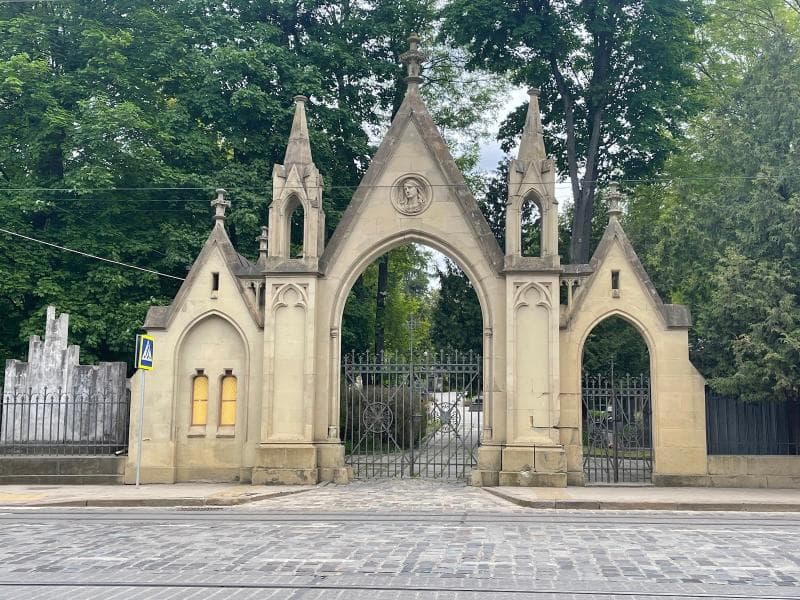
Explore the Polish Memorial, or Cemetery of Lwów Eaglets, within Lychakiv Cemetery in Lviv, Ukraine, honoring defenders of the city.
Overview
Deep within the historic Lychakiv Cemetery in Lviv, Ukraine, lies a profound testament to a complex past: the Polish Memorial. Often referred to as the 'Cemetery of the Defenders of Lwów' or the 'Cemetery of Lwów Eaglets' (Cmentarz Orląt Lwowskich), this significant sub-spot serves as a poignant burial ground and memorial for Poles and their allies who bravely fought and perished during the Polish-Ukrainian War (1918-1919) and the subsequent Polish-Soviet War (1919-1921). It forms an integral, yet distinct, part of the expansive Lychakiv Cemetery complex, which itself dates back to 1787 and is recognized as one of Europe's oldest and most beautiful necropolises. The memorial's approximately 3,000 graves include those of the young militia volunteers affectionately known as the 'Lwów Eaglets', making it one of the most famous necropolises of interwar Poland.
History & Cultural Background
Lviv, known historically as Lwów in Polish, has always been a city of interwoven cultures and shifting allegiances, a crossroads of empires that experienced periods under Austrian, Polish, and Ukrainian rule. The early 20th century brought intense conflict, as Poles and Ukrainians vied for control over the territory of Eastern Galicia following World War I. It was during these tumultuous years, particularly between 1918 and 1919, that young Polish volunteers, many still teenagers or even younger, took up arms to defend Lwów against Ukrainian forces. These courageous individuals earned the enduring moniker 'Lwów Eaglets' (Orlęta Lwowskie).
The original design for the memorial complex was the work of Rudolf Indruch, an architecture student from Lviv Polytechnic and, remarkably, one of the 'Eaglets' himself. Construction commenced and continued until the outbreak of World War II, establishing a powerful symbol of remembrance. A solemn moment in its history occurred in 1925, when the ashes of one of these unknown defenders were transferred to the Tomb of the Unknown Soldier in Warsaw. However, the post-WWII era brought devastation. Under Soviet rule, the memorial was systematically neglected and largely destroyed in 1971, with parts of its territory even converted into a truck depot. Some broken tombstones were reportedly repurposed for a statue of Lenin. Efforts for reconstruction began in 1989 by a Polish company, but faced considerable political and historical challenges from Ukrainian authorities. A significant turning point came in 2005 when, after years of complex negotiations and as a symbol of reconciliation, the memorial was officially reopened with the presidents of Poland and Ukraine in attendance.
What Makes It Special
The Polish Memorial holds a unique place not just within Lychakiv Cemetery, but also in the broader narrative of Polish-Ukrainian relations. Its profound significance lies in its role as a memorial to the 'Lwów Eaglets' – a generation of young, often untrained, individuals who made the ultimate sacrifice. The complex features a distinct domed chapel that stands as a central architectural element, along with catacombs where the exhumed remains of 72 fighters were interred.
A semi-circular colonnade forms a powerful backdrop, inscribed with the Latin phrase, 'Mortui sunt ut liberi vivamus' ('They died so we could live free'), encapsulating the spirit of their sacrifice. Beyond the Polish defenders, the memorial also honors international solidarity, including graves and monuments dedicated to American pilots from the Kościuszko Squadron and French volunteers who fought alongside the Poles. Situated within the picturesque and historically rich Lychakiv Cemetery, the memorial is surrounded by a sprawling necropolis spanning over 40 hectares, adorned with countless artistic monuments and serving as the final resting place for prominent figures from various nationalities and eras, adding layers of cultural depth to a visit.
Stories, Fun Facts & Local Details
The term 'Lwów Eaglets' originally applied specifically to those who participated in the intense fighting within the city from November 1918 to May 1919, but its usage later broadened to encompass all young Polish soldiers involved in the Polish-Ukrainian and Polish-Bolshevik Wars in Eastern Galicia. Among the many tragic stories is that of Jurek Bitschan, a 14-year-old schoolboy whose death in battle became a poignant symbol of the young defenders' sacrifice. It's said the youngest defender buried here was just 14 years old.
A testament to resilience and historical preservation is found in the pair of stone lions that once flanked the triumphal arch. These iconic statues were discreetly moved to the outskirts of the cemetery during the Soviet-era destruction, saving them from ruin, and were eventually returned to their rightful place in 2015. The broader Lychakiv Cemetery offers an incredible array of artistic expression, with over 300,000 burials and approximately 500 sculptures, chapels, and mausoleums. The diverse inscriptions on grave markers in Ukrainian, Russian, German, Polish, Armenian, and Latin silently narrate Lviv's multicultural past and its turbulent history.
Visitor Perspective
A visit to the Polish Memorial within Lychakiv Cemetery offers a deeply contemplative experience. It encourages visitors to reflect not only on the specific events it commemorates but also on the broader, often tumultuous, history of Lviv and the interwoven destinies of its peoples. While the main Lychakiv Cemetery is an open-air museum filled with artistic masterpieces and the graves of countless prominent figures, the Polish Memorial provides a distinct historical narrative, focusing on courage, conflict, and reconciliation.
The cemetery is meticulously maintained, with well-kept paths that invite visitors to wander and explore its extensive grounds. To truly appreciate the scale and significance of both the Polish Memorial and the wider Lychakiv Cemetery, travelers should allocate several hours for their visit, allowing ample time for quiet contemplation and exploration of this remarkable historical reserve. It's a place where personal stories and grand historical events converge, offering a unique window into the soul of Lviv.
Coordinates: 24.056, 49.833
View on Google Maps💬 How Travelers Describe This Place
Based on community votes
Must See
680Interesting
653Beautiful
588Unique
566Photogenic
503
Traveler Stories
Discover memorable experiences shared by travelers who have visited this place.
No traveler stories yet.
Be the first traveler to share what made this place memorable.

Tour
By
Spot
Discover amazing places around the world. Your journey starts here.
Explore
© 2026 TourBySpot. All rights reserved.