Po Lin Monastery
Hong Kong, China
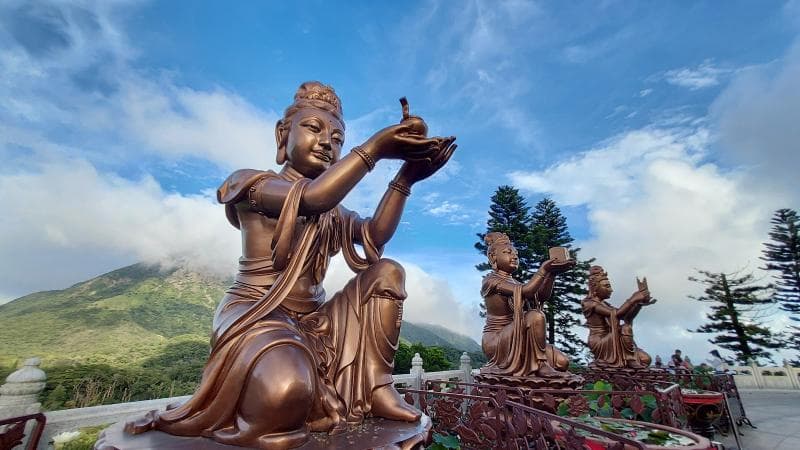
Explore Po Lin Monastery, a serene Buddhist sanctuary on Lantau Island, Hong Kong, China. Discover its history, Grand Hall of Ten Thousand Buddhas, and vegetarian cuisine.
Overview
Nestled amidst the tranquil, lush mountains of Lantau Island in Hong Kong, China, the Po Lin Monastery stands as a revered sanctuary of Buddhist faith. Its name, 'Po Lin', translates evocatively to 'Precious Lotus', symbolizing purity and enlightenment within Buddhist philosophy. This significant spiritual center is a key component of the broader Ngong Ping 360 & Big Buddha experience, offering a profound glimpse into Chan Buddhism.
As visitors approach, often via the scenic Ngong Ping 360 cable car, the monastery's grand structures emerge, harmoniously blending with the natural landscape of the Ngong Ping Plateau. It is famously situated opposite the majestic Tian Tan Buddha, often referred to as the Big Buddha, creating an awe-inspiring spiritual complex that draws pilgrims and curious travelers from around the globe.
History & Cultural Background
The origins of Po Lin Monastery trace back to humble beginnings in 1906, when three Chan Buddhist monks—Da Yue, Dun Xiu, and Yue Ming—journeyed from Jiangsu Province in mainland China to the secluded Ngong Ping Plateau. They established a modest retreat, initially known as 'The Big Hut' (大茅蓬), dedicated to spiritual practice and meditation.
Over the years, the spiritual community grew, and in 1924, the site was officially renamed Po Lin Monastery. This renaming marked a pivotal moment in its development, signifying its evolution from a simple hermitage to a recognized center for Buddhist learning and devotion. The monastery has since flourished, becoming one of Hong Kong's most important Buddhist institutions, dedicated to advancing Buddhism, promoting Chinese culture, and preserving sculptural art and landscape gardening.
What Makes It Special
Po Lin Monastery is distinguished by its impressive collection of sacred halls and architectural marvels. The main temple enshrines three magnificent bronze statues of the Buddha, representing his past, present, and future lives, surrounded by an array of Buddhist scriptures. A truly breathtaking sight is the Grand Hall of Ten Thousand Buddhas, a more recent addition, which houses thousands of intricately crafted, gilded Buddha statues, with its interior adorned with murals depicting scenes from the Buddha's life and exquisite traditional Chinese woodwork.
Other significant structures include the Hall of Skanda Bodhisattva, dedicated to the protector of Buddhist monasteries, and the Hall of the Great Hero (Mahavira Hall), the central hall housing three large Buddha statues. The monastery's serene grounds also feature a beautiful garden and the Wisdom Path, a walking trail lined with 38 wooden monuments inscribed with verses from the Heart Sutra, a pivotal text in Mahayana Buddhism, offering a path for reflection and contemplation.
Stories, Fun Facts & Local Details
Beyond its grand halls, Po Lin Monastery offers intimate cultural experiences. It is renowned for its vegetarian cafeteria, where delicious meat-free dishes are prepared by the monks themselves. This mindful dining experience is infused with Buddhist principles of compassion, reflecting the monastery's teachings.
A unique local detail is the crafting of wooden prayer bracelets, sold exclusively near the Tian Tan Buddha statue, connecting spiritual practice with traditional artisanship. The monastery grounds feature architectural elements like a three-layered platform, which cleverly imitates the design of the Circular Mound Altar of the Temple of Heaven in Beijing. Po Lin Monastery is often honored as the 'Buddhist World in the South,' a testament to its significant development and the profound serenity of its environment. In the early mornings, the combination of birdsong and resonant temple bells creates a 'celestial symphony,' offering a deeply immersive and spiritual atmosphere.
Visitor Perspective
Visiting Po Lin Monastery is often part of a larger journey to the Ngong Ping Plateau, commonly accessed by the Ngong Ping 360 cable car, which provides spectacular aerial views of Lantau Island. Upon arrival, visitors pass through traditional Pai Lau (archways), which signify the entrance to this sacred space. The monastery's location at an altitude of approximately 400 meters provides a refreshing escape from the urban bustle, offering crisp air and lush vegetation.
While the monastery itself is a haven of peace, many travelers also undertake the 268-step climb to the base of the Tian Tan Buddha, which sits majestically opposite the monastery. This ascent is rewarded with panoramic views of Lantau Island, the South China Sea, and the surrounding mountains, blending physical exertion with spiritual awe. The entire experience allows a curious traveler to delve into a living Buddhist tradition, surrounded by impressive artistry and natural beauty.
Coordinates: 113.90789, 22.25551
View on Google Maps💬 How Travelers Describe This Place
Based on community votes
Unique
826Must See
800Beautiful
387Interesting
242Photogenic
82
Traveler Stories
Discover memorable experiences shared by travelers who have visited this place.
No traveler stories yet.
Be the first traveler to share what made this place memorable.

Tour
By
Spot
Discover amazing places around the world. Your journey starts here.
Explore
© 2026 TourBySpot. All rights reserved.