Plenary Chamber
Berlin, Germany
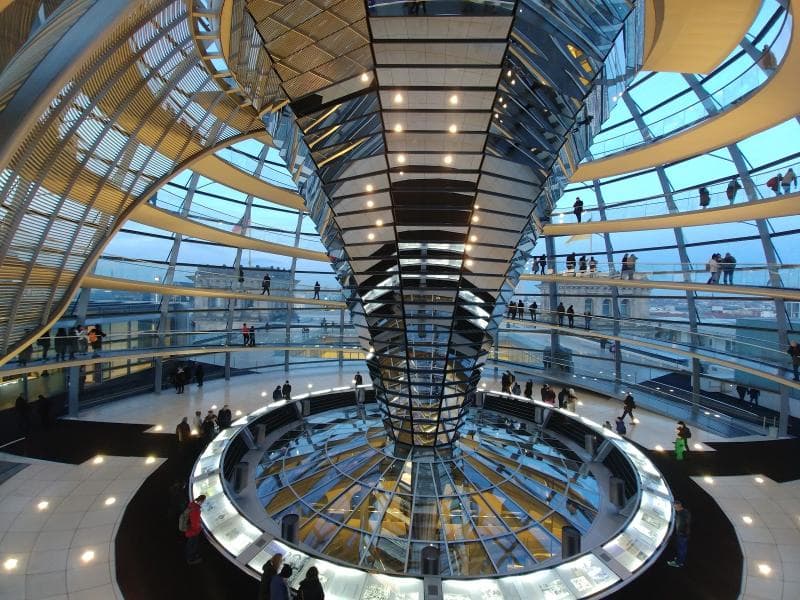
Explore the Plenary Chamber in Berlin's Reichstag Building, the heart of German democracy. Discover its rich history, unique architecture, and how to visit this significant site in Germany.
Overview
Deep within the heart of Berlin's iconic Reichstag Building, the Plenary Chamber stands as the vibrant core of German democracy. This is where the Bundestag, Germany's federal parliament, convenes to debate crucial legislation, make decisions that shape the nation, and engage in the essential work of governance. Situated at the geometric center of the historic edifice, the chamber is a symbol of transparency and accessibility, reflecting a modern democratic ethos. Its striking contemporary design, conceived by the renowned architect Lord Norman Foster, seamlessly blends with the building's historical grandeur, creating a space that is both functional and profoundly symbolic. Visitors often marvel at the interplay of natural light flooding in from the famous glass dome overhead, which not only illuminates the chamber but also offers a unique visual connection between the public and their elected representatives.
History & Cultural Background
The Reichstag Building, home to the Plenary Chamber, boasts a storied past that mirrors Germany's tumultuous history. Originally constructed between 1884 and 1894 under the designs of Paul Wallot, it served as the seat of the Reichstag of the German Empire. A pivotal moment in its history occurred on February 27, 1933, when a devastating fire ravaged the building, particularly destroying the original plenary chamber and dome. This event was used as a pretext for the persecution of political opponents and marked a dark turning point in German democracy. Further damage was inflicted during World War II, leaving the building in ruins. Following Germany's reunification in 1990, the decision was made to restore the Reichstag as the seat of the German parliament. British architect Lord Norman Foster led the extensive reconstruction project, which commenced in 1995 and was completed in 1999. His design aimed to preserve the historical shell while creating a forward-looking, transparent parliamentary space. The inscription 'Dem Deutschen Volke' (To the German People) above the main entrance, added in 1916, powerfully underscores the democratic principles the building represents.
What Makes It Special
What truly sets the Plenary Chamber apart is its deliberate embrace of transparency, both literal and symbolic. The chamber is directly overlooked by the Reichstag's iconic glass dome, allowing visitors above to peer down into the parliamentary proceedings. This architectural choice, a key element of Foster's redesign, symbolizes that the people are above the government, emphasizing democratic accountability and openness. Natural light streams into the chamber through the dome's mirrored cone, not only creating an airy atmosphere but also serving an environmentally friendly purpose by reducing the need for artificial lighting. Inside, the chamber's design features sleek concrete, steel, and glass, reflecting a modern aesthetic. The seats, famously known as 'Reichstag blue,' were chosen after much consideration. Originally proposed in gray, a Danish designer suggested the distinct blue-purple hue for its calming effect and its political neutrality, as no major parties at the time adopted blue as their primary color. This thoughtful detail contributes to the chamber's unique character.
Stories, Fun Facts & Local Details
Beyond its formal role, the Plenary Chamber holds numerous intriguing details. One poignant and enduring element visible within the Reichstag Building are the Cyrillic inscriptions left by Soviet soldiers during the Battle of Berlin in 1945. These messages, preserved during the reconstruction, offer a raw and tangible link to the building's turbulent past and serve as a powerful reminder of its wartime experiences. It's fascinating to consider that the modern glass dome, which so dramatically lights the chamber below, fulfills an aspiration that dates back to the building's original architect, Paul Wallot. His initial plans in the late 19th century included a large central dome, a vision that was finally realized over a century later by Norman Foster, who adopted a similar concept for the central cupola. The design ensures that even during debates, a sun shield tracks the sun's movement electronically, preventing direct glare and overheating, demonstrating a clever blend of tradition and high-tech innovation.
Visitor Perspective
Experiencing the Plenary Chamber firsthand offers a profound insight into German politics and history. Visiting the Reichstag Building and its Plenary Chamber is free of charge, though it requires meticulous advance planning due to its popularity. Prospective visitors must register online well in advance, providing personal details for security purposes. There are several ways to visit: you can attend a plenary sitting, which is a rare opportunity to observe live parliamentary debates from the public gallery, though these are only possible during specific parliamentary sitting weeks and booking is essential. Alternatively, guided tours of the Reichstag Building often include access to the Plenary Chamber, providing historical context and architectural insights. After visiting the chamber, many tours conclude with access to the rooftop terrace and the glass dome, offering panoramic views of Berlin. Always remember to bring a valid ID or passport, as it is strictly required for entry at every security checkpoint.
Coordinates: 13.37611, 52.51861
View on Google Maps💬 How Travelers Describe This Place
Based on community votes
Beautiful
922Must See
665Interesting
379Unique
183Photogenic
19
Traveler Stories
Discover memorable experiences shared by travelers who have visited this place.
No traveler stories yet.
Be the first traveler to share what made this place memorable.

Tour
By
Spot
Discover amazing places around the world. Your journey starts here.
Explore
© 2026 TourBySpot. All rights reserved.