Plaza Roma Viewpoints
Manila, Philippines
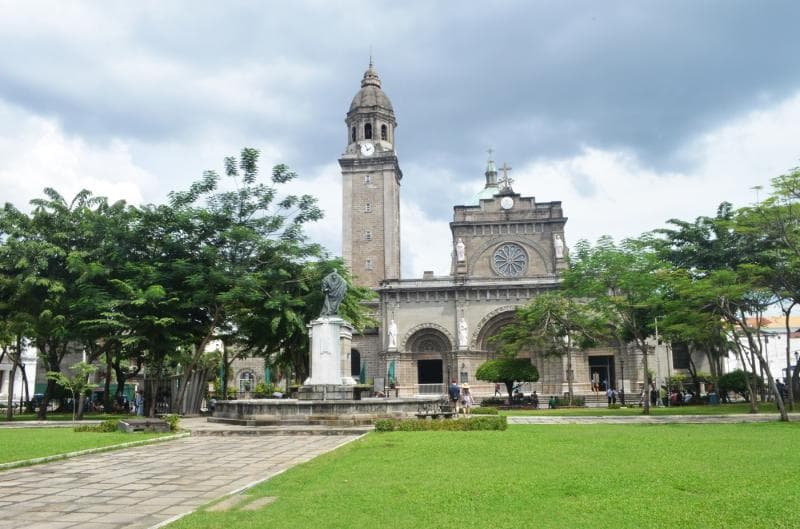
Explore Plaza Roma Viewpoints in Manila, Philippines, facing the historic Manila Cathedral. Discover centuries of history, culture, and architecture.
Overview
Step into the heart of Manila's historic walled city, Intramuros, and discover Plaza Roma Viewpoints, an iconic public square directly facing the majestic Manila Cathedral. This verdant plaza, officially known as Plaza de Roma, serves as a poignant gateway to centuries of Filipino-Spanish heritage, offering visitors a unique perspective on the city's layered past. It is more than just an open space; it is a historical canvas, where the architectural grandeur of the Manila Cathedral meets the echoes of colonial life, surrounded by other significant landmarks like the ruins of the Ayuntamiento and the Palacio del Gobernador.
From the peaceful benches of Plaza Roma, one can truly appreciate the intricate Neo-Romanesque facade of the Manila Cathedral, a testament to resilience and faith. The plaza itself, with its central monument, invites quiet contemplation, allowing travelers to immerse themselves in the rich historical tapestry that defines this central part of Manila.
History & Cultural Background
Plaza Roma's history is as rich and dynamic as the city it inhabits. Established in 1583, it was originally known as 'Plaza Mayor' during the Spanish colonial era, serving as the principal public square of Manila. This central hub was once a bustling venue for various public events, including bullfights, a vivid reminder of Spain's cultural influence. In 1797, Governor-General Rafael Maria de Aguilar transformed it into a more serene garden.
The plaza underwent several name changes, reflecting the shifting tides of power. During the American period, it was renamed Plaza McKinley in 1901, honoring U.S. President William McKinley. Its current name, Plaza de Roma, was adopted in 1961. This renaming was a gesture of honor to Rome and the College of Cardinals, following the elevation of Manila Archbishop Rufino Santos as the first Filipino cardinal. In a beautiful act of reciprocity, Rome named one of its own squares 'Piazzale Manila'.
Standing prominently at its center is the monument to King Charles IV of Spain, erected in 1824 to commemorate his role in sending the first smallpox vaccine to the Philippines. Interestingly, this monument was briefly replaced in the 1960s by one dedicated to the Gomburza (Fathers Gomez, Burgos, and Zamora), but King Charles IV's statue was re-installed in 1981 as part of Intramuros's broader restoration efforts.
The Manila Cathedral, which majestically anchors Plaza Roma, has its own remarkable story of resilience. The current structure is the eighth incarnation since its founding in 1571. It has risen 'phoenix-like' from destruction multiple times due to earthquakes, fires, and the devastation of World War II, with the present Neo-Romanesque design completed in 1958.
What Makes It Special
Plaza Roma Viewpoints is particularly special because it encapsulates centuries of Philippine history within a single frame. It is the veritable civic heart of Intramuros, serving as a silent witness to Spanish colonial rule, American governance, and the birth of the Philippine Republic.
The plaza's strategic position places it directly before the Manila Cathedral, allowing visitors to marvel at the cathedral's enduring beauty and significance. On its other sides stand the historical sites of the Ayuntamiento, the former seat of the city government, and the Palacio del Gobernador. This cluster of landmarks forms an unparalleled historical tableau, making it a focal point for understanding the country's colonial past and its deep religious roots. The architectural blend of European and Filipino influences visible here beautifully showcases Manila's rich heritage.
Stories, Fun Facts & Local Details
Imagine the spectacle of bullfights once held in Plaza Roma during the Spanish era, a vibrant glimpse into a bygone culture! The reciprocal naming of squares – Plaza Roma in Manila and Piazzale Manila in Rome – symbolizes a unique and lasting connection between the two cities. The bronze doors of the Manila Cathedral themselves are a fascinating read, depicting pivotal moments from its long and often tumultuous history.
A significant moment in the cathedral's recent history occurred in 1981 when Pope John Paul II, through his own initiative, elevated it to the status of a Minor Basilica, a rare distinction and a profound gift to the Filipino people. Within Plaza Roma, you'll also find the intriguing Book Stop Intramuros, an initiative that encourages reading and community interaction. Visiting on a Sunday can be a particularly lively experience, as the plaza comes alive with locals and tourists, featuring stalls selling local crafts and impromptu street performances, creating a vibrant cultural atmosphere.
Visitor Perspective
Approaching Plaza Roma Viewpoints offers a captivating experience, particularly when the sun casts a golden glow on the Manila Cathedral's facade in the early morning or late afternoon, perfect for photography. Admission to the Manila Cathedral is free, inviting everyone to step inside and appreciate its awe-inspiring interior, adorned with marble, intricate stained glass windows, and a majestic pipe organ.
When visiting the cathedral, it is respectful to wear modest clothing that covers your shoulders and knees, as it is an active place of worship. The plaza is easily accessible, whether by taxi, ride-hailing services, or a short jeepney ride from nearby LRT stations. Its central location within Intramuros makes it an ideal starting point for further exploration on foot, connecting seamlessly to other historical sites like Fort Santiago and San Agustin Church, allowing you to truly walk through history.
Coordinates: 120.97306, 14.59222
View on Google Maps💬 How Travelers Describe This Place
Based on community votes
Interesting
981Photogenic
617Beautiful
565Must See
157Unique
28
Traveler Stories
Discover memorable experiences shared by travelers who have visited this place.
No traveler stories yet.
Be the first traveler to share what made this place memorable.

Tour
By
Spot
Discover amazing places around the world. Your journey starts here.
Explore
© 2026 TourBySpot. All rights reserved.