Plaza Miranda
Manila, Philippines
Discover Plaza Miranda in Manila, Philippines – a historic square bustling with religious fervor, political significance, and vibrant local culture.
Overview
Nestled in the bustling heart of Quiapo, Manila, Plaza Miranda stands as a vibrant public square directly fronting the iconic Minor Basilica and National Shrine of Jesus Nazareno, more commonly known as Quiapo Church. This significant landmark, inaugurated in its current form in 1961 by Mayor Arsenio Lacson, is named after José Sandino y Miranda, who served as the Philippines' Secretary of the Treasury from 1833 to 1854. More than just a public space, Plaza Miranda is considered the pulsing center of Quiapo, an area rich in history, spirituality, and everyday Filipino life. Its granite-tiled expanse, spanning 5,358 square meters, is often a kaleidoscope of activities, from solemn religious gatherings to bustling market scenes.
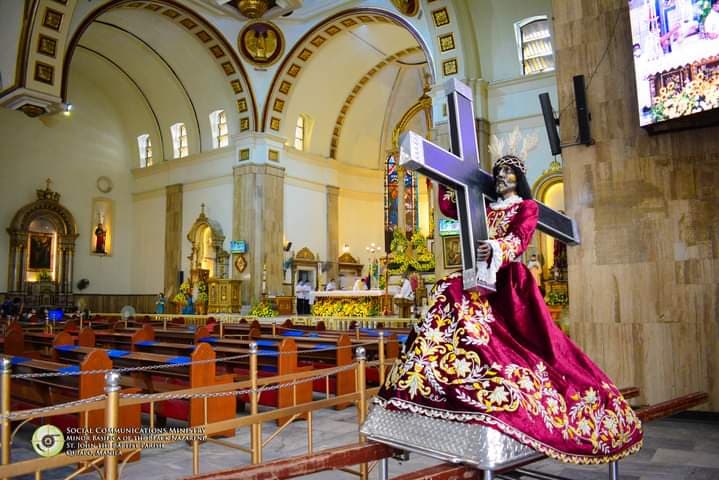
Quiapo Church itself is a beacon of faith, drawing millions of devotees to its doors. It houses the revered Black Nazarene, a dark, life-sized statue of Jesus Christ carrying the cross, believed by many to possess miraculous powers. The plaza serves as an extension of the church, especially during grand religious events, accommodating the overflow of worshippers. Together, Plaza Miranda and Quiapo Church offer a captivating glimpse into the Philippines' deep spiritual traditions and its complex socio-political narrative.
History & Cultural Background
The history of Quiapo Church dates back to 1588 when Franciscan missionaries established a modest structure of bamboo and nipa, dedicating it to the Sweetest Name of Jesus and Saint John the Baptist. Over centuries, the church proved its resilience, surviving numerous destructive fires, powerful earthquakes, and even wartime bombings, only to be rebuilt stronger each time. Its present Baroque-Neo-Classical design is largely attributed to the reconstruction efforts of National Artist Juan Nakpil in the 1930s, further enlarged in the 1980s by architects José María Zaragoza and engineer Eduardo Santiago. In 1988, Pope John Paul II elevated its status to a Minor Basilica, recognizing its profound spiritual significance.
Plaza Miranda carries its own profound historical weight. Before the imposition of martial law in 1972, it was widely regarded as the epicenter of Philippine political discourse, a stage for rallies, speeches, and public debates. Tragically, it was the site of the infamous 1971 Plaza Miranda bombing, an attack on a Liberal Party political rally that resulted in several fatalities and many injuries, an event that profoundly impacted the nation's political landscape. Following this, it became a focal point for protests against the looming martial law declaration, witnessing a massive rally in September 1972.
What Makes It Special
What truly sets Plaza Miranda apart is its unique blend of the sacred and the secular, the historical and the everyday. It is a place where fervent Catholic devotion converges with the vibrant, sometimes chaotic, energy of a traditional Filipino marketplace. The plaza acts as a spiritual overflow for Quiapo Church, especially during the hourly masses and the weekly Friday novenas, known as 'Quiapo Day,' when thousands of faithful gather, many of whom cannot be accommodated inside the basilica. During the annual Procession of the Black Nazarene on January 9th, Plaza Miranda becomes a crucial gathering point, often the site of the procession's grand finale, drawing millions of devotees.
Beyond its religious prominence, Plaza Miranda is a cultural melting pot. It's often dubbed Manila's 'Times Square' for its perpetual movement and diverse crowd. The plaza and its surrounding streets are renowned for fortune-tellers who, interestingly, often link their abilities to their devotion to the Black Nazarene. Here, visitors can find an array of lucky charms, amulets, and traditional herbal remedies, creating a fascinating tapestry where different beliefs and practices openly coexist.
Stories, Fun Facts & Local Details
One of the most compelling stories surrounding Quiapo Church is the miraculous survival of the Black Nazarene statue itself. Through centuries of fires, earthquakes, and wars, including the devastating 1945 bombing of Manila, the image has remained largely unharmed, a fact that has only deepened its reputation for miraculous powers and intensified the devotion of its followers. Legend has it that the dark complexion of the Nazarene image is not due to its original wood, but rather from being scorched in a fire aboard the galleon that brought it from Mexico in the 17th century.
Plaza Miranda, while deeply spiritual, also has its quirky side. It's a place where you might encounter street vendors hawking everything from pirated DVDs and China-made gadgets to unique religious artifacts and local crafts. The atmosphere is undeniably sensory-rich – the scent of incense, the murmur of prayers, the calls of vendors, and the vibrant colors of religious paraphernalia all blend into a unique Filipino experience. The plaza's modern renovation in 2000, which cost ₱49 million, introduced contemporary design elements, including a monument dedicated to the victims of the 1971 bombing, reflecting both its past tragedies and its enduring spirit.
Visitor Perspective
For any curious traveler, a visit to Plaza Miranda and Quiapo Church offers an authentic, immersive experience into Manila's soul. It's a place to witness profound faith in action, especially during the lively Friday novenas or the epic Black Nazarene procession, where millions participate in an overwhelming display of devotion. While bustling and sometimes crowded, the area exudes a unique charm and energy that genuinely reflects the city's spirit. Stepping into the plaza allows one to appreciate the intricate neo-Gothic architectural details that echo the grandeur of Quiapo Church.
Beyond religious observance, the plaza invites exploration of its surrounding markets, where you can find diverse goods and witness daily life unfold. It's an opportunity to connect with local culture, perhaps by observing a fortune-teller or browsing for unique souvenirs and traditional items. Plaza Miranda stands not just as a historical landmark but as a living, breathing testament to the Filipino people's resilience, faith, and vibrant community spirit. It's a place that engages all senses and leaves a lasting impression on those who venture into its dynamic embrace.
Coordinates: 120.98361, 14.59806
View on Google Maps💬 How Travelers Describe This Place
Based on community votes
Unique
958Beautiful
794Must See
571Photogenic
565Interesting
157
Traveler Stories
Discover memorable experiences shared by travelers who have visited this place.
No traveler stories yet.
Be the first traveler to share what made this place memorable.

Tour
By
Spot
Discover amazing places around the world. Your journey starts here.
Explore
© 2026 TourBySpot. All rights reserved.