Playfair Monument
Edinburgh, United Kingdom
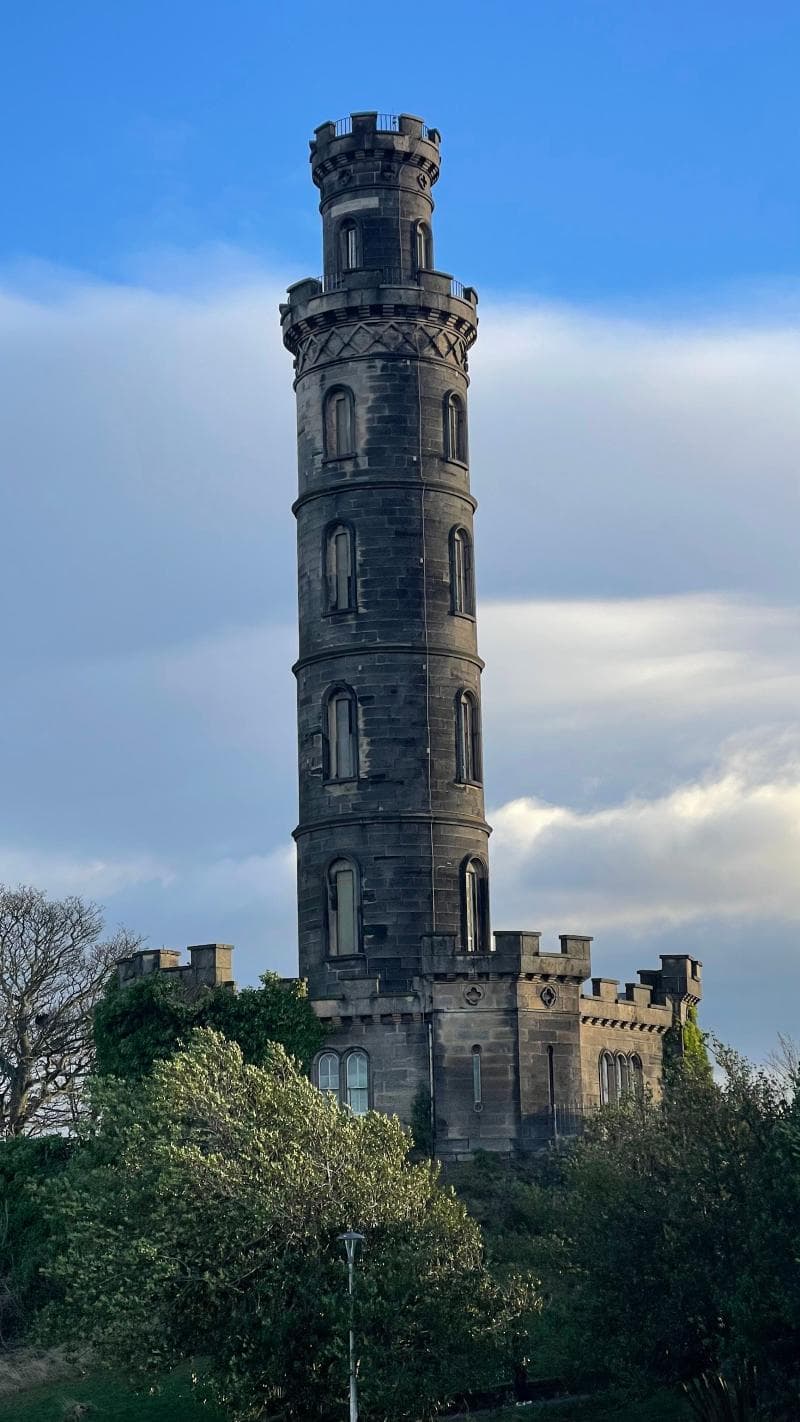
Explore the Playfair Monument on Calton Hill, Edinburgh, United Kingdom – a Greek Doric tribute to mathematician John Playfair and a highlight of the city's 'Athens of the North' heritage.
Overview
Perched majestically on Calton Hill in Edinburgh, United Kingdom, the Playfair Monument stands as a dignified tribute to one of Scotland's most brilliant minds. This elegant Greek Doric memorial honors Professor John Playfair, an eminent mathematician and natural philosopher whose contributions significantly shaped the Scottish Enlightenment. Designed by his talented nephew, William Henry Playfair, the monument is a subtle yet powerful presence amidst Calton Hill's collection of neoclassical structures, which collectively earned Edinburgh its celebrated moniker, 'The Athens of the North'.
As you ascend Calton Hill, a UNESCO World Heritage Site, the monument's polished ashlar gleams, inviting contemplation of the intellectual legacy it represents. It forms an integral part of the City Observatory complex, subtly marking the achievements of a man deeply connected to the scientific advancements of his era. Though smaller than some of its more flamboyant neighbors, the Playfair Monument holds a unique charm and historical depth, offering visitors a moment of quiet reflection amidst the panoramic vistas of Scotland's capital.
History & Cultural Background
The story of the Playfair Monument is intrinsically linked to two remarkable men and the intellectual ferment of 18th and 19th-century Edinburgh. Professor John Playfair (1748-1819) was a towering figure of the Scottish Enlightenment, holding esteemed positions as Professor of Mathematics and later Natural Philosophy at Edinburgh University. His intellect extended beyond academia; he was also the first President of the Astronomical Society, making profound contributions to both geology and astronomy.
Following John Playfair's passing, the desire to commemorate his significant impact led to proposals for a monument in 1822. It was fitting that the design was entrusted to his nephew, William Henry Playfair (1790-1857). William Henry Playfair himself would become one of Scotland's most distinguished architects, leaving an indelible mark on Edinburgh's cityscape with iconic designs such as the National Monument and the Dugald Stewart Monument, both also on Calton Hill. The monument to his uncle was constructed between 1825 and 1826, strategically placed at the southeast corner of the observatory compound wall on Calton Hill – a location that subtly underscored John Playfair's profound connection to the astronomical sciences.
What Makes It Special
The Playfair Monument distinguishes itself through its architectural purity and symbolic resonance. Crafted in the Greek Doric style, its square-plan features a robust base plinth, a stately podium, and a tetrastyle blind colonnade of fluted columns. An entablature adorned with metopes featuring laurel wreaths and a pyramidal stone roof complete its refined classical aesthetic. This elegant design is a testament to William Henry Playfair's mastery of the Greek Revival style, a characteristic feature of Edinburgh's 'New Town' and Calton Hill.
What truly sets it apart is its dedication to intellectual achievement rather than military or political heroism, contrasting with some of the other prominent memorials on Calton Hill. Its placement at the heart of the City Observatory grounds isn't accidental; it symbolically represents John Playfair's foundational role in the development of the observatory and his enduring legacy in the sciences. While it may be the smallest of Calton Hill's monuments, its architectural quality and profound dedication make it a poignant and special landmark.
Stories, Fun Facts & Local Details
One of the most touching aspects of the Playfair Monument's story is the familial connection at its core. William Henry Playfair, the renowned architect, was not just a colleague but the orphaned nephew whom John Playfair had adopted. This deeply personal bond between the subject and the designer infuses the monument with an added layer of meaning, a tribute born of both respect and affection.
The monument's south elevation features a Latin inscription: 'Joanni Playfair Amicorum Pietas, Desideriis Icta Fidelibus, Quo Ipse Loco Templum Uranaie Suae, Olim Dicaverat, Hoc Monumentum, Posuit MDCCCXXVI, Nat VI IDUS MART MDCCXLVIII, Obit XIV KAL SEXTIL MDCCCXIX'. This translates approximately to: 'To John Playfair, the piety of his friends, struck by faithful longings, placed this monument in 1826, in the very spot where he had formerly dedicated his Temple of Urania. Born 10th March 1748, Died 19th July 1819.' This inscription provides a direct link to Playfair's astronomical pursuits and the dedication of his peers.
Furthermore, the monument's strategic position at the southeast corner of the City Observatory is said to be symbolic, literally representing John Playfair's role as a 'cornerstone' in the observatory's development – a charming detail that highlights his intellectual prowess and lasting influence.
Visitor Perspective
Visiting the Playfair Monument offers more than just a historical encounter; it is an experience woven into the broader tapestry of Calton Hill. The ascent to the hill itself is a rewarding journey, providing increasingly breathtaking panoramic views of Edinburgh's iconic skyline, from Edinburgh Castle to Arthur's Seat and across the Firth of Forth.
As you approach the monument, you'll find it nestled within the elegant cluster of Calton Hill's neoclassical wonders. Take a moment to appreciate its refined details, the precision of its Greek Doric columns, and the quiet reverence it inspires. It's a place to ponder the intellectual giants who shaped Scotland's capital and contributed to its reputation as a beacon of learning. Standing by the Playfair Monument, one can easily imagine the intellectual discussions that once echoed across this very spot, making it a truly enriching stop for any curious traveler exploring Edinburgh's rich history and architectural grandeur.
Coordinates: -3.183056, 55.954799
View on Google Maps💬 How Travelers Describe This Place
Based on community votes
Must See
873Photogenic
521Unique
477Beautiful
422Interesting
157
Traveler Stories
Discover memorable experiences shared by travelers who have visited this place.
No traveler stories yet.
Be the first traveler to share what made this place memorable.

Tour
By
Spot
Discover amazing places around the world. Your journey starts here.
Explore
© 2026 TourBySpot. All rights reserved.