Place Masséna
Nice, France
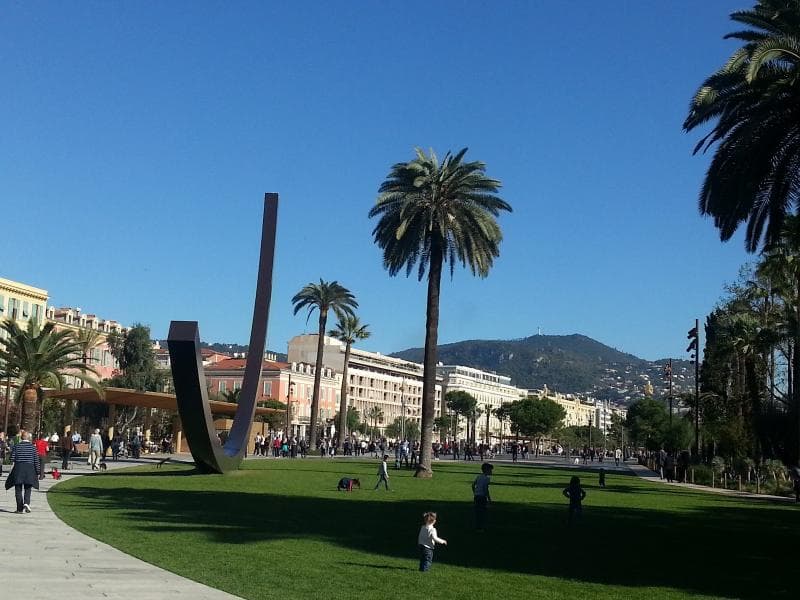
Explore Place Masséna in Nice, France – the vibrant main square connecting Old Town with modern districts, featuring unique red architecture, Apollo fountain, and illuminated 'Conversation in Nice' sculptures.
Overview
Place Masséna, often hailed as the true heart of Nice, France, is a magnificent public square that seamlessly connects the city's charming Old Town with its more modern districts. It is an iconic and indispensable stop for any traveler exploring the French Riviera. The square's distinctive aesthetic is immediately striking, characterized by its vibrant red and ochre buildings, elegant arcades, and a striking black and white tiled pavement that creates a captivating visual contrast. More than just a beautiful space, Place Masséna serves as a bustling hub for transport, social gatherings, and major city events throughout the year.
Flanked by the lush green expanse of the Promenade du Paillon and leading towards the famous Promenade des Anglais, the square offers a perfect blend of urban dynamism and serene natural beauty. Visitors are drawn to its unique blend of historical grandeur and contemporary artistic installations, making it a focal point for both locals and tourists seeking to soak in the vibrant atmosphere of Nice.
History & Cultural Background
The history of Place Masséna dates back to the early 19th century, with its construction commencing between the 1820s and 1830s. Originally, the area comprised two distinct squares separated by the Paillon River, which was eventually covered over in 1883 to unify the space. The square gained its enduring name in honor of André Masséna, a native of Nice who rose to prominence as a Marshal of France during the French Revolution and Napoleonic Wars.
The final architectural vision for Place Masséna was approved in 1843, brought to life by the Turin-based architect Joseph Vernier, also known as Giuseppe Vernier. Vernier's design established the square's characteristic Italianate porticos and consistent architectural style, with buildings featuring deep red brick made from Pompeii stone, reflecting the architectural influences of the Italian Riviera and Savoy. This rich heritage underscores Nice's historical ties to the Kingdom of Piedmont-Sardinia before it became part of France in 1860, a past still visible in the city's elegant neoclassical buildings.
What Makes It Special
Place Masséna stands out for its captivating visual harmony and the thoughtful integration of art into its public space. The square's iconic red and ochre buildings, with their classical arcades, create a warm and inviting backdrop that feels distinctly Mediterranean. The large, checkerboard-style black and white tiled ground adds a playful yet sophisticated touch, making it a favorite for photographers and an interesting detail for passersby.
At its southern end, the square features the magnificent Fontaine du Soleil, or Fountain of the Sun. This monumental fountain is crowned by a seven-meter-tall white marble statue of Apollo, the Greek god of sun and light, surrounded by five bronze statues representing celestial bodies like Earth, Mars, Venus, Saturn, and Mercury. Overlooking the square are the unique contemporary art installations by Catalan artist Jaume Plensa, titled 'Conversation in Nice'. These consist of seven kneeling figures perched high on poles, symbolizing the seven continents engaging in dialogue. At night, these sculptures are beautifully illuminated, softly changing colors and creating a magical, ethereal glow.
Stories, Fun Facts & Local Details
One of the most talked-about elements of Place Masséna's history involves the Apollo statue in the Fontaine du Soleil. When first unveiled in 1956, the statue's nude form and particularly the sculptor's anatomical interpretation caused significant public outcry and even scandal among some residents of Nice. This controversy led to the statue's temporary removal and modification, including the 'downsizing' of the offending part, before its triumphant return in 2011 after a period of exile.
The seven illuminated figures by Jaume Plensa, installed in 2007, are often mistakenly thought to represent Buddhist monks. However, the artist intended them to evoke ancient scribes, symbolizing communication and the interconnectedness of global communities. The square's strategic location also means it's a constant hub of activity. It hosts significant events such as the Nice Carnival parades, the Christmas market, the Nice Jazz Festival, and the Bastille Day military procession, transforming the square into a vibrant stage for celebration and community spirit.
Visitor Perspective
For visitors, Place Masséna is more than just a landmark; it's a vibrant central point from which to experience Nice. It's an excellent starting point for exploring both the labyrinthine streets of Old Nice and the upscale shops along Avenue Jean Medecin. The square is largely pedestrianized, offering a relaxed environment for a leisurely stroll or finding a bench to people-watch.
Adjacent to the square is the Promenade du Paillon, a sprawling green park built atop the covered river, featuring playful water jets and lush gardens, ideal for families and a refreshing break from the city bustle. Whether basking in the Mediterranean sun by day, admiring the illuminated sculptures at night, or simply enjoying a coffee under the arcades, Place Masséna offers a memorable and authentic slice of Niçois life, making it a truly unmissable experience.
Coordinates: 7.27026, 43.69705
View on Google Maps💬 How Travelers Describe This Place
Based on community votes
Photogenic
951Unique
748Beautiful
499Interesting
427Must See
94
Traveler Stories
Discover memorable experiences shared by travelers who have visited this place.
No traveler stories yet.
Be the first traveler to share what made this place memorable.
Things to see at Place Masséna



Tour
By
Spot
Discover amazing places around the world. Your journey starts here.
Explore
© 2026 TourBySpot. All rights reserved.