Place De La Croix-Rousse
Lyon, France
Discover Place de la Croix-Rousse in Lyon, France, the vibrant heart of the historic Croix-Rousse district. Explore its famous market, learn about the Canuts silk workers, and experience local life on the 'hill that works'.
Overview
Place de la Croix-Rousse is a significant and vibrant square situated within the heart of the larger Croix-Rousse district in Lyon, France. This prominent public space acts as a central hub, known for its lively atmosphere and its historical connections. The square itself is notably divided into two distinct parts, one of which borders the eponymous boulevard. Today, it serves as a gathering place for local events and is particularly famous for its bustling outdoor market, which runs several days a week. As a sub-spot within the UNESCO-listed Croix-Rousse district, the square embodies the area's rich past and its enduring community spirit.
History & Cultural Background
The name 'La Croix-Rousse', meaning 'the russet cross', originates from a reddish-brown stone cross erected on the hill in the 16th century. This historic district became the epicenter of Lyon's silk industry in the 18th century, drawing silk workers, known as 'Canuts', from other parts of the city. The Croix-Rousse earned the nickname 'the hill that works' (la colline qui travaille), a stark contrast to Fourvière, known as 'the hill that prays' (la colline qui prie), reflecting its industrious character. The district's unique urban landscape was shaped by the needs of the silk trade, with buildings constructed to accommodate the large Jacquard looms.
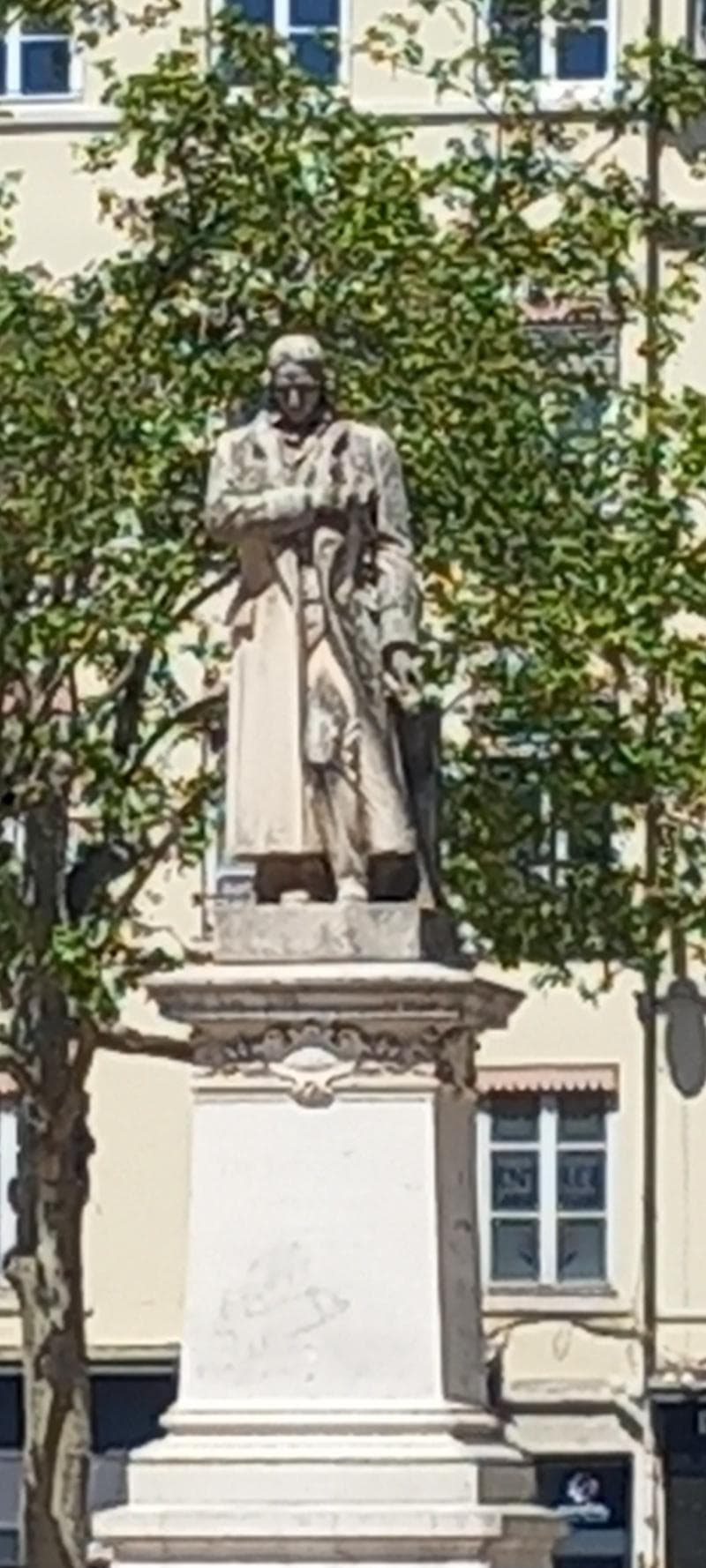
A central feature of Place de la Croix-Rousse is the statue of Joseph Marie Jacquard, the renowned French inventor of the semi-automatic loom in 1801. This invention revolutionized the textile industry and is a testament to Lyon's silk-making legacy. The original bronze statue honoring Jacquard was inaugurated in 1840, later moved to Place de la Croix-Rousse in 1898 (or 1901 by another source), melted down in 1942 during wartime, and eventually replaced with the current stone statue in 1947. Until 1852, the boulevard adjacent to the square marked the city limits of Lyon, and it now forms the northern boundary of the UNESCO World Heritage sector. The district also played a significant role in social history, being the site of the Canut revolts in the 1830s, some of the earliest worker uprisings.
What Makes It Special
The most distinctive feature of Place de la Croix-Rousse is undoubtedly its bustling outdoor market, the Marché de la Croix-Rousse. This extensive market, often stretching for nearly a kilometer along the boulevard, is a vibrant showcase of local produce, flowers, and various goods. It's a place where you can find everything from fresh fruits, vegetables, and cheeses to meats, fish, and baked goods, often sourced directly from surrounding farms. On Saturdays, a dedicated section offers organic produce, catering to a loyal clientele.
The statue of Joseph Marie Jacquard stands proudly in the middle of the square, serving as a powerful symbol of the district's industrial heritage and the ingenuity that shaped it. Beyond its historical significance, the square continues to be a vibrant center for the community, hosting events and offering a snapshot of authentic Lyonnaise life. The overall Croix-Rousse district itself is often described as having a unique 'village' atmosphere, fostering a strong sense of local identity and a bohemian spirit.
Stories, Fun Facts & Local Details
The legacy of the Canuts profoundly influences the architecture of Croix-Rousse. Their apartments, designed to accommodate the towering silk looms, featured notably high ceilings, sometimes reaching four to five meters, and large windows to maximize light for weaving. These distinctive buildings are still a hallmark of the district today. Another fascinating local detail, closely associated with the broader Croix-Rousse area, is the 'Gros Caillou' (Big Pebble). This large, unusually shaped stone, extracted during the construction of the Croix-Rousse funicular in 1862, is considered a symbol of the neighborhood and offers panoramic views from its location on the eastern extension of Boulevard de la Croix-Rousse.
The market itself is a living piece of local culture, where vendors often use colorful Lyonnaise expressions, and it's a prime spot to hear the local accent. On Tuesdays, the market expands to include a 'manufactured products market' on the opposite side of the boulevard, offering clothing, fabrics, household items, and more. The sheer variety and the strong emphasis on local producers make it a culinary adventure for visitors and a cherished institution for residents. The district's bohemian and artistic vibe is further enhanced by street art and murals found throughout, including the famous Mur des Canuts, one of Europe's largest trompe l'oeil frescoes, depicting everyday scenes of the neighborhood.
Visitor Perspective
For any curious traveler, a visit to Place de la Croix-Rousse offers a genuine immersion into the everyday life and rich history of Lyon. Starting your exploration at the market on Place de la Croix-Rousse is an excellent way to experience the local culture, engage with vendors, and sample regional delicacies. After browsing the stalls, many locals and visitors alike enjoy relaxing at one of the numerous cafes along the boulevard, soaking in the vibrant atmosphere. The district, with its unique character, combines historical depth with a lively, bohemian spirit, offering a refreshing contrast to some of Lyon's more traditional areas. The sense of a 'village within the city' is palpable, making it an authentic and welcoming place to explore. While the immediate square offers historical landmarks like the Jacquard statue, the surrounding plateau of Croix-Rousse is also known for offering impressive views over the city of Lyon and the Rhône-Alpes region.
Coordinates: 4.83199, 45.77483
View on Google Maps💬 How Travelers Describe This Place
Based on community votes
Photogenic
998Must See
685Unique
472Beautiful
399Interesting
92
Traveler Stories
Discover memorable experiences shared by travelers who have visited this place.
No traveler stories yet.
Be the first traveler to share what made this place memorable.

Tour
By
Spot
Discover amazing places around the world. Your journey starts here.
Explore
© 2026 TourBySpot. All rights reserved.