Pipe Organ
Manila, Philippines
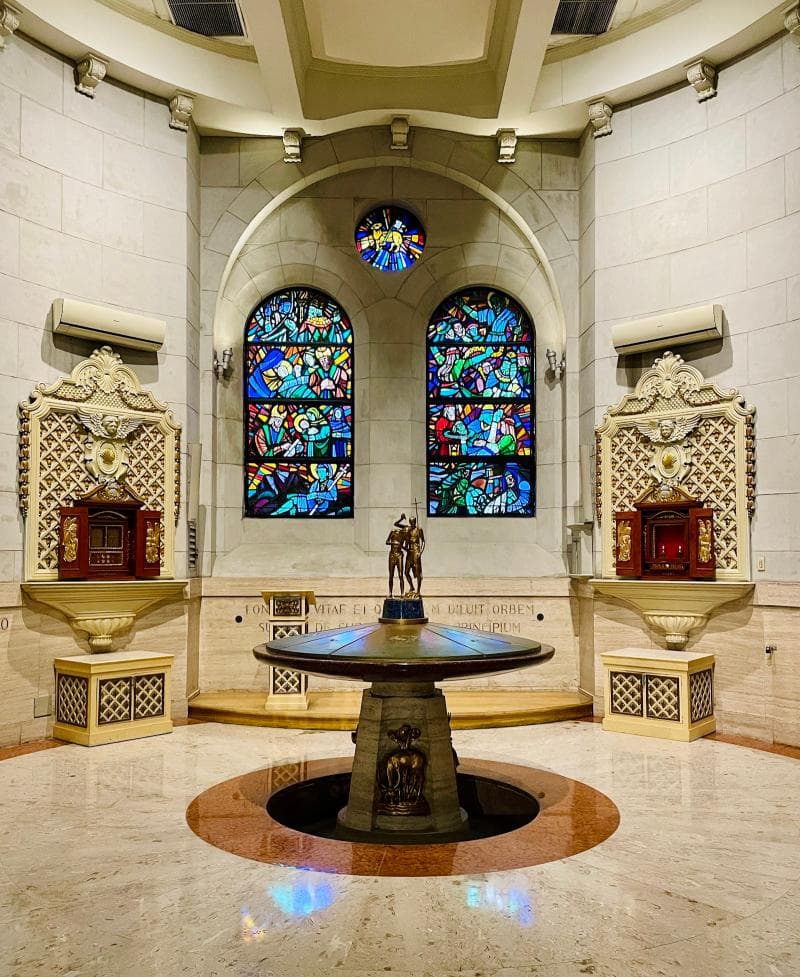
Discover the majestic Pipe Organ of Manila Cathedral in Manila, Philippines – the largest in Southeast Asia. Explore its rich history, intricate design, and powerful sound.
Overview
Nestled within the venerable walls of the Manila Cathedral, officially known as the Minor Basilica and Metropolitan Cathedral of the Immaculate Conception, lies a majestic treasure often overlooked: its grand Pipe Organ. This instrument is not merely a musical fixture but a significant historical and cultural artifact, recognized as the largest pipe organ in the Philippines and arguably the largest church organ in Southeast Asia. Its powerful voice resonates throughout the cathedral's sacred space, enriching liturgical celebrations and captivating audiences during special concerts. The organ's impressive stature and intricate design reflect centuries of musical tradition and the enduring spiritual heart of Manila.
History & Cultural Background
The history of the pipe organ within the Manila Cathedral is as tumultuous and resilient as the cathedral itself, which has seen numerous destructions and rebuilds since its founding in 1571. The very first pipe organ, a portable box organ, arrived with Bishop Domingo de Salazar in 1581 but tragically succumbed to a devastating fire in 1583 that engulfed much of old Manila. Over the centuries, subsequent organs were likely installed, only to be damaged or destroyed by the frequent earthquakes and other calamities that plagued the city.
A notable instrument was constructed in 1913 by the renowned French firm Cavaillé-Coll, a testament to the cathedral's commitment to musical excellence. However, this magnificent organ, like the cathedral itself, was tragically destroyed during the Liberation of Manila in World War II. The current pipe organ, a symbol of post-war reconstruction and rebirth, was meticulously built in 1958 by the Dutch organ-building company Pels & Zoon. Its installation was spearheaded by the efforts of figures like the late Cardinal Santos.
The organ has undergone significant restoration work to maintain its grandeur and ensure its longevity. A major overhaul was completed in 2006 by the esteemed Diego Cera Organ Builders. More recently, a substantial restoration was undertaken in 2025, which saw the addition of 862 new pipes and the installation of a brand-new, customized Monarke Cavaillé-Coll pipe organ console from Dutch builder Johannus Organ. This latest upgrade increased its total pipe count to 6,446, further solidifying its status as a monumental instrument.
What Makes It Special
What truly sets the Manila Cathedral's Pipe Organ apart is its sheer scale and the profound richness of its sound. Boasting 6,446 pipes, four manuals, and pedals, it offers a vast tonal palette capable of producing a breathtaking array of sounds that fill the cathedral's acoustically resonant interior. Its immense size makes it not only the largest in the country but also a significant instrument on the Southeast Asian stage.
The 2025 restoration introduced fascinating new 'toy stops' such as the Zimbelstern, a revolving star adorned with small bells, and Pajaritos, a unique water-effect mechanism creating bird-like chirping sounds, particularly inspired by traditional Spanish and Iberian organs. These additions infuse the organ's repertoire with whimsical and historically rich soundscapes. The new console, inspired by the legendary Cavaillé-Coll, further enhances the organist's control and the instrument's expressive capabilities, allowing for truly majestic performances.
Stories, Fun Facts & Local Details
From its earliest days, the Manila Cathedral has had a deep connection with sacred music. Records show that a 'Colegio de Tiples' or choir school was established as early as 1582 to provide for the cathedral's musical needs, a testament to a long-standing tradition of nurturing church musicians. The role of 'Chantre' (Master of Music) and formally named organists dates back to 1581, with Simon Ambrosio being recognized as an organist in 1724.
The current organ's inaugural concert in 1958 was performed by the world-renowned Belgian organist Flor Peeters, marking a significant moment in the cathedral's musical history. Since then, its powerful pipes have accompanied numerous solemn liturgical events, including the historic Papal Visits of Pope Paul VI, Pope John Paul II, and Pope Francis, resonating with spiritual significance for millions. The choir loft, where the organ resides above the main entrance, is adorned with stained-glass windows depicting King David with his harp and Saint Cecilia at the organ, symbolizing the ancient and profound traditions of sacred music.
Visitor Perspective
For travelers exploring the historic Intramuros district, a visit to the Manila Cathedral offers a profound encounter with faith, history, and art. While the pipe organ is typically situated in the choir loft and not directly accessible to visitors, its presence is felt and heard throughout the basilica. Attending a mass or a special concert provides the best opportunity to experience the full, resonant glory of its sound, which enhances the cathedral's already impressive acoustics. The organ's music adds an emotional layer to the spiritual atmosphere, creating a truly memorable experience. Visitors are encouraged to check the cathedral's schedule for mass times or potential organ recitals to fully appreciate this magnificent instrument. There is no entrance fee to the Manila Cathedral, but donations are welcomed for its upkeep and preservation.
Coordinates: 120.9736, 14.5915
View on Google Maps💬 How Travelers Describe This Place
Based on community votes
Beautiful
934Must See
741Unique
276Interesting
30Photogenic
16
Traveler Stories
Discover memorable experiences shared by travelers who have visited this place.
No traveler stories yet.
Be the first traveler to share what made this place memorable.

Tour
By
Spot
Discover amazing places around the world. Your journey starts here.
Explore
© 2026 TourBySpot. All rights reserved.