Pink Parliament Building
Tallinn, Estonia
Overview
Perched atop the historic Toompea Hill in Tallinn, Estonia, lies Toompea Castle, a majestic landmark whose pink Baroque facade is often referred to informally as the 'Pink Parliament Building.' This striking edifice, with its vibrant hue, instantly captures attention against the backdrop of Tallinn's medieval Old Town. While the pink exterior is a defining characteristic of the castle's administrative wing, the actual Estonian Parliament, known as the Riigikogu, is housed within a distinct, more modern structure nestled inside the castle's courtyard. Together, these elements form a complex tapestry of architectural styles, representing centuries of Estonian history and governance.
The castle today serves as the active seat of the Estonian Parliament, making it a unique example of a medieval fortress that continues to function as a governmental center. Visitors can admire the Baroque elegance of the pink facade from Lossi plats (Castle Square) and delve into the layered history of the site, where Danish, Swedish, and Russian influences have each left an indelible mark.
History & Cultural Background
The history of Toompea Castle is a chronicle of Estonia itself, spanning over 800 years as a center of power. The earliest recorded structures on Toompea Hill date back to the 9th century, starting as a wooden stronghold. By the 13th century, a stone castle was established by the German Knights of the Sword.
The iconic pink facade, the part often called the 'Pink Parliament Building,' was added much later, between 1767 and 1773. This Baroque and early Classicist wing was commissioned by order of Catherine the Great of Russia. Its purpose was to serve as an elegant palace for the Governorate of Estonia, designed to project imperial grandeur rather than military might, a stark contrast to the rough medieval stone of the earlier fortress. The choice of soft colors like pink for administrative buildings was common in Russian imperial architecture of that period.
Following Estonia's declaration of independence in 1918, a new and dedicated parliament building, the Riigikogu, was constructed between 1920 and 1922 within the castle's courtyard. This modern addition was built on the foundations of a medieval convent building that had been destroyed in 1917.
What Makes It Special
What truly sets the 'Pink Parliament Building' and the larger Toompea Castle complex apart is the remarkable architectural juxtaposition it presents. The striking pink Baroque facade, with its stately and symmetrical design, is an 18th-century overlay on a foundation dating back to the Middle Ages. It serves as the primary entrance to Estonia's Parliament, leading visitors into a complex that reveals layers of history.
Inside the courtyard, a completely different architectural marvel awaits: the Riigikogu building. Designed by architects Eugen Habermann and Herbert Johanson, this is the world's only Expressionist parliament building. Its interior boasts an unconventional palette of lemon yellow, rust brown, and electric blue, adorned with zig-zagging motifs and sharp geometric angles. This deliberate choice of style, initially met with criticism, makes the Riigikogu a globally unique example of 1920s Expressionist architecture applied to a governmental structure.
The complex also features the Tall Hermann Tower, a medieval watchtower proudly flying the Estonian flag, symbolizing the nation's independence.
Stories, Fun Facts & Local Details
One charming local legend suggests that Toompea Hill itself was built by Linda, the mythical mother of the Estonian epic hero Kalevipoeg, who painstakingly carried boulders to form the hill. This tale imbues the very ground on which the parliament stands with deep cultural significance.
The decision to build the ornate pink Baroque palace is also linked to an interesting anecdote involving Catherine the Great. Legend has it that after she fell ill due to a cold room in Kadriorg Palace, she decided a more modern and magnificent building was needed at Toompea for the provincial administration. This led to the construction of the pink facade we see today.
Furthermore, Estonia holds the distinction of being the first new state established after World War I to specifically commission and construct a dedicated parliament building. The Riigikogu building was also pioneering in Estonia for being the first public structure designed with electric power and integrated lighting solutions.
Visitor Perspective
Visiting the 'Pink Parliament Building' and Toompea Castle offers a fascinating journey through Estonian history and politics. While the exterior of the pink Baroque facade and the castle grounds are freely accessible, gaining entry to the Riigikogu interior requires booking a free guided tour in advance. These tours, often available in English, provide insights into the castle's history and the workings of the Estonian Parliament.
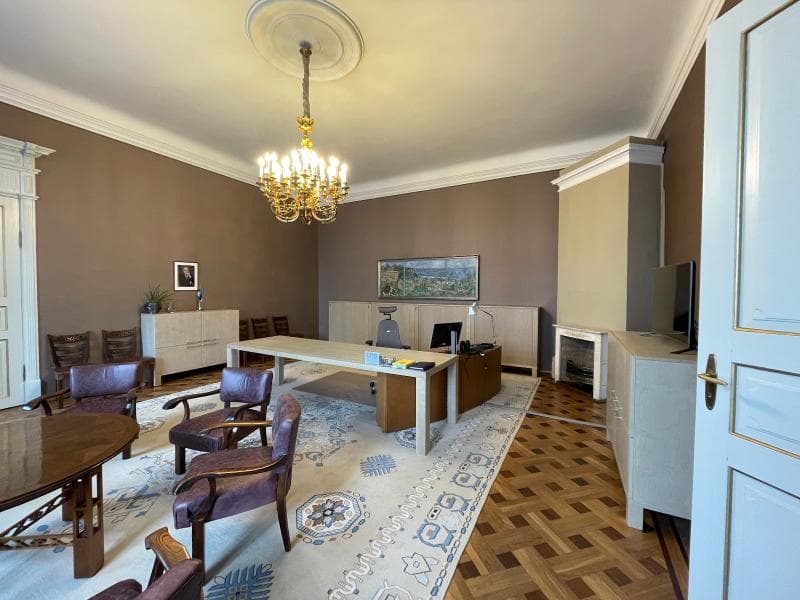
During a tour, visitors might see the Session Hall where laws are passed and witness the blend of historical and Expressionist architectural elements. It's important to remember that as an active government building, security is strict, requiring valid photo identification for entry. Even without an interior tour, simply walking around Lossi plats and the Governor's Garden allows for appreciation of the pink facade, the Tall Hermann Tower, and the panoramic views over Tallinn's UNESCO-listed Old Town.
Coordinates: 24.737029, 59.435732
View on Google Maps💬 How Travelers Describe This Place
Based on community votes
Interesting
551Unique
547Beautiful
336Photogenic
298Must See
219
Traveler Stories
Discover memorable experiences shared by travelers who have visited this place.
No traveler stories yet.
Be the first traveler to share what made this place memorable.

Tour
By
Spot
Discover amazing places around the world. Your journey starts here.
Explore
© 2026 TourBySpot. All rights reserved.