Pinecone Courtyard
Rome, Italy
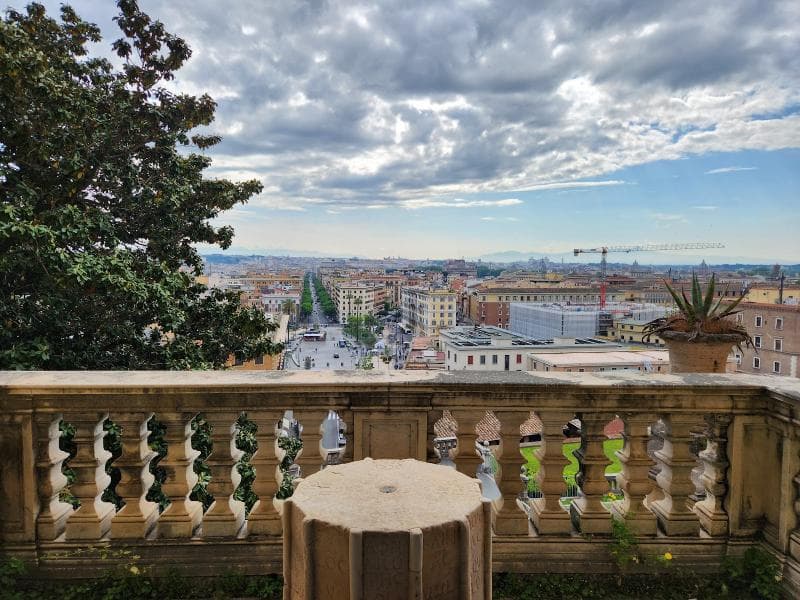
Discover the Pinecone Courtyard (Cortile della Pigna) in the Vatican Museums, Rome, Italy. Explore its ancient artifacts, Renaissance architecture, and modern art.
Overview
The Pinecone Courtyard, known in Italian as Cortile della Pigna, is a magnificent open-air space nestled within the vast Vatican Museums complex in Rome, Italy. This grand courtyard serves as a captivating introduction for many visitors on their journey toward the Sistine Chapel. Its name is derived from the colossal ancient Roman bronze pinecone sculpture that stands prominently in a niche at its northern end. The courtyard beautifully bridges centuries of artistic expression, showcasing a remarkable blend of ancient artifacts and modern sculpture, all set against a backdrop of Renaissance architecture.
As a key feature of the Vatican Museums, the Pinecone Courtyard is not merely a transitional space but a destination in itself, inviting travelers to pause and explore its unique collection of art. It features the impressive bronze pinecone, two elegant bronze peacocks, a monumental bust of Emperor Augustus, and a striking contemporary sculpture titled 'Sphere Within Sphere' by Arnaldo Pomodoro.
History & Cultural Background
The Pinecone Courtyard’s origins are deeply intertwined with the development of the Vatican Palace and Museums. It was originally part of the expansive Belvedere Courtyard, an ambitious Renaissance project conceived by Pope Julius II and designed by the renowned architect Donato Bramante between 1504 and 1514. Before its transformation, the courtyard was part of the Papal Palace, with initial construction dating back to Pope Nicholas III in 1277.
The centerpiece, the bronze pinecone, is an artifact of immense historical significance, dating back to the 1st or 2nd century AD. It is widely believed to have once served as a decorative fountain in the ancient Baths of Agrippa in Rome. During the Middle Ages, it was moved to adorn the forecourt of Old St. Peter's Basilica before finding its current home in the Cortile della Pigna in 1608, atop a double-ramp staircase attributed to Michelangelo. The two bronze peacocks flanking the pinecone are copies of originals from Emperor Hadrian's villa in Tivoli. The modern 'Sphere Within Sphere' sculpture, created by Arnaldo Pomodoro between 1979 and 1980 and donated in 1990, represents the Vatican Museum’s commitment to integrating contemporary art into its historical tapestry.
What Makes It Special
The Pinecone Courtyard is special for its extraordinary juxtaposition of ancient Roman heritage with modern artistic vision. The colossal bronze pinecone, standing approximately four meters tall, immediately captures attention not just for its size but for its profound symbolism of immortality, rebirth, fertility, and abundance in both ancient Roman and Christian contexts.
The courtyard's design, attributed to Bramante, creates a harmonious environment where the old and new engage in a compelling dialogue. Arnaldo Pomodoro's 'Sphere Within Sphere' with its intricate internal mechanisms and polished exterior, offers a striking contrast to the time-worn pinecone, symbolizing the complex relationship between the religious world and the contemporary one. This space is a testament to the Vatican Museums’ role as a custodian of diverse artistic narratives across millennia.
Stories, Fun Facts & Local Details
One of the most captivating tales associated with the pinecone is its mention by Dante Alighieri in Canto XXXI of his 'Inferno' from 'The Divine Comedy.' Dante, impressed by its massive size when it stood near St. Peter’s Basilica, described a giant’s face as ‘long and big as the pine cone at St. Peter Basilica in Rome.’ These very words are now carved into the base where the pinecone rests.
Historically, the ancient pinecone was a functional fountain, its 'petals' or 'scales' once having holes through which water flowed. The Egyptian lions at its base are remnants from the world's first Egyptian museum, once owned by the Pope. Intriguingly, before it became a public space, the courtyard hosted various papal events; Pope Alexander VI, for instance, organized bullfights here, and Pope Leo X famously housed his pet elephant, Hanno, within its confines. The large bust of Emperor Augustus displayed in the courtyard is another curious detail, as it portrays him with a perpetually youthful appearance, a propaganda choice despite his advanced age.
Visitor Perspective
For visitors to the Vatican Museums, the Pinecone Courtyard offers a memorable moment of transition and reflection. It is often one of the first significant outdoor areas encountered after entering the museum, providing a spacious and visually rich environment. Many tour groups utilize this courtyard to provide essential context about the Sistine Chapel, as talking is not permitted inside the chapel itself. Despite the potential for crowds, the courtyard maintains a tranquil atmosphere, allowing for peaceful contemplation of its art and architecture.
Strolling through the Cortile della Pigna allows one to appreciate the intricate details of the ancient sculptures and the modern sphere, offering a unique blend of experiences. It serves as a perfect spot for a brief respite from the indoor galleries, a place where history and art enthusiasts can connect with centuries of cultural legacy in the heart of the Vatican.
Coordinates: 12.45459, 41.90579
View on Google Maps💬 How Travelers Describe This Place
Based on community votes
Must See
276Interesting
152Photogenic
33Beautiful
30Unique
16
Traveler Stories
Discover memorable experiences shared by travelers who have visited this place.
No traveler stories yet.
Be the first traveler to share what made this place memorable.

Tour
By
Spot
Discover amazing places around the world. Your journey starts here.
Explore
© 2026 TourBySpot. All rights reserved.