Pinacoteca
Milan, Italy
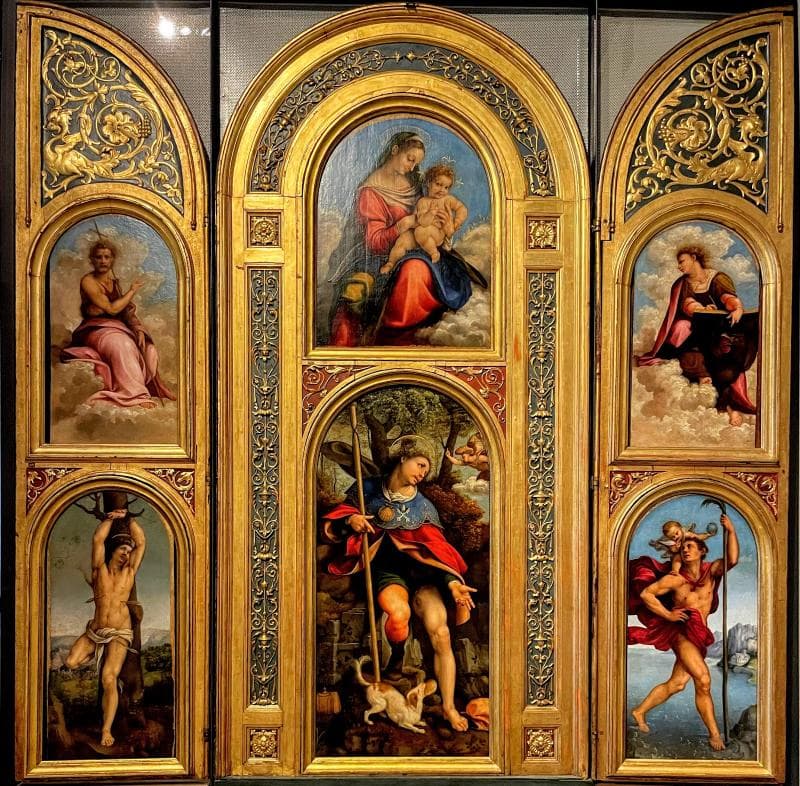
Explore the Pinacoteca at Castello Sforzesco in Milan, Italy. Discover centuries of Italian, Venetian, and Flemish art, from Mantegna to Canaletto.
Overview
Tucked within the magnificent Castello Sforzesco in Milan, Italy, the Pinacoteca serves as a captivating art gallery, offering visitors a profound journey through centuries of artistic expression. This esteemed institution is home to an extensive collection of paintings, primarily focusing on Italian art from the 15th to the 18th centuries, with significant contributions from Lombard, Venetian, and Flemish masters. While its complete inventory boasts over 1,500 artworks, approximately 230 masterpieces are thoughtfully displayed across several rooms on the castle's upper floor, providing a rich and insightful experience for art enthusiasts and curious travelers alike.
The Pinacoteca’s curated exhibition prioritizes Lombard painting from the mid-15th century right up to the dawn of Neoclassicism, showcasing the unique stylistic evolution of the region. Beyond its impressive canvases, the gallery also integrates other art forms, presenting carved wooden reliefs, marble statues, terracotta busts, and a selection of medals, enriching the narrative of artistic development and cultural interchange.
History & Cultural Background
The establishment of the Pinacoteca del Castello Sforzesco is rooted in a civic-minded endeavor to create a municipal art heritage for Milan. In the 19th century, with significant existing art collections in the city, prominent Milanese citizens initiated a series of generous donations and bequests to form a public collection.
Key early contributions came from testaments such as those of the Fogliani-Marchesi family in 1861, followed by Innocenzo and Gian Giacomo Attendolo Bolognini in 1863, and Antonio Guasconi between 1863 and 1865. This foundational period led to the official inauguration of the collection as the Museo Artistico Municipale in 1878, initially housed in the Salone dei Pubblici Giardini.
However, the growing collection soon necessitated a larger, more prestigious home. The Pinacoteca found its permanent residence within the historic Castello Sforzesco, opening its doors to the public in this grand setting on May 10, 1900. The Castello itself, originally built in the 14th century by the Visconti family and later extensively rebuilt by Francesco Sforza in the 15th century, evolved from a military fortress to a lavish ducal residence under Ludovico Sforza, attracting luminaries like Leonardo da Vinci and Bramante. Its subsequent restoration by Luca Beltrami in the late 19th century prepared it to become the cultural hub it is today, housing various civic museums, including the Pinacoteca.
What Makes It Special
What truly distinguishes the Pinacoteca is its profound focus on Lombard painting, offering an unparalleled insight into the artistic currents that shaped this vital region of Italy. The collection traces a comprehensive itinerary from the mid-15th century to the Neoclassical period, allowing visitors to appreciate the stylistic nuances and innovations of Lombard masters.
Among its most celebrated pieces are Andrea Mantegna's 'Trivulzio Madonna' from 1497 and Bronzino's 'Portrait of Lorenzo Lenzi', alongside significant works by other titans of art history such as Correggio, Tiziano, and Tintoretto. The Pinacoteca also proudly displays two notable groups of Venetian paintings and a select series of 17th-century Flemish-Dutch works, showcasing broader European artistic dialogues.
A particularly unique highlight is the 'camera picta', a series of frescoes depicting the 'Stories of Griselda' from around 1460, originally part of the Castello di Roccabianca in Parma. These frescoes offer a rare visual document of medieval storytelling and artistic technique, meticulously reconstructed within the Pinacoteca. The collection also features compelling works by the 'painters of the plague', offering a poignant artistic response to the devastating epidemic that struck Milan in 1630.
Stories, Fun Facts & Local Details
The Pinacoteca is more than just a collection of art; it is a repository of Milanese identity and history. Its very genesis as a municipal museum, built through the goodwill and donations of Milanese citizens, underscores its role as a mirror reflecting the city's artistic soul. Many of the works on display either originate from Milanese contexts or were once part of local private collections, such as the renowned Trivulzio Collection acquired by the city in 1935.
A fun fact connected to the broader Castello Sforzesco is the mythical 'biscione' coat of arms of the Visconti family, depicting a serpent swallowing a human being. This powerful symbol can be seen on the imposing tower at the castle's entrance, a reminder of the foundational dynasty that first built a fortress on this site. The castle's transformation from a military stronghold to a dazzling ducal court under Ludovico Sforza, who invited Leonardo da Vinci and Bramante to adorn its walls, speaks volumes about Milan's Renaissance splendor. While the Pinacoteca's collection doesn't heavily feature works by Leonardo himself, it does include a devotional painting donated in 2007 by Amedeo Lia, which provides an iconographic testimony of the Castello Sforzesco as painted by one of Leonardo’s pupils.
Visitor Perspective
Visiting the Pinacoteca offers a serene and enriching cultural experience, perfectly complementing a tour of the wider Castello Sforzesco complex. Located on the upper floor, the gallery is designed to provide a calm and focused viewing environment, with wide, well-lit halls that allow ample space to appreciate each artwork.
The Castello Sforzesco, and by extension the Pinacoteca, is conveniently located in the historic center of Milan, easily accessible from the Duomo via the pleasant pedestrian street, Via Dante. For those using public transport, several metro lines (M1, M2) and numerous tram and bus routes serve the castle. The facilities are also considerate of accessibility, offering dedicated ramps, elevators to all main museum sections, and accessible bathrooms. The Pinacoteca is typically open from Tuesday to Sunday, from 10:00 to 17:30, making it an ideal destination for an immersive artistic interlude in the heart of Milan.
Coordinates: 9.18, 45.4699
View on Google Maps💬 How Travelers Describe This Place
Based on community votes
Beautiful
795Interesting
536Must See
522Unique
489Photogenic
251
Traveler Stories
Discover memorable experiences shared by travelers who have visited this place.
No traveler stories yet.
Be the first traveler to share what made this place memorable.

Tour
By
Spot
Discover amazing places around the world. Your journey starts here.
Explore
© 2026 TourBySpot. All rights reserved.