Pilatus Kulm
Lucerne, Switzerland
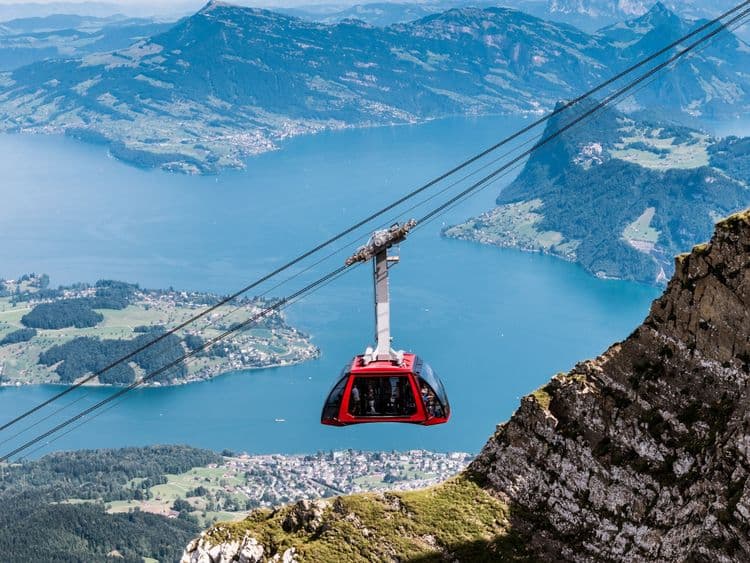
Explore Pilatus Kulm in Lucerne, Switzerland, known as the 'Dragon Mountain'. Discover breathtaking views, unique history, and thrilling cogwheel railway rides. Learn its legends!
Overview
Perched majestically above Lucerne, Switzerland, Pilatus Kulm stands at an impressive 2,132 meters (6,995 feet) above sea level, offering panoramic vistas that sweep across Lake Lucerne and over 70 Alpine peaks of Central Switzerland. It serves as the primary summit area and is a focal point of the larger Mount Pilatus massif. Accessible via a spectacular journey, Pilatus Kulm is renowned for its breathtaking natural beauty and unique transport experiences.
Visitors can reach this elevated plateau through several iconic routes, most notably the world's steepest cogwheel railway from Alpnachstad, which boasts a gradient of up to 48%. Alternatively, the 'Dragon Ride' aerial cableway and panoramic gondolas provide a scenic ascent from Kriens. Many choose the famed 'Golden Round Trip,' combining boat, cogwheel railway, and cable car to experience the diverse landscapes leading to the summit.
History & Cultural Background
Mount Pilatus has long captured the human imagination, its rugged peaks inspiring both awe and superstition. The mountain's name itself is steeped in legend. One prominent theory suggests it derives from 'Mons Pileatus,' Latin for 'cloud-capped mountain,' referring to the frequent cloud formations around its summit. Another fascinating, though less historically substantiated, legend links the mountain to Pontius Pilate, the Roman governor. Local folklore once held that his restless spirit haunted a remote lake on the mountain, leading to prohibitions against disturbing the waters for fear of invoking violent storms. The mountain was also historically known as 'Fractus Mons,' meaning 'broken mountain.'
The ambition to make the summit accessible led to remarkable engineering feats. The world's steepest cogwheel railway, a marvel of 19th-century construction, opened in 1889, transforming the way people experienced Pilatus Kulm.
What Makes It Special
The unparalleled combination of natural grandeur and human ingenuity makes Pilatus Kulm truly special. The journey aboard the cogwheel railway, ascending gradients as steep as 48%, is an experience in itself, offering dramatic perspectives on the changing alpine scenery. From Pilatus Kulm, visitors are treated to expansive panoramic views that on a clear day can encompass more than 70 Alpine peaks, alongside the shimmering expanse of Lake Lucerne and the surrounding central Swiss landscape.
Beyond the views, Pilatus Kulm offers various opportunities for exploration. The 'Dragon Path' is a short, atmospheric trail winding through rock galleries and crevices, while more extensive paths lead to viewpoints like Esel and Oberhaupt, providing even wider perspectives. The 'Dragon World' interactive tour delves into the mountain's mythical past. For those seeking a deeper connection with the mountain, overnight stays are possible in the historic summit hotels, allowing guests to witness breathtaking sunrises and sunsets from this elevated vantage point.
Stories, Fun Facts & Local Details
Mount Pilatus is famously known as the 'Dragon Mountain,' a nickname rooted deeply in medieval legends. Tales abound of friendly dragons with healing powers residing in the mountain's caves and crevices. One popular story recounts how in the summer of 1421, a farmer named Stempflin witnessed a dragon crash-landing near his farm, leaving behind a 'Dragon Stone' said to possess miraculous curative properties. Murals depicting these mythical creatures can still be found along the 'Dragon Path' near the summit, keeping the folklore alive.
Another enduring legend connects the mountain to the Roman prefect Pontius Pilate. Superstition held that Pilate's body, after his death, was cast into a remote lake on the mountain. Locals believed his restless spirit haunted the waters, and disturbing the lake could unleash violent thunderstorms and hailstorms. For centuries, climbing the mountain was forbidden, with severe penalties for those who defied the ban. In a dramatic attempt to appease the spirit, a group of villagers and a priest reportedly 'exorcised' the lake in 1585 by throwing boulders into it.
Visitor Perspective
A visit to Pilatus Kulm is an immersive journey, often beginning with the 'Golden Round Trip' which seamlessly combines a boat ride across Lake Lucerne, an ascent on the world's steepest cogwheel railway, and a descent via aerial cableways, returning to Lucerne by bus. This circuit provides ever-changing panoramas, from tranquil lake scenery to rugged alpine cliffs. At the summit, the observation decks offer comfortable spots to soak in the 360-degree views, while various hiking trails cater to different fitness levels, from a leisurely stroll on the 'Dragon Path' to more challenging ascents to subsidiary peaks like Esel or Tomlishorn.
Dining options are available at Pilatus Kulm, ranging from casual eateries to fine dining, all with stunning backdrops. The experience of being high above the clouds, sometimes with a 'sea of fog' below revealing only mountain peaks, is truly unforgettable. Whether seeking adventure, historical intrigue, or simply serene natural beauty, Pilatus Kulm provides a captivating and easily accessible alpine experience.
Coordinates: 8.25552, 46.97925
View on Google Maps💬 How Travelers Describe This Place
Based on community votes
Unique
872Beautiful
846Interesting
684Photogenic
363Must See
87
Traveler Stories
Discover memorable experiences shared by travelers who have visited this place.
No traveler stories yet.
Be the first traveler to share what made this place memorable.

Tour
By
Spot
Discover amazing places around the world. Your journey starts here.
Explore
© 2026 TourBySpot. All rights reserved.