Pikk Hermann Tower
Tallinn, Estonia
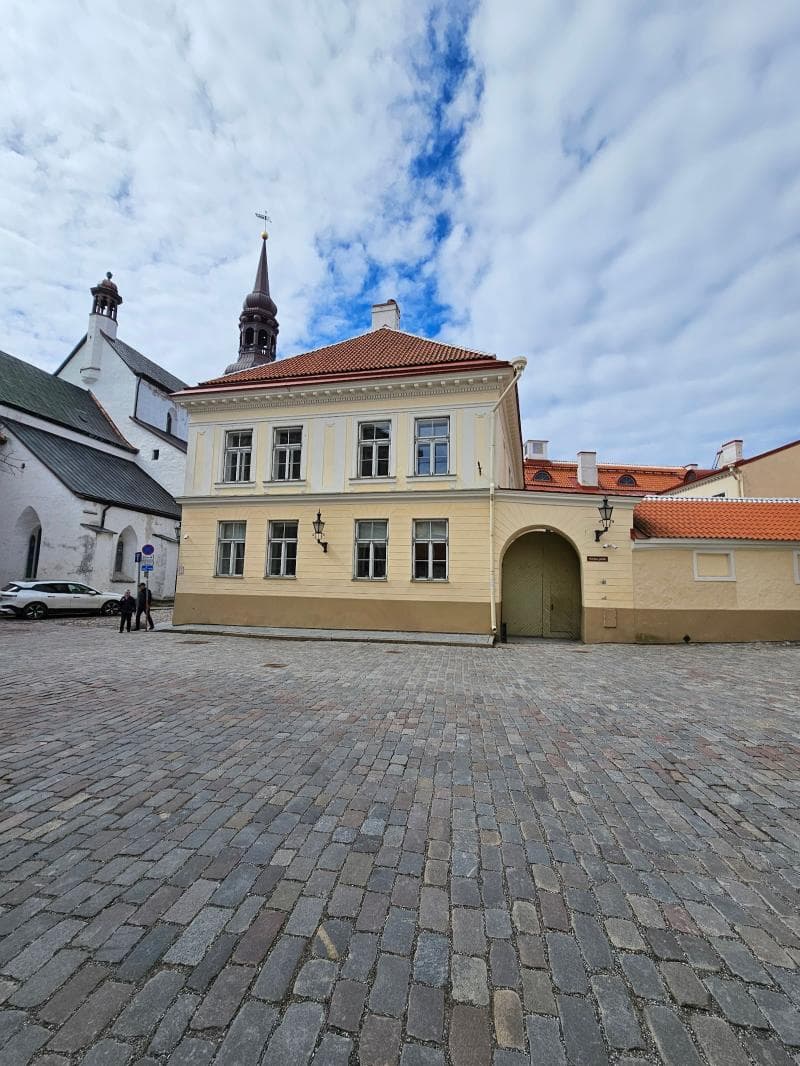
Discover Pikk Hermann Tower, a symbol of Estonian independence within Toompea Castle, Tallinn. Learn its history and flag traditions.
Overview
Perched proudly within the historic Toompea Castle complex in Tallinn, Estonia, the Pikk Hermann Tower stands as an enduring symbol of national pride. Known locally as 'Tall Hermann,' this defensive tower forms an integral part of the castle's southwestern corner, rising majestically above Toompea Hill. Approximately 45 to 48 meters (148 to 157 feet) high, Pikk Hermann features ten internal floors and is ascended by a winding staircase of 215 steps, leading to a viewing platform that offers captivating panoramas of Tallinn's Old Town and beyond.
Today, the tower, adjacent to the Estonian Parliament building (Riigikogu), is most recognized for the daily tradition of raising and lowering the Estonian flag. This ceremony, accompanied by the national anthem, underscores its profound significance as a beacon of Estonian sovereignty.
History & Cultural Background
The origins of Pikk Hermann date back to the late 14th century, with initial construction occurring between 1360 and 1370. It was subsequently rebuilt and attained its current impressive height in the 16th century. As part of Toompea Castle, which has served as the seat of power in Estonia for centuries, the tower has witnessed the ebb and flow of various rulers and historical eras.
Throughout its long history, Toompea Castle, and by extension Pikk Hermann, has adapted to the architectural styles and defensive needs of different occupying powers, including the Danes, Swedes, and Russians. However, its most poignant cultural role emerged with Estonia's independence. The tower transformed from a mere defensive structure into a potent emblem of nationhood. The blue, black, and white Estonian national flag was first hoisted atop Pikk Hermann in December 1918, marking a pivotal moment in the country's fight for self-determination.
During the decades of Soviet occupation, this symbolic act was suppressed, with the Soviet flag replacing the Estonian tricolor. The restoration of the Estonian flag atop Pikk Hermann on February 24, 1989, became a powerful and emotional moment, signaling the imminent return of Estonia's independence.
What Makes It Special
What truly sets Pikk Hermann apart is its role as the living heart of Estonian national identity. Every sunrise (or no earlier than 7:00 AM) and sunset (or no later than 10:00 PM), the Estonian flag is ceremoniously raised and lowered. This isn't merely a routine; it's a daily reaffirmation of Estonia's hard-won freedom and sovereignty. As the flag ascends, the Estonian national anthem, 'Mu isamaa, mu õnn ja rõõm' (My Fatherland, My Happiness and Joy), plays. When it descends, the moving melody of 'Mu isamaa on minu arm' (My Fatherland Is My Love) fills the air.
This tradition, rooted deeply in Estonia's struggle for independence, transforms the tower into a dynamic monument. The flag itself, with its blue representing the sky, black for the soil and past hardships, and white for hope and purity, carries profound symbolic weight for every Estonian. Pikk Hermann, as part of Tallinn's UNESCO World Heritage-listed Old Town, embodies centuries of history and the unbreakable spirit of a nation.
Stories, Fun Facts & Local Details
A popular local saying captures the tower's essence: 'Whosoever's flag flies from Pikk Hermann rules Estonia.' This proverb highlights the tower's historical significance as the ultimate symbol of the governing power. The momentous raising of the Estonian flag in 1989, after nearly 50 years of Soviet rule, was not just a symbolic act but a bold declaration that helped galvanize the independence movement.
Did you know that since the tricolor was re-hoisted in 1989, the flag flown from Pikk Hermann has been changed over 160 times? This frequent changing ensures the flag remains in pristine condition, reflecting the nation's respect for its emblem. While the tower itself measures around 45 to 48 meters, the flagpole extends its visual presence, reaching an impressive 95 meters (312 feet) above sea level, making the flag visible from afar.
Visitor Perspective
For visitors, approaching Pikk Hermann Tower is an encounter with living history. Although internal access to the tower is generally restricted, typically offered only on specific national days such as the Day of Restoration of Independence, or through pre-booked guided tours of the Riigikogu (Estonian Parliament) building, its exterior presence is always commanding. Walking through the Governor's Garden adjacent to the tower provides excellent vantage points for photographs and a sense of its imposing stature.
When access is available, the ascent of 215 steps to the top of Pikk Hermann is rewarded with unparalleled panoramic views. From this vantage, one can appreciate the medieval tapestry of Tallinn's red rooftops, historic spires, and the Baltic Sea shimmering in the distance. Even without entering, the sight of the Estonian flag fluttering proudly atop Pikk Hermann, especially during the daily ceremonies, offers a moving and memorable experience, connecting visitors to the heart of Estonia's enduring spirit.
Coordinates: 24.736944, 59.435278
View on Google Maps💬 How Travelers Describe This Place
Based on community votes
Photogenic
869Beautiful
445Unique
416Must See
141Interesting
33
Traveler Stories
Discover memorable experiences shared by travelers who have visited this place.
No traveler stories yet.
Be the first traveler to share what made this place memorable.

Tour
By
Spot
Discover amazing places around the world. Your journey starts here.
Explore
© 2026 TourBySpot. All rights reserved.