Piano Room
Lucerne, Switzerland
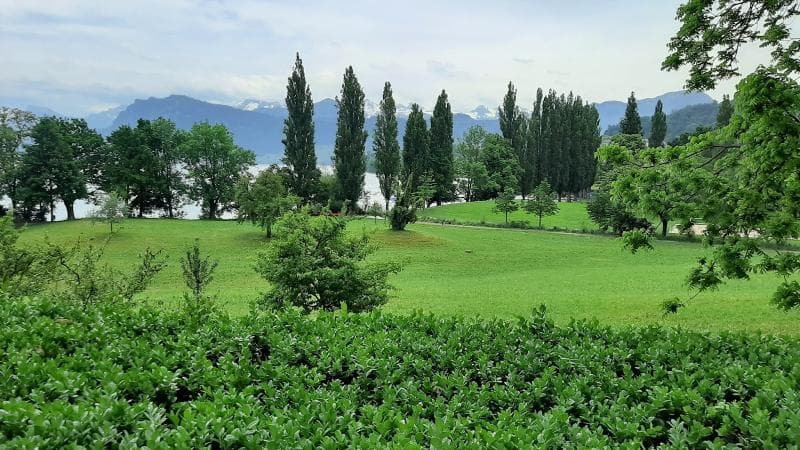
Discover Richard Wagner's Erard grand piano in the 'Piano Room' at the Richard Wagner Museum in Lucerne, Switzerland. Explore his creative sanctuary.
Overview
Nestled on the picturesque shores of Lake Lucerne, within the historic Richard Wagner Museum, lies a truly special sub-spot known colloquially as the 'Piano Room'. This serene space houses the very Erard grand piano that belonged to the legendary composer Richard Wagner. It is not merely an exhibit but a focal point where music history comes alive, offering a unique glimpse into the artistic heart of one of the 19th century's most influential figures.
The museum itself, housed in Wagner's former residence in Tribschen, Lucerne, served as his home and creative sanctuary for six transformative years. The 'Piano Room', featuring his beloved instrument, stands as a testament to his prolific period here, where some of his most monumental works were conceived and brought to life.
History & Cultural Background
Richard Wagner resided in the villa, a cube-shaped manor house with roots tracing back to the 15th century, from April 1866 to April 1872. This period, often described by Wagner himself as among the happiest and most productive of his life, was profoundly shaped by the tranquil beauty of Lucerne and the inspiration it provided.
During these pivotal years, he completed the opera 'Die Meistersinger von Nürnberg', finalized 'Siegfried', and initiated work on 'Götterdämmerung', all within the walls of this very home. The presence of his Erard grand piano, an instrument dating from 1858, underscores the intense creative activity that permeated these rooms. After Wagner's departure, the city of Lucerne acquired the property in 1931, transforming his former residence into the museum we know today, opening its doors to the public in 1933.
What Makes It Special
The 'Piano Room' is extraordinary because it offers an intimate connection to the musical genius of Richard Wagner. The Erard grand piano, often referred to as the museum's 'gem', is not behind a rope or glass barrier in the same way many historical artifacts are. Instead, it remains an active, living instrument. The ability to witness or even hear this very piano played during special chamber concerts imbues the space with an unparalleled authenticity and emotional resonance.
This room transports visitors beyond mere observation, allowing them to experience the acoustic environment that once nurtured some of the world's most enduring compositions. It is a rare opportunity to connect with the past through sound, experiencing the instrument that was a direct extension of Wagner's creative spirit during his formative years in Switzerland.
Stories, Fun Facts & Local Details
One of the most heartwarming stories associated with Wagner's time in Lucerne and, implicitly, with this very piano, concerns his composition of 'Siegfried Idyll'. This beautiful orchestral piece was a surprise birthday gift for his wife, Cosima. On Christmas morning of 1870, an orchestra performed the 'Idyll' on the staircase of the Tribschen villa, awakening Cosima to its melodies. The creative spark for this intimate piece, penned as a celebration of their shared life and the birth of their son Siegfried, undoubtedly began at the Erard grand piano.
It was also here in Tribschen that Cosima, daughter of Franz Liszt, joined Wagner, and their children Eva and Siegfried were born. They married in Lucerne in 1870, further cementing the villa's role as a place of profound personal significance for the composer. The idea for the Bayreuth Festival, his ultimate theatrical vision, is also said to have taken root in the rooms of Villa Tribschen.
Visitor Perspective
For any admirer of classical music or European cultural history, a visit to the 'Piano Room' is a deeply moving experience. Standing in the presence of Wagner's piano, one can almost hear the echoes of his creative process. The serene location of the museum, overlooking Lake Lucerne with the majestic Alps in the background, mirrors the tranquility that allowed Wagner to focus on his masterpieces. The opportunity to see the original scores and memorabilia alongside the piano creates a comprehensive and immersive journey into his world.
The museum staff often share insights into Wagner's daily life and creative routine during his residency, adding rich layers to the visit. It is a place that invites contemplation, offering a powerful sense of connection to the composer's legacy and the very instrument where his genius found expression. Visitors leave with a deeper appreciation not only for Wagner's music but also for the intimate environment that fostered such unparalleled artistic output.
Coordinates: 8.328944, 47.042444
View on Google Maps💬 How Travelers Describe This Place
Based on community votes
Beautiful
948Unique
913Interesting
337Must See
196Photogenic
94
Traveler Stories
Discover memorable experiences shared by travelers who have visited this place.
No traveler stories yet.
Be the first traveler to share what made this place memorable.

Tour
By
Spot
Discover amazing places around the world. Your journey starts here.
Explore
© 2026 TourBySpot. All rights reserved.