Phra Mondop
Bangkok, Thailand
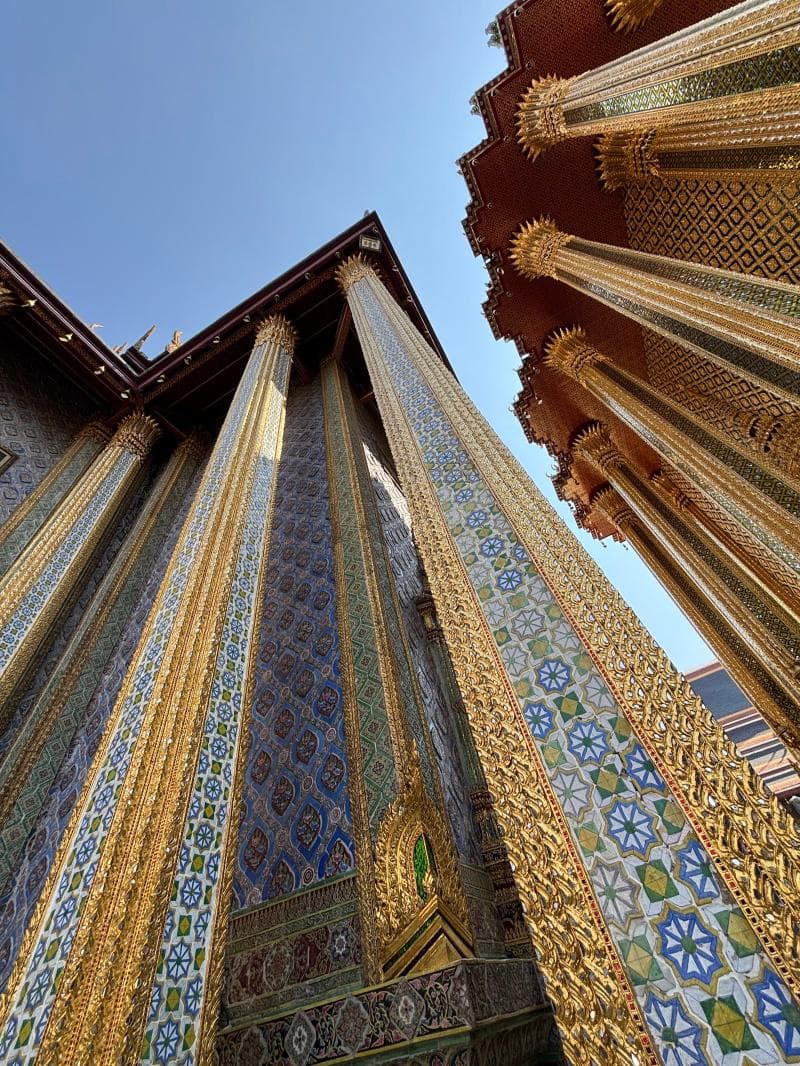

Discover Phra Mondop, the exquisite library within Bangkok's revered Wat Phra Kaew. Explore its stunning architecture, historical significance, and cultural treasures.
Overview
Nestled within the sacred grounds of Wat Phra Kaew, Thailand's most revered temple, lies the exquisite Phra Mondop. This architectural jewel, though its interior remains a mystery to most visitors, stands as a testament to Thailand's profound Buddhist heritage and artistic mastery. It is one of the key structures on the elevated terrace of the Temple of the Emerald Buddha, surrounded by other iconic edifices such as the gilded Phra Si Rattana Chedi and the Royal Pantheon. Its captivating exterior, rich with intricate details and shimmering ornamentation, offers a glimpse into the spiritual and cultural heart of Bangkok, Thailand. Functioning as a dedicated library for sacred Buddhist scriptures, the Phra Mondop holds immense historical and religious significance, making it a focal point for understanding the spiritual foundations of the nation.
History & Cultural Background
The story of Phra Mondop began with King Rama I, the founder of the Chakri Dynasty and Bangkok as the new capital. He commissioned its construction in the late 18th century. Before the current Phra Mondop, an earlier structure, the Ho Phra Monthien Tham, served as a library on the same site. Tragically, this initial building was destroyed by fire, ironically caused by fireworks on its inauguration day, despite traditional precautions like surrounding it with water to protect against fire and termites. Miraculously, the precious Buddhist manuscripts it housed, along with a mother-of-pearl inlaid cabinet, were saved from the flames.
Following this incident, King Rama I ordered the construction of the Phra Mondop in its place, elevating it on a high platform. Its primary purpose was to safeguard the first fully revised edition of the Buddhist Canon of the Rattanakosin Era, often referred to as the 'Royal Golden Edition.' This act underscored the profound reverence for the Tripitaka (Buddhist scriptures) and the king's commitment to preserving and promoting Buddhist teachings. The very existence of Phra Mondop reflects a deep cultural value placed on knowledge, spiritual wisdom, and the meticulous preservation of religious texts that guide the nation's spiritual life.
What Makes It Special
The Phra Mondop's distinctiveness lies not only in its sacred function but also in its breathtaking architecture and opulent decoration. It is easily identifiable by its multi-tiered, seven-roofed structure, a hallmark of traditional Thai religious architecture. The exterior walls are a dazzling spectacle, covered in vibrant green mirrored tiles, meticulously inlaid with gold medallions that depict the Buddha. These glittering mosaics create a mesmerizing effect under the Thai sun, reflecting light and adding to its ethereal beauty. Intricate gilded patterns, emerald-colored glass mosaics, and mythical chofas (bird-like finials) embellish its tiers, showcasing exceptional Thai craftsmanship.
Adding to its grandeur, the base of the walls is adorned with two rows of small, gilded guardian angels, each subtly unique, offering a protective embrace to the sacred contents within. At each of its four corners stand ancient stone Buddhas carved in the 9th-century Javanese style, adding a layer of historical depth and artistic influence. The ornate mother-of-pearl door panels, once opening to reveal the revered scriptures, are masterpieces in themselves. The entire structure is supported by sixteen twelve-cornered columns, each meticulously crafted to hold the weight of its history and beauty. This combination of intricate details and grand scale makes Phra Mondop a unique and unforgettable sight within the Grand Palace complex.
Stories, Fun Facts & Local Details
The history of Phra Mondop is steeped in stories that highlight both human endeavor and a touch of the miraculous. The survival of the original Buddhist manuscripts from the fire that consumed the previous library is often recounted as a fortunate intervention, emphasizing the perceived sacredness of these texts. King Rama I's dedication to revising and preserving the Buddhist Canon immediately upon his accession to the throne speaks volumes about the importance of Buddhist teachings in establishing the new Rattanakosin Kingdom.
Although visitors cannot enter Phra Mondop, its external guardians offer fascinating details. The four pairs of demon guardians (yaksha) and human-faced nagas (serpents) guarding its stairways are not just decorative; they are powerful figures from the Ramakien epic, believed to protect the sacred contents from malevolent forces. These figures, particularly those from the Rama I period, are considered exemplary representations of Rattanakosin craftsmanship. Another intriguing detail is that the floor of Phra Mondop was originally woven from strips of pure silver, adding to its legendary decadence and value. These elements, though subtle, tell tales of belief, protection, and the artistic flourish of an era.
Visitor Perspective
For visitors to Wat Phra Kaew, approaching Phra Mondop is an experience of awe and wonder. While its doors remain respectfully closed to the public, the sheer magnificence of its exterior demands attention. Standing on the elevated terrace, amidst the grandeur of the temple complex, the Phra Mondop glows with an otherworldly luminescence, especially on a sunny day when its mirrored tiles shimmer. One can spend considerable time admiring the intricate details: the tiny golden Buddha images, the meticulously crafted guardian angels, the ancient Javanese-style Buddhas, and the impressive multi-tiered roof.
It encourages contemplation about the vast repository of ancient wisdom contained within its walls. Observing the Phra Mondop from outside, one connects with centuries of devotion, artistry, and the enduring legacy of the Thai monarchy's commitment to Buddhism. It is a visual feast, a silent guardian of knowledge, and a powerful symbol of Thailand's rich cultural and spiritual heritage, inviting respectful admiration from every traveler who gazes upon its splendor.
Coordinates: 100.4925, 13.75139
View on Google Maps💬 How Travelers Describe This Place
Based on community votes
Photogenic
826Unique
800Must See
589Interesting
387Beautiful
90
Traveler Stories
Discover memorable experiences shared by travelers who have visited this place.
No traveler stories yet.
Be the first traveler to share what made this place memorable.

Tour
By
Spot
Discover amazing places around the world. Your journey starts here.
Explore
© 2026 TourBySpot. All rights reserved.