Photography Spots
San Francisco, United States
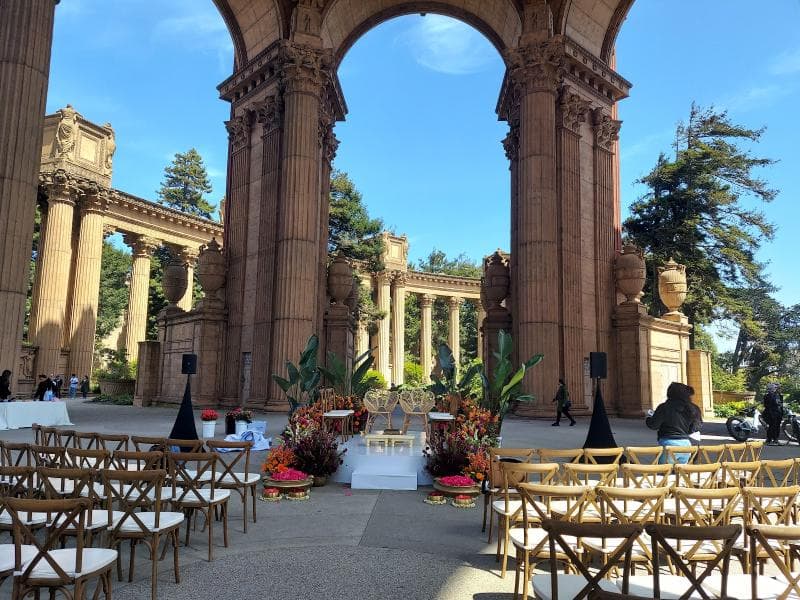
Discover the enchanting Palace Of Fine Arts in San Francisco, United States – a historic Beaux-Arts landmark and premier photography spot with stunning Roman-inspired architecture and a tranquil lagoon. Perfect for capturing timeless memories.
Overview
Nestled in the Marina District of San Francisco, United States, the Palace Of Fine Arts is a breathtaking landmark renowned for its majestic beauty and serene ambiance, making it a prime destination for photography enthusiasts. This iconic structure, originally built for the 1915 Panama–Pacific International Exposition, evokes the grandeur of ancient Roman and Greek ruins, yet stands as a unique testament to San Francisco’s resilience and artistic spirit. It is a free and open public space, inviting visitors to stroll through its classical architecture and tranquil lagoon, capturing stunning images at every turn.
History & Cultural Background
The Palace Of Fine Arts was conceived by architect Bernard Maybeck for the 1915 Panama-Pacific International Exposition (PPIE). This world's fair celebrated the completion of the Panama Canal and showcased San Francisco's remarkable recovery from the devastating 1906 earthquake. Maybeck’s vision was to create a 'fictional ruin from another time,' drawing inspiration from the classical architecture of ancient Rome and Greece, notably Piranesi's etchings and Böcklin's 'Isle of the Dead' painting. The Palace was designed to serve as a quiet, reflective space where fair attendees could appreciate art, away from the bustling main exhibition grounds.
Initially constructed as a temporary edifice using a framework of wood covered with plaster and burlap (known as 'staff'), the Palace was never intended to be permanent. However, its profound beauty and the public's overwhelming affection led to its preservation, defying the fate of most other exposition buildings which were demolished after the fair. Over the decades, the temporary materials succumbed to decay, and by the 1950s, the simulated ruin had become a crumbling one. Thanks to significant philanthropic efforts, the Palace was completely rebuilt in durable concrete between 1964 and 1974, meticulously replicating Maybeck's original design and ensuring its legacy for future generations.
What Makes It Special
The Palace Of Fine Arts is a masterpiece of Beaux-Arts architecture, characterized by its towering Corinthian columns, intricate sculptures, graceful arches, and its magnificent 162-foot-high central rotunda. These architectural elements create a dramatic and photogenic backdrop that captivates artists and visitors alike. A central feature is the tranquil, man-made lagoon that mirrors the stately structures, often graced by elegant swans, adding to its picturesque charm. Look closely at the colonnades and you'll find poignant figures of weeping women, symbolizing 'the melancholy of life without art,' a detail that adds a layer of emotional depth to its classical grandeur. As the sole surviving structure from the 1915 Panama-Pacific International Exposition on its original site, it holds a unique place in San Francisco's history and architectural heritage.
Stories, Fun Facts & Local Details
Before its permanent reconstruction, the Palace Of Fine Arts led a varied life, reflecting its temporary beginnings. After the fair, it served a number of surprising roles: from housing a continuous art exhibition and eighteen tennis courts to functioning as a military storage depot during World War II, a city Park Department warehouse, a telephone book distribution center, and even temporary Fire Department headquarters. This adaptive reuse highlights the city's attachment to the structure even in its deteriorated state. The architect, Bernard Maybeck, a student of the École des Beaux-Arts, poured his unique perspective into the design, aiming to evoke the transient nature of human endeavors. Today, beyond its role as a photographic marvel, the Palace hosts various events, including weddings and trade fairs in its exhibition center, and cultural performances in its theater. More recently, pickleball courts have also found a home in parts of the venue, illustrating its continued evolution as a dynamic public space.
Visitor Perspective
For photographers, the Palace Of Fine Arts offers an abundance of captivating compositions. Key spots include directly beneath the main rotunda, where wide-angle portraits capture its immense scale and intricate dome details. The rhythmic colonnade arches provide an 'artsy aesthetic' and frame perfect shots, especially with the interplay of light and shadow. The serene lagoon is ideal for capturing reflections of the architecture against the sky, creating 'atmospheric and cinematic shots.' Many consider it a top location for engagement, wedding, and family portraits, with its grand architecture providing an elegant and timeless backdrop. The Palace is beautiful to photograph in both sunny and overcast weather, offering different moods and lighting opportunities. To experience its tranquility and capture photos with fewer crowds, an early morning visit is highly recommended. Whether you seek dramatic architectural shots or peaceful natural reflections, the Palace Of Fine Arts presents endless opportunities for memorable photography.
Coordinates: -122.44833, 37.80278
View on Google Maps💬 How Travelers Describe This Place
Based on community votes
Unique
791Interesting
514Beautiful
457Must See
252Photogenic
207
Traveler Stories
Discover memorable experiences shared by travelers who have visited this place.
No traveler stories yet.
Be the first traveler to share what made this place memorable.

Tour
By
Spot
Discover amazing places around the world. Your journey starts here.
Explore
© 2026 TourBySpot. All rights reserved.