Photo Spots
Seoul, South Korea
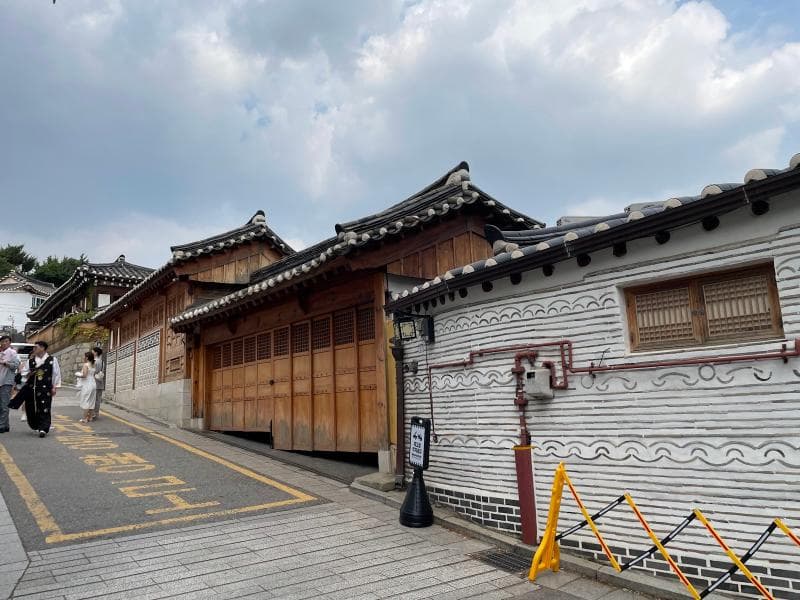
Discover the best Photo Spots in Bukchon Hanok Village, Seoul, South Korea. Capture traditional hanok architecture, historic alleys, and panoramic views of the city.
Overview
Tucked amidst the towering skyscrapers of modern Seoul, South Korea, lies the enchanting Bukchon Hanok Village, a residential district steeped in six centuries of history. Within this village, designated 'Photo Spots' offer a curated journey through time, showcasing the traditional Korean houses known as 'hanok'. Unlike purpose-built folk villages, Bukchon is a living, breathing neighborhood where residents still reside in these beautifully preserved dwellings. Its unique location, nestled between the grand palaces of Gyeongbokgung and Changdeokgung, provides a captivating juxtaposition of ancient architecture against a contemporary urban backdrop, making it an ideal destination for those seeking both cultural immersion and picturesque scenery.
History & Cultural Background
Bukchon, meaning 'northern village', earned its name from its location north of the Cheonggyecheon Stream and Jongno, areas considered central to historic Seoul. During the Joseon Dynasty (1392-1897), this elevated quarter was the exclusive domain of high-ranking government officials, aristocrats, and members of the royal family, signifying its esteemed status. The hanok here were built to reflect their residents' noble standing.
However, the village's character saw significant transformation during the Japanese colonial period (1910-1945). Faced with Japanese settlers acquiring land and building Japanese-style homes, a patriotic Korean real estate developer named Jeong Se-kwon spearheaded the construction of numerous 'urban hanok'. These were modernized versions of traditional hanok, incorporating amenities like glass windows and electricity, yet retaining their distinctive architectural essence. Jeong's efforts were a form of cultural resistance, preserving Korean housing traditions and enabling a wider range of Koreans to become homeowners in the area. By the 1970s, as rapid urbanization threatened the remaining hanok, local protests led to the designation of Bukchon as a folk landscape, initiating crucial preservation efforts that continue to this day.
What Makes It Special
The 'Photo Spots' of Bukchon Hanok Village are not merely picturesque locations; they are carefully selected viewpoints that encapsulate the village's charm and historical layers. The most renowned are the 'Eight Scenic Views of Bukchon', a series of vantage points offering diverse perspectives. These include sweeping vistas of the traditional hanok rooftops cascading down hillsides, often framed by the modern Seoul skyline or the distant Namsan Tower. Specific highlights include the steep, winding alleys of Gahoe-dong (notably Gahoe-dong 11-gil and 31-gil), which present iconic scenes of traditional architecture. The 'Downward Alley in Gahoe-dong' and the 'Upward Alley in Gahoe-dong' are particularly famous for their dynamic compositions. Another unique spot is the 'Bukchon Observatory', a private viewing platform that, for a small fee, offers unparalleled panoramic views over the dense cluster of hanok rooftops, providing a quieter and elevated photographic experience. Even quieter corners like Wonseo-dong Gongbang-gil, once home to royal craftsmen, offer tranquil scenes for capturing the essence of old Seoul.
Stories, Fun Facts & Local Details
The very existence of Bukchon Hanok Village is a testament to cultural preservation and national pride, largely thanks to figures like Jeong Se-kwon, whose development efforts were a direct response to colonial pressures. His vision created the 'urban hanok' that define much of the village today, blending tradition with practical urban living. Visitors often enhance their experience by donning a 'hanbok', traditional Korean attire, which adds an authentic touch to their photographs and connects them more deeply with the village's historical ambiance. It's a delightful way to step into a K-drama like setting. The village also boasts numerous small artisan workshops, tea houses, and cultural centers housed within hanoks, offering glimpses into traditional Korean crafts and daily life.
Visitor Perspective
Exploring the Photo Spots of Bukchon Hanok Village is best done on foot, as the village consists of winding, often steep, alleyways. Wear comfortable shoes and be prepared for some uphill climbs, which are ultimately rewarded with breathtaking views. To fully appreciate the village and capture its beauty without overwhelming crowds, it is highly recommended to visit early in the morning on a weekday. As Bukchon is a residential area, visitors are kindly requested to maintain a respectful demeanor, keeping noise levels down and being mindful of residents' privacy. Strict visiting hours, typically from 10 AM to 5 PM, are enforced in certain areas to ensure the peace and quiet of the community. A map or a reliable navigation app is invaluable for finding your way through the maze-like alleys to discover both the famous and the hidden photographic gems.
Coordinates: 126.98361, 37.58306
View on Google Maps💬 How Travelers Describe This Place
Based on community votes
Beautiful
898Unique
667Must See
308Photogenic
190Interesting
32
Traveler Stories
Discover memorable experiences shared by travelers who have visited this place.
No traveler stories yet.
Be the first traveler to share what made this place memorable.

Tour
By
Spot
Discover amazing places around the world. Your journey starts here.
Explore
© 2026 TourBySpot. All rights reserved.