Photo Galleries
Phnom Penh, Cambodia
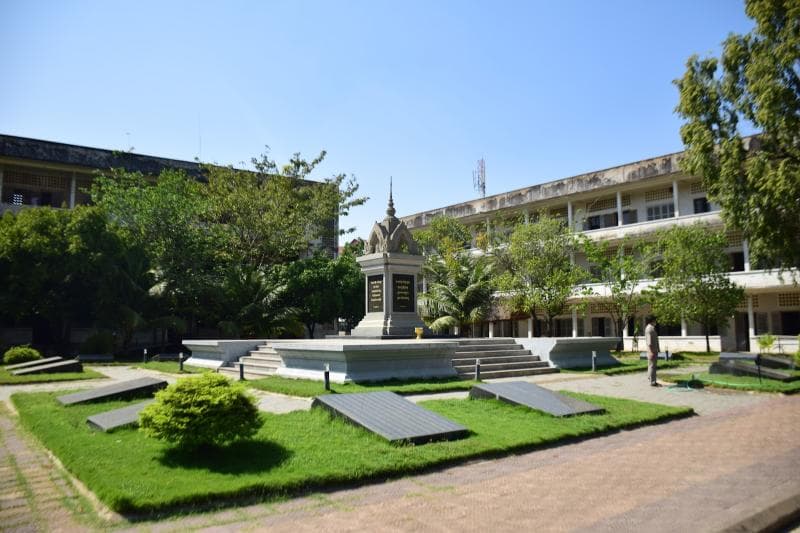
Explore the haunting Photo Galleries at Tuol Sleng Genocide Museum in Phnom Penh, Cambodia, showcasing thousands of victims' portraits from S-21 prison.
Overview
The Photo Galleries at the Tuol Sleng Genocide Museum in Phnom Penh, Cambodia, serve as a stark and profoundly moving testament to the atrocities committed under the Khmer Rouge regime. Housed within the former Security Prison 21 (S-21), a site once known as Tuol Svay Prey High School, these galleries display thousands of black and white portrait photographs of men, women, and children who were imprisoned here between 1975 and 1979. These images are not mere historical artifacts; they are the faces of the estimated 14,000 to 20,000 individuals who passed through S-21, most of whom never emerged alive. The galleries provide an unfiltered and confronting glimpse into a dark chapter of Cambodian history, preserving the identities of victims and serving as an enduring memorial.
History & Cultural Background
Tuol Sleng's transformation from a high school into the Khmer Rouge's most notorious interrogation and detention center, S-21, began shortly after the regime seized power in 1975. The regime, in its brutal pursuit of a utopian agrarian society, systematically purged perceived enemies of the state, including intellectuals, former government officials, soldiers, and even their own cadres. The Khmer Rouge leadership maintained meticulous records of their prisoners, a practice that included photographing each individual upon their arrival at S-21. These identification photographs were taken immediately after captives were brought in, often disoriented and fearful. The purpose was to document each prisoner before their interrogation, torture, and eventual execution, with the photos intended to be attached to their interrogation documents.
What Makes It Special
What makes the Photo Galleries particularly impactful is their raw, unedited nature and immense scale. Several rooms within the former prison complex are lined, floor to ceiling, with these photographic portraits. Each face tells a unique story of terror and despair, captured in the final moments before their brutal fate. The collection stands as powerful, tangible evidence of the Khmer Rouge's crimes against humanity. Unlike artistic renditions or abstract memorials, these photographs are direct documentary evidence, offering a window into the institutionalized brutality of S-21. The sheer volume of faces, often appearing with expressions of 'shock, resignation, confusion, defiance, and horror,' creates an overwhelming sense of the vast human cost of the genocide.
Stories, Fun Facts & Local Details
Among the thousands of portraits, visitors will notice the diverse ages and backgrounds of the victims—young and old, male and female, soldiers and civilians. While many of the individuals in the photographs remain unidentified, efforts continue to match names to faces, restoring a piece of their stolen identity. Some of the original negatives, numbering over 6,000, were left behind by the fleeing Khmer Rouge in 1979. These negatives form the basis of the museum's extensive collection, providing invaluable historical records. The museum also contains a gallery showcasing the paintings of Mr. Vann Nath, one of the few S-21 survivors, whose artwork depicts scenes of torture and living conditions within the prison. This combination of photographic and artistic documentation offers a multi-faceted and deeply personal look into the lives lost and the suffering endured.
Visitor Perspective
Visiting the Photo Galleries is an intensely emotional and sobering experience. Many visitors describe it as confronting and distressing, leaving a lasting impression. The museum, located in the heart of Phnom Penh, aims to preserve the memory of the victims and encourage visitors to become messengers of peace, preventing such atrocities from recurring. It serves as a vital educational space, prompting reflection on the past and the fragility of human rights. While the images are difficult to witness, they are presented not for sensationalism, but as crucial historical evidence and a memorial to those who perished. Visitors are encouraged to approach the galleries with reflection, respect, and a desire to understand, contributing to the museum's mission of healing psychological trauma and disseminating historical knowledge.
Coordinates: 104.91778, 11.54944
View on Google Maps💬 How Travelers Describe This Place
Based on community votes
Unique
961Beautiful
555Interesting
448Must See
387Photogenic
156
Traveler Stories
Discover memorable experiences shared by travelers who have visited this place.
No traveler stories yet.
Be the first traveler to share what made this place memorable.

Tour
By
Spot
Discover amazing places around the world. Your journey starts here.
Explore
© 2026 TourBySpot. All rights reserved.