Pest Entrance Plaza
Budapest, Hungary
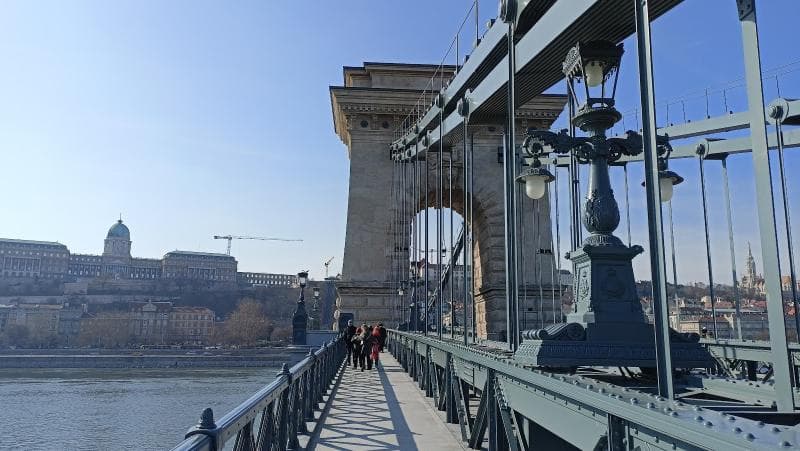
Explore the Pest Entrance Plaza of Budapest's iconic Chain Bridge. Discover its rich history, lion statues, and stunning views of the Danube River and city skyline in Hungary.
Overview
The Pest Entrance Plaza serves as the magnificent gateway to the iconic Széchenyi Chain Bridge on the eastern bank of the Danube River in Budapest, Hungary. This historic area, formally known as Széchenyi Square, is not merely an entry point to a bridge; it's a vibrant hub brimming with architectural grandeur and historical resonance, connecting the bustling Pest side to the ancient Buda hills. As you step onto this plaza, you are immediately immersed in the city's rich past and present, surrounded by some of Budapest's most distinguished landmarks.
Standing proudly at this entrance are the famous stone lion statues, guarding the bridge with a timeless gaze. Beyond them, the Chain Bridge stretches majestically across the Danube, offering breathtaking vistas of the Hungarian Parliament Building and the Buda Castle District. The plaza itself is flanked by architectural masterpieces such as the Hungarian Academy of Sciences and the opulent Gresham Palace, now home to a luxury hotel, creating a dramatic backdrop to your journey across one of Europe's most beautiful bridges.
History & Cultural Background
The story of the Chain Bridge and its Pest entrance is deeply intertwined with Hungary's journey towards modernization and national identity. Before its construction, crossing the Danube between Buda and Pest was a seasonal challenge, often impossible during harsh winters due to ice. This inconvenient reality famously inspired Count István Széchenyi, often hailed as 'the greatest Hungarian,' to champion the creation of a permanent crossing after he was unable to attend his father's funeral due to the impassable river.
Designed by the English engineer William Tierney Clark and brought to life by the Scottish engineer Adam Clark, construction began in 1840 and the bridge officially opened in 1849. At its completion, the Chain Bridge was considered a marvel of modern engineering, boasting one of the largest spans in the world and becoming Europe's longest suspension bridge of its kind. It swiftly became a potent symbol of progress, national awakening, and the eventual unification of the independent cities of Buda and Pest into the vibrant metropolis of Budapest.
The bridge faced destruction during World War II when retreating German forces blew it up in 1945, leaving only its stone towers standing. However, its significance was such that it was meticulously rebuilt to its original design and reopened in 1949, precisely one hundred years after its initial inauguration, symbolizing the nation's resilience.
What Makes It Special
The Pest Entrance Plaza, as part of the Chain Bridge experience, is special due to its unique blend of historical grandeur, architectural brilliance, and symbolic importance. It's more than just a functional space; it's a place where history resonates and beauty captivates. The bridge itself, with its neoclassical design, stands as a testament to 19th-century engineering prowess.
The majestic lion statues, crafted by sculptor János Marschalkó, at both ends of the bridge (including the Pest side) have become iconic symbols of Budapest. These stoic guardians add a mythical quality to the entrance, inviting travelers into the city's narrative. The plaza also offers an unparalleled vantage point for appreciating the Danube River and the distinct skylines of both Buda and Pest, making it a favorite spot for photographers and sightseers alike.
Furthermore, its strategic location positions it as a cultural and intellectual gateway, with the Hungarian Academy of Sciences — a beacon of Hungarian intellectual life — just steps away. This convergence of engineering, art, history, and natural beauty makes the Pest Entrance Plaza a profoundly special place in the heart of Budapest.
Stories, Fun Facts & Local Details
Beyond its grand facade, the Pest Entrance Plaza and the Chain Bridge hold fascinating stories and local tidbits that enrich the visitor's experience. One of the most enduring urban legends revolves around the famous lion statues. Many believe the lions are tongueless, a supposed oversight by their sculptor, János Marschalkó. However, this is a myth; the lions do have tongues, but they are simply not visible from ground level. This detail often prompts a closer inspection and a chuckle from those in the know.
Another interesting fact dates back to the bridge's early days: it was a toll bridge, and notably, no one, not even the aristocracy, was exempt from paying to cross. This 'burden sharing' was a revolutionary concept at a time when nobles enjoyed many privileges, marking the bridge as a symbol of equality and progress. The Chain Bridge also has a smaller, similar 'sibling' in Marlow, England, also designed by William Tierney Clark, a testament to the engineer's distinctive style.
Local lore also casts the bridge as a romantic destination. It's said that if a young couple walks across the Chain Bridge after sunset, they are destined to fall in love, making it a popular spot for romantic strolls and proposals. After extensive renovations, the bridge reopened to pedestrians in 2023, offering a refreshed and fully accessible experience, and notably, it remains car-free for private vehicles, emphasizing its role as a pedestrian-friendly landmark.
Visitor Perspective
For any traveler arriving in Budapest, the Pest Entrance Plaza of the Chain Bridge offers an immediate and captivating introduction to the city's splendor. It serves as an ideal starting point for exploration, whether you plan to venture across the Danube to Buda or delve deeper into the Pest side's attractions. The sensation of walking across the bridge, with the Danube flowing beneath and the panoramic cityscapes unfolding, is truly unforgettable.
From this vantage point, you can absorb stunning views of the historic Buda Castle perched atop its hill, the stately Hungarian Parliament building glittering along the riverbank, and the constant flow of river traffic. The walk itself is relatively short, typically taking 5 to 10 minutes, but the temptation to pause and soak in the scenery is irresistible. During the day, the sunlight glints off the river and the architectural details; at night, the bridge transforms into a glittering spectacle of lights, casting a magical glow over the Danube, perfect for a romantic evening stroll. The plaza's accessibility, with nearby public transport options, makes it a convenient and essential stop on any Budapest itinerary.
Coordinates: 19.04361, 47.49889
View on Google Maps💬 How Travelers Describe This Place
Based on community votes
Photogenic
898Unique
618Beautiful
449Interesting
308Must See
22
Traveler Stories
Discover memorable experiences shared by travelers who have visited this place.
No traveler stories yet.
Be the first traveler to share what made this place memorable.

Tour
By
Spot
Discover amazing places around the world. Your journey starts here.
Explore
© 2026 TourBySpot. All rights reserved.