Permanent Collection Floors
Brussels, Belgium
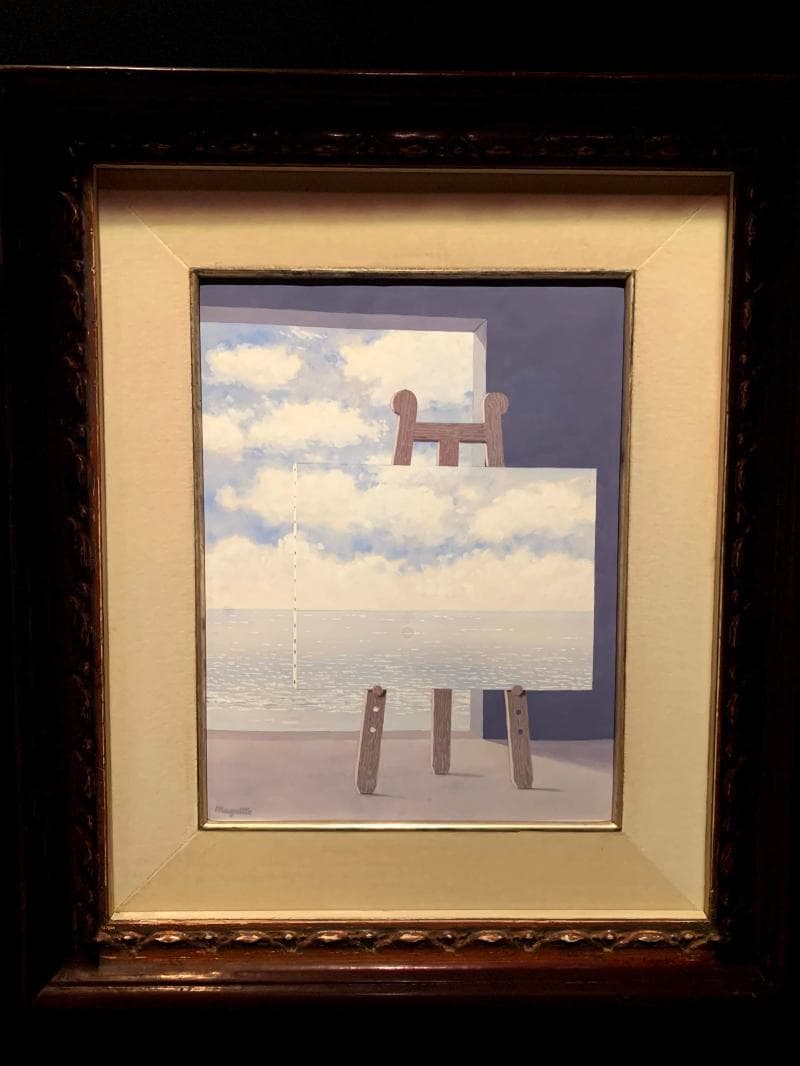
Explore the Permanent Collection Floors at the Magritte Museum in Brussels, Belgium, home to the world's largest René Magritte artwork collection.
Overview
The Permanent Collection Floors of the Magritte Museum in Brussels, Belgium, offer an unparalleled journey into the surreal world of René Magritte, one of Belgium's most celebrated artists. Housed within the stately 18th-century neoclassical Hôtel du Lotto (also known as Hôtel Altenloh) on Place Royale, this museum is a cornerstone of the Royal Museums of Fine Arts of Belgium. It boasts the world's largest collection of Magritte's works, showcasing over 200 original pieces, including paintings, drawings, gouaches, sculptures, and a rich archive of his personal effects. The collection spans all five decades of Magritte's prolific career, providing a comprehensive look at his artistic evolution and philosophical depth.
The museum's permanent exhibition is thoughtfully spread across three main floors, meticulously arranged to guide visitors through a semi-chronological and thematic exploration of Magritte's genius. This deliberate layout allows for a deep immersion into the artist's distinctive style and thought-provoking imagery, which redefined the boundaries of reality and representation in 20th-century art.
History & Cultural Background
René Magritte, born in Lessines, Belgium, in 1898, spent the majority of his adult life living and working in Brussels. His profound connection to the city deeply influenced his art, often infusing his unsettling domestic scenes with a unique 'bourgeois quietude'. The Magritte Museum itself was inaugurated on June 2, 2009, bringing together a vast collection that had previously been dispersed or held in private hands.
The museum's location within the Hôtel du Lotto adds another layer of historical context. This elegant 18th-century building, part of an architectural complex erected after the Palace of Coudenberg burned down, offers a stark, classical counterpoint to the revolutionary surrealist works it contains. Magritte rose to prominence as a key figure in the Surrealist movement, known for placing familiar objects in unfamiliar contexts to challenge viewers' perceptions. His distinctive approach often questioned the relationship between an object, its image, and its name, famously explored in works like 'The Treachery of Images'.
What Makes It Special
What truly sets the Permanent Collection Floors apart is the sheer scale and depth of its holdings, making it the definitive Magritte archive. Visitors encounter an extensive array of his iconic works, from early commercial designs to his mature surrealist masterpieces. The curatorial approach deliberately resists strict chronological rigidity, instead grouping works by recurring themes that captivated Magritte throughout his career. This includes explorations of the duality of day and night, the concealment of the human face, and the inherent tension between language and image.
The collection provides a unique insight into Magritte's artistic development, showcasing not only his widely recognized surrealist canvases but also his experimental periods, such as the colorful 'Renoir period' and the satirical 'Vache period' from the 1940s. The museum offers an intimate encounter with his genius, allowing visitors to trace the evolution of his visual language and the philosophical inquiries that underpinned his art.
Stories, Fun Facts & Local Details
Despite the often dreamlike and enigmatic quality of his art, René Magritte led a remarkably 'un-surreal' life compared to many of his avant-garde contemporaries. He remained married to the same woman, Georgette, for his entire adult life and largely resided in Brussels, even working as a graphic designer to support himself during his early career. This grounding in everyday reality often made the surreal elements in his paintings even more startling and profound. Magritte himself insisted that his paintings were not puzzles to be solved but rather 'questions to be lived with', encouraging viewers to engage with the mystery rather than seek a singular interpretation.
Visitors will encounter many of Magritte's signature motifs throughout the floors: the ubiquitous bowler-hatted man, floating rocks, pipes that are 'not pipes', and skies that seem to rain figures. These recurring symbols are not mere whimsical additions but integral parts of his philosophical questioning of perception and representation. The museum also houses rare photographs and films made by Magritte, offering a glimpse into his broader artistic experiments beyond painting.
Visitor Perspective
A visit to the Permanent Collection Floors typically begins on the third floor, allowing for a chronological descent through Magritte's career. This journey starts with his formative years and early commercial endeavors, progressing downwards to his most famous and mature works on the first floor, including 'The Dominion of Light' and 'The Treachery of Images'. The estimated visit duration is generally 1.5 to 2 hours, offering ample time to absorb the intricacies of his art.
To enrich the experience, an audio guide is highly recommended. It provides invaluable anecdotes and insights from Magritte's friends and even recordings of the artist himself, offering a deeper understanding of his creative process and personality. The museum's careful curation and the sheer volume of authentic works ensure that every visitor, whether a seasoned art enthusiast or a curious traveler, leaves with a profound appreciation for René Magritte's enduring legacy in the world of surrealism.
Coordinates: 4.35861, 50.84194
View on Google Maps💬 How Travelers Describe This Place
Based on community votes
Beautiful
998Interesting
903Unique
481Photogenic
458Must See
92
Traveler Stories
Discover memorable experiences shared by travelers who have visited this place.
No traveler stories yet.
Be the first traveler to share what made this place memorable.

Tour
By
Spot
Discover amazing places around the world. Your journey starts here.
Explore
© 2026 TourBySpot. All rights reserved.