Peristyle Entrance
Split, Croatia
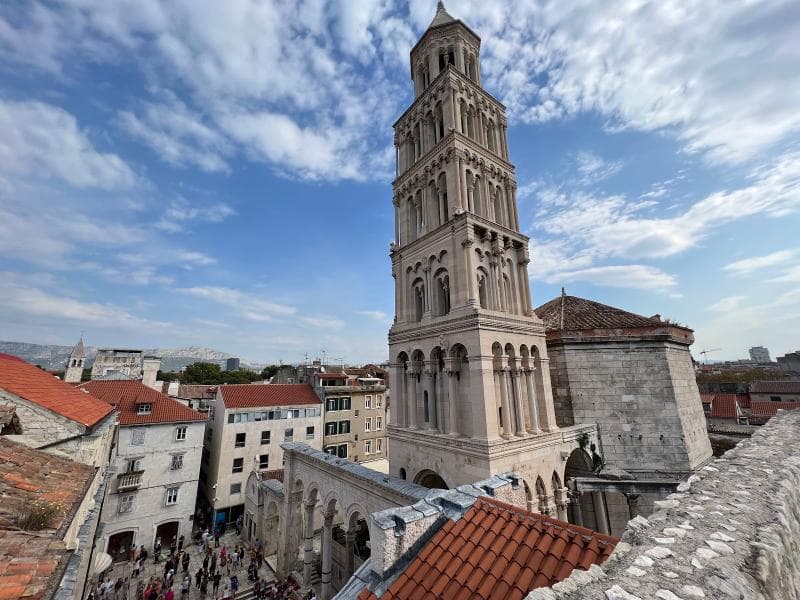
Explore the Peristyle Entrance, the ancient ceremonial heart of Diocletian's Palace and forecourt to the Cathedral of Saint Domnius in Split, Croatia. Discover its Roman history, unique architecture, and vibrant role in modern city life.
Overview
The Peristyle, often referred to as the Peristyle Entrance, is not merely an entry point but the vibrant, beating heart of Diocletian's Palace in Split, Croatia. This grand central courtyard, framed by magnificent columns, served as the formal ceremonial square of the ancient palace and continues to be a bustling public space today. It's a place where history breathes, effortlessly blending the glory of the Roman Empire with the everyday life of modern Split. While technically part of Diocletian's Palace, it forms the impressive forecourt to the Cathedral of Saint Domnius, which was originally Emperor Diocletian's mausoleum, illustrating a remarkable historical transformation.
History & Cultural Background
Constructed between 295 and 305 AD as part of Emperor Diocletian's sprawling retirement palace, the Peristyle was designed to impress and awe. It functioned as the imperial court, serving as the northern access to Diocletian's private apartments, where the emperor himself would make appearances. This monumental space was central to court life, witnessing elaborate public gatherings, ceremonies, and imperial processions during Diocletian's reign. The Peristyle's architectural style masterfully combines Roman and Greek influences, characterized by symmetry, balance, and intricate detailing. The red granite columns, brought from Egypt, were specifically chosen to highlight its ceremonial function, as purple (the color of imperial porphyry, often appearing reddish) was the imperial color. Following the decline of the Roman Empire and the arrival of refugees from nearby Salona in the 7th century, the palace began its transformation into a living city. It was then that Diocletian's own mausoleum, a central octagonal structure adjacent to the Peristyle, was ironically converted into the Cathedral of Saint Domnius, becoming one of the oldest continually used Catholic cathedrals in the world.
What Makes It Special
What sets the Peristyle apart is its extraordinary blend of ancient Roman architecture and its continuous, dynamic role in the city's life. The grand colonnade of Corinthian columns, some made from local Brac marble and others imported from Italy and Egypt, forms a breathtaking open-air 'room'. Overseeing this ancient stage is a captivating 3500-year-old black granite sphinx, brought from Egypt by Diocletian himself, a silent guardian of centuries of history. Unlike many archaeological sites, the Peristyle is not a museum piece but an active urban space. Palaces of Split's noble families from later periods lean against its authentic columns, adding layers of Renaissance and Gothic architecture to the Roman foundations. This seamless integration allows visitors to witness a 'living monument', where history is not just preserved but actively lived amidst cafes, shops, and cultural events. Its unique acoustics also make it an ideal venue for open-air concerts and theatrical performances, particularly during the Split Summer Festival.
Stories, Fun Facts & Local Details
Imagine Emperor Diocletian, celebrated as the living son of Jupiter, appearing under the architrave, with his subjects kneeling and kissing the hem of his scarlet cloak, or prostrating themselves before him. This vivid scene regularly comes to life today with daily reenactments of the 'Change of the Diocletian's Roman Guard' during tourist season, bringing ancient traditions to the modern visitor. A beloved local custom involves enjoying a coffee on the very steps that surround the Peristyle, offering a unique opportunity to connect intimately with this ancient heritage. Pope John Paul II, upon visiting, famously remarked, 'Dear God, how many feet have stepped through here', a testament to the Peristyle's enduring presence through millennia. For the citizens of Split, the Peristyle is more than just a landmark; it's considered the center of their city, and even the center of the world. The irony of history is palpable here: the mausoleum of an emperor known for persecuting Christians now stands as a Christian cathedral, dedicated to Saint Domnius, a bishop martyred during Diocletian's reign.
Visitor Perspective
For any curious traveler, the Peristyle Entrance is an essential starting point for exploring Diocletian's Palace and the historic core of Split. It acts as a central hub from which to venture into other significant sites, such as the Temple of Jupiter and, of course, the Cathedral of Saint Domnius. Visitors can immerse themselves in the ambiance, observing the intricate Roman craftsmanship and the way subsequent eras have built upon and around it. Climbing the bell tower of Saint Domnius, accessible from the Peristyle area, offers unparalleled panoramic views of the terracotta rooftops of the old town, the azure Adriatic Sea, and the surrounding islands. Whether you're captivated by the architectural details, the echoes of imperial power, or the vibrant cultural life, the Peristyle offers a deeply enriching experience, inviting you to become a part of its unfolding story.
Coordinates: 16.4404, 43.508
View on Google Maps💬 How Travelers Describe This Place
Based on community votes
Interesting
915Must See
211Unique
123Beautiful
74Photogenic
53
Traveler Stories
Discover memorable experiences shared by travelers who have visited this place.
No traveler stories yet.
Be the first traveler to share what made this place memorable.

Tour
By
Spot
Discover amazing places around the world. Your journey starts here.
Explore
© 2026 TourBySpot. All rights reserved.