Pergamon Museum
Berlin, Germany
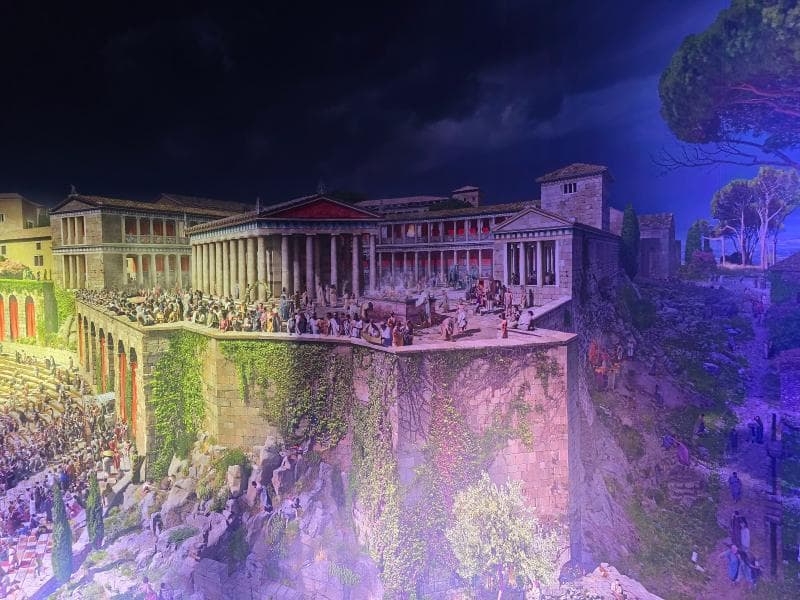
Explore Berlin's Pergamon Museum on Museum Island, home to the Pergamon Altar and Ishtar Gate, offering a journey into ancient civilizations.
Overview
The Pergamon Museum, a celebrated institution on Berlin's historic Museum Island, stands as a testament to humanity's rich cultural heritage. Opened in 1930, it is the youngest of the five museums that form the UNESCO World Heritage Site known as Museum Island. Conceived by Emperor Wilhelm II and designed by Alfred Messel, with Ludwig Hoffmann completing the project, the museum was built specifically to house monumental architectural reconstructions and extensive archaeological collections. It is home to three distinct collections: the Collection of Classical Antiquities, the Museum of the Ancient Near East, and the Museum of Islamic Art. Renowned globally for its reconstructed monumental structures, such as the Pergamon Altar and the Ishtar Gate of Babylon, the museum offers a unique journey through ancient civilizations. Please note that the Pergamon Museum is currently undergoing extensive renovation, with a full closure in effect since October 2023. Portions are expected to reopen in phases, starting with the North Wing in June 2027.
History & Cultural Background
The origins of the Pergamon Museum trace back to a vision to display vast archaeological finds unearthed by German expeditions in the late 19th and early 20th centuries. Early plans by Wilhelm von Bode, director of the Kaiser-Friedrich-Museum, aimed to create a dedicated space for ancient architecture, and Middle Eastern and Islamic art. Construction began in 1910 under challenging conditions, including the First World War and the hyperinflation of the 1920s, finally concluding in 1930. The museum's name is derived from its most famous exhibit, the Pergamon Altar, a colossal structure from the ancient Greek city of Pergamon (modern-day Turkey), which was shipped to Berlin in 1910. During the Second World War, the museum suffered severe damage, and its collections were largely moved for protection. After the war, some artifacts became war booty, and parts of the collection were divided between East and West Berlin. In 1999, Museum Island, including the Pergamon Museum, was designated a UNESCO World Heritage Site, recognizing its architectural significance and role in the evolution of museums.
What Makes It Special
The Pergamon Museum is particularly special for its impressive full-scale architectural reconstructions, which allow visitors to experience ancient monuments in a uniquely immersive way. The most prominent of these include the awe-inspiring Pergamon Altar, a Hellenistic masterpiece from the 2nd century BC featuring a dramatic 113-meter long sculptural frieze depicting the Gigantomachy – the battle between gods and giants. Equally captivating is the vibrant blue Ishtar Gate and the Processional Way of Babylon, dating back to the reign of King Nebuchadnezzar II in the 6th century BC. This monumental gate, adorned with glazed brick reliefs of mythical creatures like dragons and bulls, served as a grand entrance to ancient Babylon. Another significant reconstruction is the Market Gate of Miletus, a towering Roman structure from the 2nd century AD. The museum also houses the intricately carved Mshatta Facade from an 8th-century Umayyad desert palace, showcasing the grandeur of Islamic art.
Stories, Fun Facts & Local Details
One of the most compelling stories associated with the Pergamon Museum involves the Ishtar Gate. Its excavation by German archaeologists in the early 20th century and subsequent reconstruction in Berlin have been a subject of debate regarding the repatriation of cultural artifacts, with Iraq having formally requested its return multiple times. The decision to build such a grand museum on unstable ground proved problematic; an earlier, smaller building on the same site had to be demolished in 1909 due to structural damage from subsoil issues. The construction of the current museum took two decades and was fraught with challenges, including funding difficulties and geopolitical turmoil. During its comprehensive renovations, which began in phases in 2013, unexpected structural problems, like the discovery of old pump houses, further increased costs and extended timelines. While the main museum is closed, a nearby exhibition, 'Pergamonmuseum. Das Panorama', offers a 360-degree panorama of the ancient city of Pergamon by artist Yadegar Asisi, complemented by original artifacts, providing an alternative way to engage with the museum's spirit.
Visitor Perspective
For a curious traveler, understanding the current status of the Pergamon Museum is key. As of July 2026, the main building remains completely closed for extensive renovations. The first phase of reopening, which includes the Pergamon Altar hall, parts of the Collection of Classical Antiquities, and the newly arranged Museum of Islamic Art with the Mshatta Facade, is anticipated for June 4, 2027. However, iconic displays like the Ishtar Gate and the Market Gate of Miletus are not expected to be accessible until sometime in the 2030s, as part of later renovation phases. Despite the closure of the main building, visitors can still immerse themselves in the ancient world through the 'Pergamonmuseum. Das Panorama' exhibition, located directly opposite Museum Island. This temporary exhibition features a panoramic experience and some original artifacts, offering a valuable insight into the museum's treasures. Museum Island itself, a UNESCO World Heritage site, still offers plenty to explore with its other world-class museums remaining open.
Coordinates: 13.39647, 52.52091
View on Google Maps💬 How Travelers Describe This Place
Based on community votes
Unique
852Must See
270Photogenic
244Beautiful
146Interesting
80
Traveler Stories
Discover memorable experiences shared by travelers who have visited this place.
No traveler stories yet.
Be the first traveler to share what made this place memorable.

Tour
By
Spot
Discover amazing places around the world. Your journey starts here.
Explore
© 2026 TourBySpot. All rights reserved.