Performance Stage
Hanoi, Vietnam
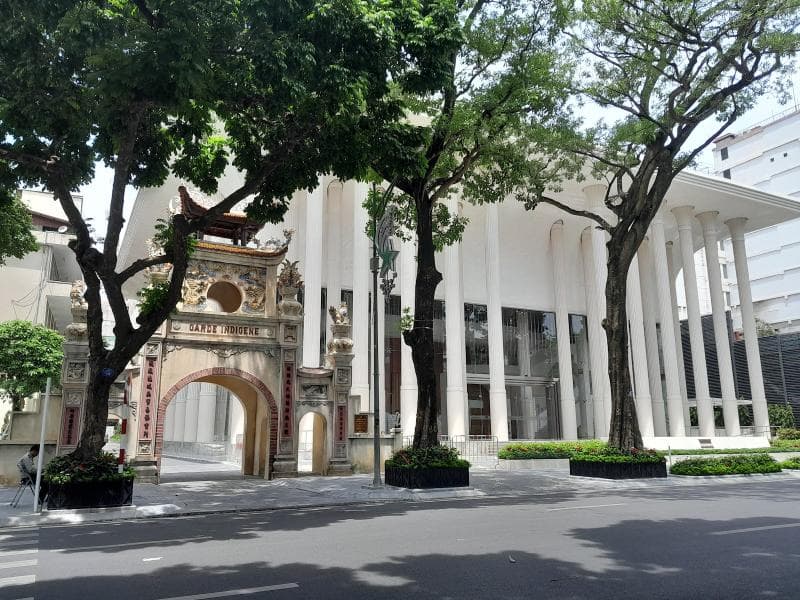
Discover the Performance Stage of the Hanoi Opera House in Hanoi, Vietnam, a historic and cultural landmark renowned for its stunning French colonial architecture and diverse artistic performances.
Overview
The Performance Stage within the Hanoi Opera House is not merely a platform for artists; it is the vibrant heart of a cultural landmark, nestled in the bustling capital of Hanoi, Vietnam. This magnificent stage, part of an architectural masterpiece inspired by Paris's Palais Garnier, has for over a century been a pivotal site for artistic expression and historical milestones. It stands as a testament to both French colonial heritage and the enduring spirit of Vietnamese art and culture, drawing visitors into a world where history and performance beautifully intertwine.
Located at 1 Trang Tien Street in the Hoan Kiem District, the opera house's stage hosts a diverse array of performances, from classical Western operas and ballets to traditional Vietnamese music and modern theatrical productions. Its grandeur and acoustic excellence make every performance an unforgettable experience, offering a unique glimpse into Hanoi's rich past and its dynamic artistic present.
History & Cultural Background
The Hanoi Opera House, including its central performance stage, was constructed by the French colonial administration between 1901 and 1911. Designed by architects Broyer and Harley, the building was modeled after the opulent Palais Garnier in Paris, intended to serve as a cultural hub primarily for the European elite and upper-class Vietnamese.
However, its role dramatically shifted following Vietnam's independence. What was once a symbol of colonial power transformed into a beacon of national pride and cultural preservation. The stage and its grand hall bore witness to significant historical events, including a pivotal mass meeting for the August Revolution in 1945, which marked a new chapter in Vietnam's journey to independence. It later hosted the first session of the National Assembly of the Democratic Republic of Vietnam in 1946, solidifying its place in the nation's historical narrative.
In the mid-1990s, a significant renovation project, supervised by architect Ho Thieu Tri, restored the opera house to its original splendor, ensuring its continued legacy as a witness to Hanoi's development and a premier venue for the arts.
What Makes It Special
The main performance hall, or auditorium, is truly the heart of the Hanoi Opera House. It features a horseshoe-shaped design, meticulously crafted to ensure excellent acoustics that carry every note and spoken word with clarity throughout the space. The seating, typically ranging from around 600 to 900 plush red velvet seats, is arranged over three tiers, offering varied perspectives of the stage.
The stage itself is a sophisticated setup, standing approximately three meters high and equipped with advanced lighting and sound systems. Modern stage machinery, including movable lifts, backdrop control devices, and an orchestra pit, allows for a wide range of productions, from intricate ballets to grand operatic spectacles. The interior is lavishly decorated with Corinthian columns, a magnificent crystal chandelier, ornate ceiling murals, and gilded details, creating an atmosphere of opulent grandeur.
Beyond its physical attributes, the stage is special for the incredibly diverse repertoire it hosts. It is a 'dream stage' for Vietnamese artists, showcasing both traditional Vietnamese art forms like 'Ca Trù', 'Chèo', and 'Cải Lương', alongside international classical music concerts, opera, and contemporary ballet performances by esteemed groups such as the Vietnam National Symphony Orchestra and the Vietnam National Opera & Ballet. This blend of local and global artistry makes the stage a unique cultural crossroads.
Stories, Fun Facts & Local Details
One fascinating aspect of the Hanoi Opera House's construction is its foundation. The massive stone building, weighing tens of thousands of tons, was originally built on what was once a pond and marshland extending from Hoan Kiem Lake. To overcome the soft ground, French engineers famously drove tens of thousands of sturdy bamboo piles underground, laying thick concrete layers to support this architectural marvel.
Locally, the Opera House is not just admired for its performances but also for its distinctive French neoclassical architecture with Gothic and Art Nouveau elements, particularly its striking yellow facade. Many have noted that its interior, with its meticulous design, is arguably even more aesthetically appealing than the Paris Opera House that inspired it.
The opera house and its surrounding square continue to be a focal point for cultural activities and community gatherings, embodying a deep connection to the city's identity and its evolving artistic landscape. It stands as a timeless symbol of elegance and artistic rebirth for Hanoians.
Visitor Perspective
For a curious traveler, experiencing a performance on this historic stage is an unforgettable journey. Whether attending a classical concert, a vibrant opera, or a traditional Vietnamese show, the intimate setting and superb acoustics promise an immersive cultural experience. Visitors are encouraged to purchase tickets in advance, especially for popular events, as shows often sell out. While there isn't a strict dress code, smart casual or formal attire is recommended out of respect for the venue and the performing arts.
Guided architectural tours are also available, offering a chance to explore the grand foyer, the ornate Mirror Room, and, of course, the magnificent auditorium and its stage, providing deeper insights into the building's history and design. Photography is generally permitted during tours when no performances are underway, allowing visitors to capture the timeless beauty of this iconic structure. Silence is to be maintained during performances, and photography or recording is strictly prohibited to ensure an undisturbed experience for all attendees.
Coordinates: 105.8547, 21.0212
View on Google Maps💬 How Travelers Describe This Place
Based on community votes
Unique
980Must See
712Beautiful
288Photogenic
247Interesting
130
Traveler Stories
Discover memorable experiences shared by travelers who have visited this place.
No traveler stories yet.
Be the first traveler to share what made this place memorable.

Tour
By
Spot
Discover amazing places around the world. Your journey starts here.
Explore
© 2026 TourBySpot. All rights reserved.