Peggy Guggenheim Museum
Venice, Italy
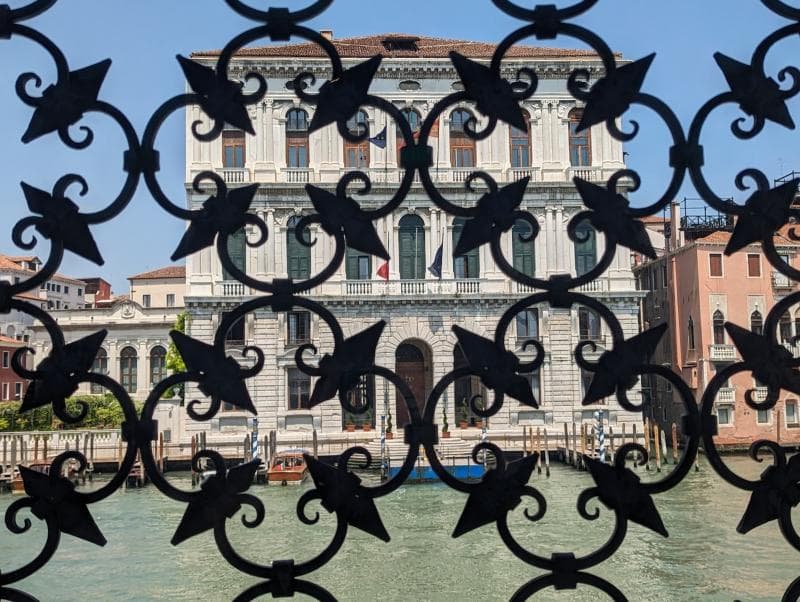
Explore modern masterpieces at the Peggy Guggenheim Museum in Venice, Italy, home to a world-class collection on the Grand Canal.
Overview
Nestled on the Grand Canal in the Dorsoduro district of Venice, Italy, the Peggy Guggenheim Museum stands as a beacon of modern art. Housed within the elegant, yet famously unfinished, Palazzo Venier dei Leoni, this museum is Italy's foremost institution for 20th-century European and American art. It offers an intimate glimpse into the extraordinary life and vision of its founder, American heiress and art collector Peggy Guggenheim. More than just a museum, it was once Peggy's home for three decades, a place where she lived surrounded by her unparalleled collection, making it one of Venice's most visited and cherished cultural destinations.
History & Cultural Background
The story of the Peggy Guggenheim Museum is inextricably linked with its namesake, a prominent figure in the 20th-century art world. Peggy Guggenheim, niece of mining magnate Solomon R. Guggenheim, developed a fervent passion for modern art, actively collecting works primarily between 1938 and 1946. Her collection grew to encompass groundbreaking movements like Cubism, Surrealism, and Abstract Expressionism, featuring artists such as Pablo Picasso, Salvador Dalí, Wassily Kandinsky, and Jackson Pollock.
After closing her 'Art of This Century' gallery in New York, Peggy returned to Europe, eventually settling in Venice. In 1948, she exhibited her collection for the first time at the Venice Biennale, introducing many American artists to Europe. The following year, in 1949, she purchased the Palazzo Venier dei Leoni. This 18th-century palace, designed by Lorenzo Boschetti, was intended to be a grand five-story structure, but due to financial difficulties of the Venier family, only the first floor was ever completed, leaving it with its distinctive low-slung facade along the Grand Canal. Peggy made the palazzo her home, and by 1951, she began opening it and her collection to the public a few afternoons a week. In 1970, she generously donated the palazzo, and in 1976, her entire collection, to the Solomon R. Guggenheim Foundation. The collection officially opened year-round as a museum in 1980, a year after her passing.
What Makes It Special
What truly sets the Peggy Guggenheim Museum apart is its unique blend of a personal residence and a world-class art institution. Visitors don't just view art; they step into the very rooms where Peggy Guggenheim lived, entertained, and cultivated her extraordinary taste. The museum houses an impressive selection of modern art, with masterpieces that tell stories of artistic innovation and daring.
Beyond the galleries, the museum boasts the tranquil Nasher Sculpture Garden, which offers a serene setting to appreciate sculptures amidst lush greenery and provides beautiful views of the Grand Canal. The unfinished nature of the Palazzo Venier dei Leoni itself is a compelling element, making the building a part of the artistic narrative. Its singular architecture, a stark contrast to the towering palaces surrounding it, creates a unique dialogue between history and modernity, encapsulating Peggy's unconventional spirit.
Stories, Fun Facts & Local Details
Peggy Guggenheim was a woman of fierce independence and pioneering spirit. One of the most endearing and widely known facts about her Venetian life is that she is buried in the museum's sculpture garden, alongside her beloved Lhasa Apso dogs. It is said to be the only museum in the world where the curator and her pets rest within its grounds, a testament to her profound love for them.
Her commitment to art was so profound that she once adopted the motto 'Buy a picture a day' during her collecting years in Europe, acquiring significant pieces even as World War II began. She was a tireless champion of emerging artists, notably providing Jackson Pollock with his first gallery exhibitions and a stipend, helping to launch his career. The Palazzo's name, 'Venier dei Leoni' (Venier of the Lions), is believed to stem either from sculptural lion heads adorning its facade or, more playfully, from a theory that the Venier family once kept a lion in the garden.
Visitor Perspective
Visiting the Peggy Guggenheim Museum is an experience that transcends a typical museum visit. It feels like being invited into a private home, allowing for a more intimate connection with the art and the collector's spirit. The atmosphere is often described as welcoming, allowing visitors to appreciate the art in a less formal setting than many other major institutions.
Located easily accessible along the Grand Canal, between the Accademia Bridge and the Church of Santa Maria della Salute, the museum is conveniently reached by water bus (vaporetto) or on foot through charming Venetian streets. Its popularity is evident as it consistently ranks among Venice's most visited attractions, second only to Doge's Palace, drawing hundreds of thousands of visitors annually. The museum offers various ways to engage with its collections, including guided tours and free presentations, providing deeper insights into Peggy's life and her significant contribution to modern art.
Coordinates: 12.33111, 45.43056
View on Google Maps💬 How Travelers Describe This Place
Based on community votes
Photogenic
948Unique
595Beautiful
358Interesting
196Must See
19
Traveler Stories
Discover memorable experiences shared by travelers who have visited this place.
No traveler stories yet.
Be the first traveler to share what made this place memorable.

Tour
By
Spot
Discover amazing places around the world. Your journey starts here.
Explore
© 2026 TourBySpot. All rights reserved.