Pedestrian Zone
Munich, Germany
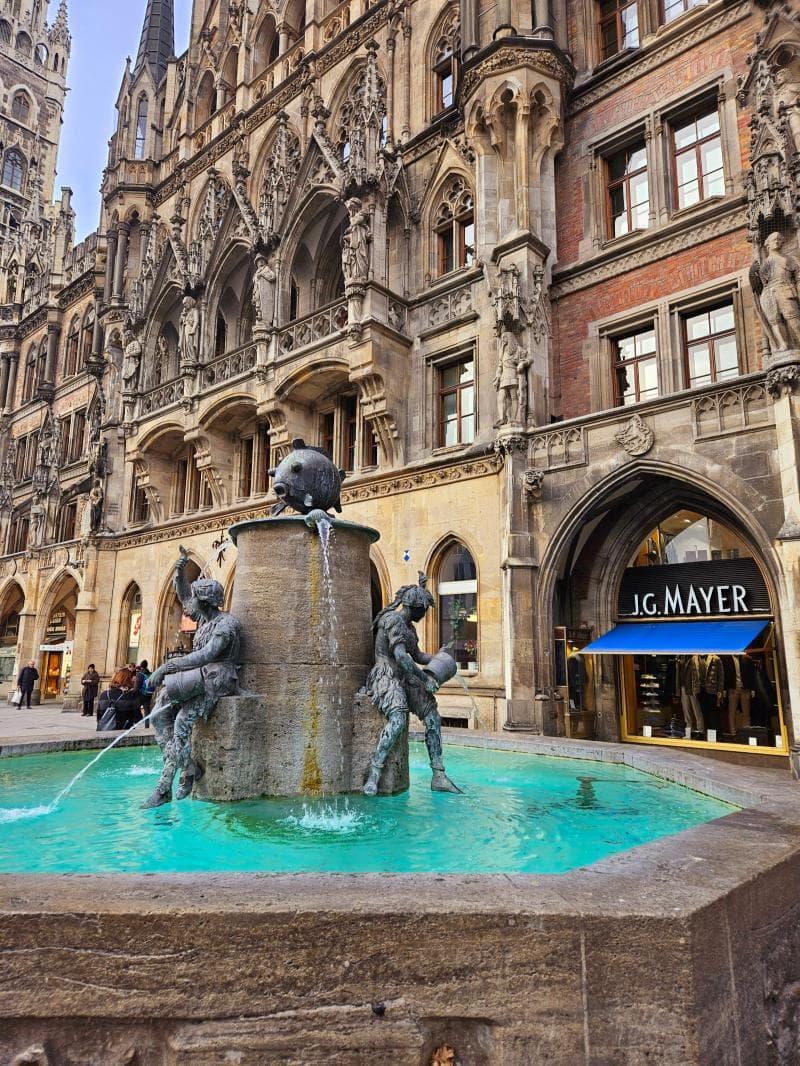
Explore Munich's vibrant Pedestrian Zone at Marienplatz, Germany. Discover rich history, the iconic Glockenspiel, and car-free shopping streets.
Overview
Munich's Pedestrian Zone, a vibrant heart within the bustling city, centers around the iconic Marienplatz and extends towards Karlsplatz (Stachus), forming a sprawling, car-free urban landscape. This lively area serves as Munich's primary pedestrian zone and a crucial transportation hub, making it incredibly accessible for locals and visitors alike. It's a place where history, culture, and modern city life seamlessly intertwine, offering an immersive Bavarian experience from the moment one steps onto its cobbled streets.
The zone, encompassing famous shopping streets like Kaufingerstraße and Neuhauser Straße, is not merely a retail destination. It's a continuous stage for daily life, celebrations, and chance encounters. Marienplatz itself, often referred to as 'Munich's front parlour,' acts as a central meeting point and the starting line for countless explorations into the city's rich past and present.
History & Cultural Background
The concept of a car-free zone in Munich was a visionary urban development plan, culminating in the official opening of the Pedestrian Zone on June 30, 1972, just in time for the Summer Olympic Games. Before this transformation, streets like Kaufingerstraße and Neuhauser Straße were choked with traffic, with up to 75,000 cars and trams daily, forcing pedestrians to navigate dangerously amidst the congestion.
Munich thus became the first German city to establish such a central, car-free shopping area. The architect Bernhard Winkler played a significant role in its design, contributing to its furniture and many fountains. Marienplatz itself has been the city's central square since Munich's founding in 1158 by Henry the Lion. It began as a bustling marketplace, known as 'Schrannenplatz' or 'Grain Market Square,' serving as the commercial, judicial, and administrative core of the nascent city.
Its renaming to Marienplatz occurred in 1854, influenced by a cholera epidemic, placing the square under the patronage of the Virgin Mary. However, the Marian Column (Mariensäule), central to the square's identity, was erected much earlier in 1638 to commemorate Bavaria's deliverance from Swedish occupation during the Thirty Years' War.
What Makes It Special
What truly sets Munich's Pedestrian Zone apart is its harmonious blend of historical grandeur and contemporary vitality. It is a space where magnificent neo-Gothic and older architectural styles stand side-by-side, creating a captivating backdrop for daily activities. The zone provides car-free access to Munich's historic center, making it exceptionally pleasant for leisurely strolls.
The New Town Hall (Neues Rathaus), with its intricate facade, dominates Marienplatz and houses the famous Glockenspiel, a mechanical clock that re-enacts historical scenes with 32 figures and 43 bells. Visible from various points within the zone are the distinctive turquoise domes of the Frauenkirche (Cathedral of Our Lady), adding to the cityscape's unique charm.
Beyond its architectural beauty, the Pedestrian Zone is a cultural hub where major celebrations, from Oktoberfest processions to Christmas markets, unfold. It hosts public gatherings and is often the site of spontaneous street performances, fostering a constant sense of energy and community.
Stories, Fun Facts & Local Details
One of the most beloved traditions is the Glockenspiel performance at the New Town Hall, which takes place daily at 11 AM and 12 PM, with an additional 5 PM show from March to October. It tells the stories of Duke Wilhelm V's marriage and the Schäfflertanz, or Coopers' Dance, said to have originated during a plague to cheer up the populace.
The Mariensäule, crowned with a golden statue of the Virgin Mary standing on a crescent moon, represents Mary's triumph over war, plague, hunger, and heresy, symbolized by four battling putti at its base.
For locals, the Fischbrunnen (Fish Fountain) in front of the New Town Hall is a popular and easily recognizable meeting spot. This historic fountain, rebuilt after being destroyed during World War II, continues to be a central point for social arrangements.
The Kaufingerstraße, one of the busiest shopping streets in Germany, was first mentioned as 'Chufringerstraße' in 1316, making it one of Munich's oldest street names and highlighting its enduring commercial significance as part of the old Salt Road.
Visitor Perspective
For visitors, the Pedestrian Zone is undeniably the ideal starting point for exploring Munich. Its central location and excellent public transport links, with six U-Bahn and S-Bahn lines converging beneath Marienplatz, make it incredibly easy to reach.
The area offers a seamless walking experience, connecting numerous shops, restaurants, cafes, and key attractions like the Old Town Hall (Altes Rathaus) and the Viktualienmarkt, all within comfortable walking distance. Its well-maintained sidewalks and car-free environment contribute to a safe and enjoyable exploration of Munich's historic core.
Whether you're there to marvel at the Glockenspiel, immerse yourself in history, enjoy some Bavarian cuisine, or simply soak in the lively atmosphere, the Pedestrian Zone around Marienplatz provides an authentic and memorable glimpse into the soul of Munich. Tourist information services are also conveniently located within the New Town Hall, offering advice and tickets for further explorations.
Coordinates: 11.5754, 48.13714
View on Google Maps💬 How Travelers Describe This Place
Based on community votes
Interesting
953Beautiful
695Photogenic
658Must See
396Unique
22
Traveler Stories
Discover memorable experiences shared by travelers who have visited this place.
No traveler stories yet.
Be the first traveler to share what made this place memorable.

Tour
By
Spot
Discover amazing places around the world. Your journey starts here.
Explore
© 2026 TourBySpot. All rights reserved.