Parking Overlook
San Francisco, United States
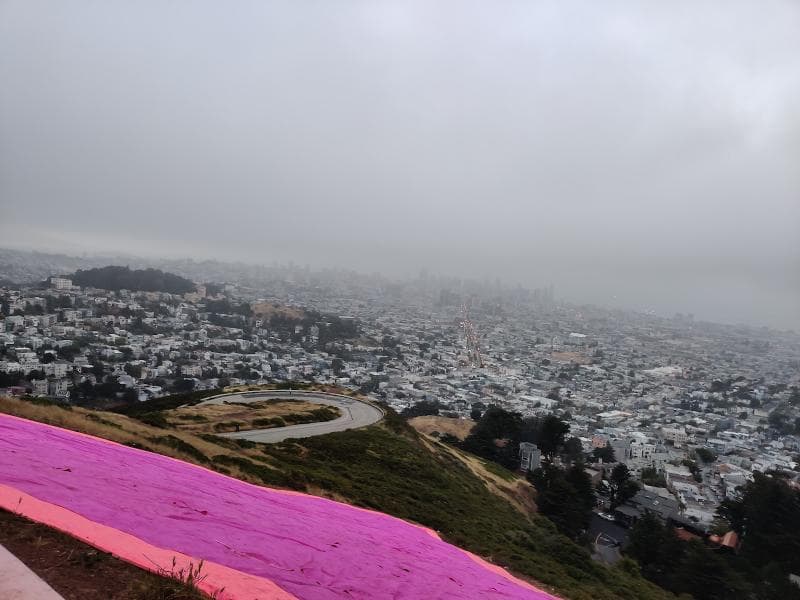
Discover the Twin Peaks Parking Overlook in San Francisco, United States, offering unparalleled panoramic views of the city, bay, and ocean. Explore its history and unique features.
Overview
Perched majestically near the geographical heart of San Francisco, the Twin Peaks Parking Overlook offers a breathtaking 360-degree panorama of the city, the expansive San Francisco Bay, and the Pacific Ocean beyond. This iconic viewpoint, situated within the larger Twin Peaks natural area, is a magnet for travelers and locals alike seeking unparalleled vistas. As you arrive at the summit, the designated parking area provides immediate access to sweeping views that stretch from the Golden Gate Bridge and Alcatraz to the downtown skyline and the Mission District. It is a place where San Francisco's dramatic topography and urban sprawl unfold beneath you, creating a memorable visual experience.
History & Cultural Background
The Twin Peaks have long held significance for the people of San Francisco. Historically, the native Ohlone people utilized these prominent hills as a crucial lookout point, offering a strategic vantage over the peninsula. Early Spanish settlers, captivated by the distinctive shape of the two adjacent hills, originally named them 'Los Pechos de la Choca', meaning 'Breasts of the Maiden'. Later, in the 19th century, the more familiar name 'Twin Peaks' was adopted. Today, the Twin Peaks area is not merely a scenic spot but a protected natural area, covering 31 acres and managed by the San Francisco Recreation and Parks Department. This preservation ensures the survival of its unique coastal scrub and grassland ecosystems, giving visitors a glimpse into the city's pre-development landscape.
What Makes It Special
What truly sets the Twin Peaks Parking Overlook apart is its unrivaled perspective. At an elevation of approximately 925 feet, it stands as the second and third highest natural points in San Francisco, surpassed only by Mount Davidson. Unlike other viewpoints, the peaks are largely undeveloped, offering unobstructed sightlines in every direction, free from dense tree cover. The two peaks themselves, known individually as 'Eureka' (the northern peak) and 'Noe' (the southern peak), are separated by about 660 feet and play a vital role in shaping the city's microclimates. They act as a natural barrier, often diverting the summer fog and allowing eastern neighborhoods to enjoy more sunshine while the western slopes remain misty. This unique geographical position contributes to the dynamic weather patterns experienced at the summit, where conditions can change rapidly.
Stories, Fun Facts & Local Details
- Mission Blue Butterfly: The Twin Peaks Natural Area is a critical habitat for the federally listed endangered Mission Blue Butterfly. This quarter-sized, light blue butterfly relies on the park's rocky grasslands and specific lupine species for its survival, a testament to the area's ecological importance.
- Pink Triangle: Every June during Pride Month, the Twin Peaks become a canvas for a powerful art installation – the Twin Peaks Pink Triangle. First installed in 1995, this acre-large triangle, made of pink sailcloths (and sometimes LED lights), faces the Castro District and serves as a poignant symbol commemorating LGBTQ+ victims of the Holocaust and celebrating LGBTQ+ rights.
- Fire Department Reservoir: Hidden from immediate view, a significant 14-million-gallon Summit Reservoir rests atop Twin Peaks. This reservoir is crucial for San Francisco's fire department, supplying water to its independent high-pressure fire suppression system, a direct legacy of the devastating 1906 earthquake and fire.
- Promenade Project: A section of Twin Peaks Boulevard, previously a roadway, is being transformed into the Twin Peaks Promenade. This project, which broke ground in 2026, aims to create a linear park with parallel trails for pedestrians, cyclists, and those with accessibility needs, further enhancing the visitor experience and connecting to the wider Bay Area Ridge Trail.
Visitor Perspective
A visit to the Twin Peaks Parking Overlook is an essential San Francisco experience, best enjoyed with a few considerations. While the views are spectacular at any time, sunrise and sunset offer particularly magical moments, painting the sky with vibrant hues over the city lights. However, it's wise to be prepared for the elements. The exposed elevation means strong winds are common, and San Francisco's notorious fog can roll in quickly, obscuring views. Dressing in layers and wearing sturdy shoes are highly recommended. The main parking area is at Christmas Tree Point, which can get busy, especially on clear days and around sunset, so arriving early is advisable. From the overlook, visitors can choose to simply enjoy the 180-degree views or embark on a short walk to the true summits of the peaks for an even more encompassing 360-degree vista.
Coordinates: -122.451541, 37.753098
View on Google Maps💬 How Travelers Describe This Place
Based on community votes
Unique
836Interesting
797Photogenic
286Beautiful
255Must See
86
Traveler Stories
Discover memorable experiences shared by travelers who have visited this place.
No traveler stories yet.
Be the first traveler to share what made this place memorable.

Tour
By
Spot
Discover amazing places around the world. Your journey starts here.
Explore
© 2026 TourBySpot. All rights reserved.