Papal Cross
Dublin, Ireland
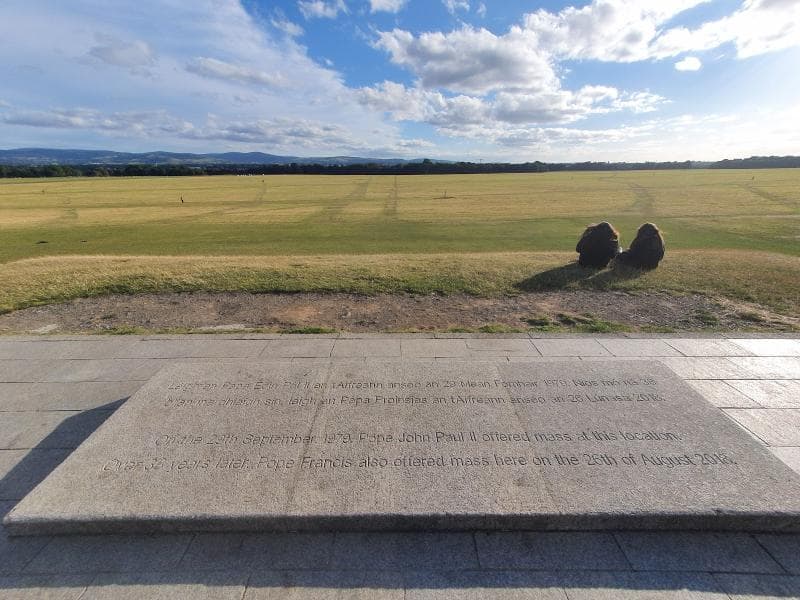
Discover the iconic Papal Cross in Phoenix Park, Dublin, Ireland – a towering symbol of faith and a landmark of Irish history, witnessing millions.
Overview
The Papal Cross stands as a prominent and deeply symbolic landmark within the expansive green heart of Phoenix Park in Dublin, Ireland. Rising majestically from the Fifteen Acres area, this towering white steel structure is more than just a cross; it is a profound historical marker. Erected for a momentous event in modern Irish history, it continues to draw visitors seeking both historical understanding and a tranquil escape within one of Europe's largest enclosed urban parks. Its simple yet striking design against the Dublin sky offers a sense of peace and reflection, inviting contemplation of the significant gatherings it has witnessed.
Visible from a considerable distance across the parkland, the cross serves as a natural focal point for walkers, cyclists, and those simply enjoying the serene landscape. Surrounded by open fields often grazed by the park's wild fallow deer, the area around the Papal Cross provides panoramic views of Phoenix Park's vast beauty. It is a place where history resonates softly amidst nature's calm, accessible to all who wish to experience its unique atmosphere.
History & Cultural Background
The story of the Papal Cross begins in 1979, when it was hastily erected for the historic visit of Pope John Paul II to Ireland. This visit marked the first time a reigning pontiff had ever set foot on Irish soil, igniting a fervent spiritual and national response. On September 29, 1979, an astonishing 1.25 million people gathered in Phoenix Park to attend an open-air Mass celebrated by the Pope at the foot of this very cross. It was an event that indelibly stamped itself on the nation's collective memory, signifying a powerful moment of faith and unity for a predominantly Catholic country.
Designed by the esteemed Irish firm Scott Tallon Walker Architects, specifically by Ronnie Tallon, the cross was a considerable feat of engineering. Standing an impressive 116 feet (35 meters) high, it was constructed from painted steel beams by J. and C. McGloughlin steelworks in Inchicore and put in place in a remarkably short period of about eight weeks. Despite its grandeur, the cross was originally intended to be a temporary structure. However, its immense social and religious significance, combined with the intervention of then Taoiseach Charles J. Haughey, ensured its permanent retention. Although initially lacking formal planning permission, its continued presence was later sanctioned by Dublin Corporation, now Dublin City Council, acknowledging its status as a landmark.
Decades later, the Papal Cross once again became the focal point for a pontifical visit. In August 2018, Pope Francis celebrated Mass at the site during his own visit to Ireland. While the attendance of approximately 130,000 people was significantly smaller than in 1979, it underscored the enduring spiritual and cultural importance of the location, even as it reflected a changing societal landscape in Ireland.
What Makes It Special
What makes the Papal Cross truly special is its dual role as both a monumental religious symbol and a powerful historical testament. It is a tangible link to one of the most significant public gatherings in Irish history, embodying a shared national experience that transcended mere religious observance. The sheer scale of the 1979 event, with over a million people united in one place, speaks volumes about its impact on the Irish psyche.
Beyond its historical weight, the cross stands as a symbol of endurance. Conceived as temporary, its continued presence highlights its deep-rooted meaning for the community. Its simple, unadorned white steel design allows for individual interpretation and universal appeal, acting as a beacon of peace and reflection for people of all backgrounds who visit Phoenix Park. The contrast between its minimalist form and the vast, vibrant landscape of the park creates a unique visual and spiritual experience.
Stories, Fun Facts & Local Details
One of the most fascinating aspects of the Papal Cross is the story of its unexpected permanence. Initially designed and installed as a temporary fixture for Pope John Paul II's 1979 Mass, plans were supposedly in place to dismantle it shortly after the event. However, a combination of popular sentiment and a discreet intervention by then Taoiseach Charles J. Haughey, who was reportedly convinced by architect Ronnie Tallon of its significance, led to its indefinite retention. It is said that Haughey personally intervened with the Office of Public Works (OPW) to ensure it remained, effectively cementing its place in the park's landscape.
The construction itself was a marvel of rapid execution, orchestrated in just eight weeks from design approval to erection. Imagine the logistical challenge of assembling such a large structure and preparing the site for over a million attendees in such a short timeframe! The cross became a symbol of national pride, even featuring a two-acre papal carpet made in County Antrim, a detail that garnered media attention given the political climate of the time.
Today, the area around the cross remains a vibrant part of Phoenix Park life. Visitors often find themselves sharing the open expanse with the park's famous herd of wild fallow deer, adding to the picturesque and serene atmosphere. It's a place where history, nature, and quiet contemplation converge, offering a truly Irish experience.
Visitor Perspective
Visiting the Papal Cross offers a unique blend of historical immersion and natural beauty. The cross is freely accessible within Phoenix Park, which is open twenty-four hours a day, seven days a week. It serves as an excellent landmark to aim for during a walk or cycle through the park, offering clear views from various points.
The location on the edge of the Fifteen Acres provides a wide-open, peaceful setting ideal for reflection, a quiet picnic, or simply enjoying the expansive views. Many visitors appreciate the opportunity to walk around the base of the cross, gaining a sense of its towering scale and the historical weight it carries. The surrounding area is relatively flat, making it accessible for most, including those with wheelchairs. While there is not extensive signage directly at the site, the sheer presence of the cross and the history it represents often speak for themselves. Parking is available nearby, and the site is a pleasant 10-15 minute walk from the Phoenix Park Visitor Centre. It's a place to pause, breathe, and connect with a significant piece of Ireland's past in a truly beautiful natural environment.
Coordinates: -6.32909, 53.35661
View on Google Maps💬 How Travelers Describe This Place
Based on community votes
Must See
931Interesting
670Unique
655Beautiful
266Photogenic
166
Traveler Stories
Discover memorable experiences shared by travelers who have visited this place.
No traveler stories yet.
Be the first traveler to share what made this place memorable.

Tour
By
Spot
Discover amazing places around the world. Your journey starts here.
Explore
© 2026 TourBySpot. All rights reserved.