Palm House
Vienna, Austria
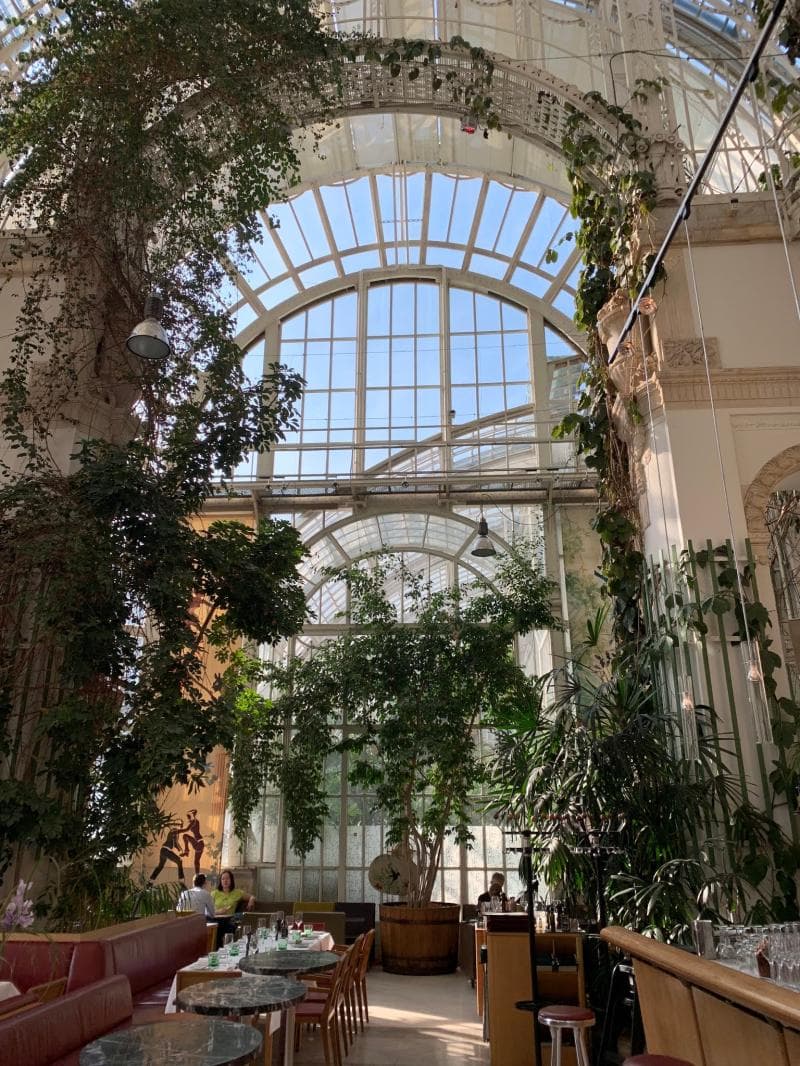
Explore the magnificent Palm House at Schönbrunn Palace in Vienna, Austria. Discover its unique glass architecture and diverse plant collections.
Overview
Nestled within the expansive gardens of Schönbrunn Palace in Vienna, Austria, the Palm House, known locally as Palmenhaus Schönbrunn, stands as a magnificent testament to 19th-century botanical engineering and imperial ambition. It is one of the largest botanical exhibits of its kind in the world, housing an impressive collection of approximately 4,500 to 5,000 plant species from diverse climatic zones across the globe. This monumental iron-and-glass greenhouse offers a captivating journey through tropical, subtropical, and Mediterranean flora, providing a warm, verdant escape even in the heart of winter. As a prominent feature of the UNESCO World Heritage-listed Schönbrunn Palace Park, the Palm House draws visitors into a world of exotic plant life and architectural grandeur.
History & Cultural Background
The story of the Palm House at Schönbrunn is deeply intertwined with the Habsburg monarchy's passion for natural sciences and botanical collection. Early palm houses and greenhouses existed in the palace park since the 18th and 19th centuries, initiated by Emperors Francis I and Joseph II. The current Palmenhaus, however, was commissioned by Emperor Franz Joseph I and built between 1880 and 1882. Designed by court architect Franz-Xaver Segenschmid and constructed by Ignaz Gridl, its opening on June 19, 1882, marked a significant architectural and botanical achievement. At the time of its inauguration, it was considered the largest greenhouse in the world, a symbol of imperial prestige and a hub for botanical advancement. For many years, the collections were cared for by the k.u.k. Hofgärten (Imperial and Royal Court Gardens), and since 1918, it has been managed by the Bundesgärten (Federal Gardens). The structure has faced its share of challenges, enduring severe damage during a bomb attack in February 1945, which destroyed most of its glazing and resulted in the loss of many plants. Following extensive rebuilding efforts, it was reopened in 1953. A temporary closure in 1976 due to safety concerns, following the collapse of the Reichsbrücke, led to further renovations between 1986 and 1990.
What Makes It Special
The Palm House's unique appeal lies in its monumental iron-and-glass architecture and its remarkable botanical diversity. Spanning 111 meters in length, 28 meters in width, and rising to a height of 25 meters, the building is composed of 600 tons of wrought iron and 120 tons of cast iron, covered by approximately 45,000 glass panes. Its innovative design features three distinct pavilions, each maintaining a different climate zone through a sophisticated steam heating system. The central pavilion houses a temperate Mediterranean climate, the northern annex functions as a cold house, and the southern annex provides a hothouse environment for tropical species. This allows for the cultivation of a vast array of plants, from high-altitude mountain flora to lush rainforest inhabitants. The collection includes notable specimens like a 350-year-old olive tree from Spain, a prehistoric Wollemia pine, and a rare Coco de Mer plant from the Seychelles. The impressive Victoria amazonica water lily, with leaves reaching up to 1.2 meters in diameter, also makes a seasonal appearance.
Stories, Fun Facts & Local Details
Upon its completion in 1882, the Schönbrunn Palm House was recognized as the largest glasshouse globally, a testament to the cutting-edge engineering of its era. The immense scale of its construction required 45,000 individual glass panes, which were reportedly cleaned by cadets of the Austrian Navy to maintain maximum light penetration. A particular highlight is the 'Mirna palm,' a Livistona chinensis planted in 2008 in the central pavilion, named after Austrian swimmer Mirna Jukić. The building's restoration in 1990, undertaken by the successor company of its original builders, Waagner Biro, cost 212 million Austrian schillings, highlighting the ongoing commitment to preserving this botanical treasure. Earlier botanical gardens on this site, predating the current structure, contained as many as 4,000 plants from nearly 800 different species as early as 1799.
Visitor Perspective
Stepping into the Palm House is akin to embarking on a botanical expedition, a sensory journey through diverse ecosystems. The transitions between the cold, temperate, and tropical zones offer a tangible experience of different global climates, all under one magnificent glass roof. Visitors can wander along elevated pathways and spiral staircases, gaining unique perspectives on the towering palms and intricate plant arrangements. It provides a tranquil and educational escape, allowing one to appreciate the intricate beauty of nature and the ingenuity required to cultivate such a varied collection. Located within the vast Schönbrunn Palace Park, it is conveniently situated near other attractions like the Desert House and Schönbrunn Zoo, making it a perfect complement to a day exploring imperial Vienna. The Palm House is open daily throughout the year, offering a vibrant, green oasis regardless of the season outside.
Coordinates: 16.3098086, 48.1802626
View on Google Maps💬 How Travelers Describe This Place
Based on community votes
Photogenic
894Beautiful
748Interesting
304Must See
73Unique
35
Traveler Stories
Discover memorable experiences shared by travelers who have visited this place.
No traveler stories yet.
Be the first traveler to share what made this place memorable.

Tour
By
Spot
Discover amazing places around the world. Your journey starts here.
Explore
© 2026 TourBySpot. All rights reserved.