Palazzo Pamphilj
Rome, Italy
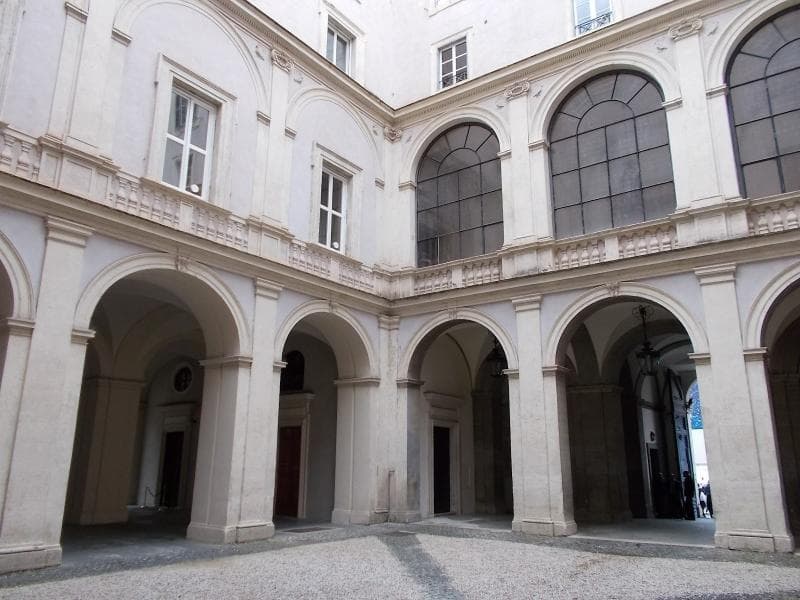
Explore Palazzo Pamphilj in Rome, Italy, a Baroque masterpiece on Piazza Navona. Discover its history as Pope Innocent X's residence and current role as the Brazilian Embassy.
Overview
Standing majestically on the western flank of Rome’s iconic Piazza Navona, Palazzo Pamphilj is a grand testament to Baroque ambition and artistry. This historic palace, built between 1644 and 1650, is not merely an architectural marvel but a repository of rich Roman history. Today, it serves as the Embassy of Brazil in Italy, a unique role for such a significant landmark. Visitors exploring Piazza Navona will immediately notice its elegant facade, a subtle yet imposing presence amidst the square's vibrant atmosphere.
History & Cultural Background
The story of Palazzo Pamphilj begins with the ascent of Cardinal Giovanni Battista Pamphilj, who, upon his election as Pope Innocent X in 1644, sought to create a residence befitting his family's newfound prestige. The ambitious project involved consolidating several existing family properties on Piazza Navona. The renowned architect Girolamo Rainaldi was initially commissioned, with construction commencing in 1646. However, the architectural narrative of the palace is further enriched by the involvement of Francesco Borromini, a master of Baroque design, who was consulted in 1647. Although Rainaldi's more conservative design largely prevailed, Borromini's ingenious contributions included the intricate stucco work of the main salon and the elegant design of the palace’s grand Gallery.
The construction and subsequent lavish adornment of the palace were closely overseen by Pope Innocent X's influential sister-in-law, Olimpia Maidalchini. Her prominent role and perceived influence over the Pope earned her the nickname 'La Pimpaccia di Piazza Navona' and made her the subject of popular satirical verses, known as 'pasquinades,' often displayed on the ancient 'talking statue' of Pasquino located near the palace. The palace was a central element in Innocent X's broader vision to transform Piazza Navona into a grand showcase of Pamphilj power and patronage, alongside the extensive refurbishment of the square and the concurrent construction of the magnificent Church of Sant'Agnese in Agone. The Pamphilj family proudly asserted a lineage tracing back to the mythical Aeneas, a claim boldly depicted in the palace's frescoes, intertwining family legacy with the very foundation myths of Rome itself.
What Makes It Special
Palazzo Pamphilj stands as one of Rome's most distinguished examples of aristocratic Baroque architecture. Its interior boasts an extraordinary collection of frescoes by leading 17th-century artists. Among the most notable is Pietro da Cortona's breathtaking cycle depicting scenes from the life of Aeneas, adorning the vault of the palace's Gallery. Other masters such as Giacinto Gimignani, Gaspard Dughet, Andrea Camassei, and Giacinto Brandi also contributed to the palace's rich artistic tapestry.
The palace's direct frontage onto Piazza Navona offers unparalleled views of Gian Lorenzo Bernini's spectacular Fountain of the Four Rivers, establishing a dramatic architectural dialogue between the two Baroque masterpieces. A thoughtful detail of the palace's design, attributed in part to Borromini, was a private passage connecting it directly to the adjacent Church of Sant'Agnese in Agone, allowing the Pamphilj family to attend religious services without leaving their residence. A recent restoration has meticulously brought back the palace's original pastel blue facade, further enhancing its visual splendor.
Stories, Fun Facts & Local Details
The saga of Olimpia Maidalchini, Pope Innocent X's sister-in-law, adds a fascinating layer of intrigue to the palace's history. Her immense influence and perceived avarice made her a frequent target of anonymous, often scandalous, satirical verses known as 'pasquinades,' which were posted on the ancient 'talking statue' of Pasquino located near the palace. The statue was even nicknamed 'Olimpia' in reference to her.
An enduring family legend, embodied in the palace's art, is the Pamphilj claim of direct descent from Aeneas, the Trojan hero and mythical founder of Rome. Pietro da Cortona's frescoes in the Gallery were a grand visual proclamation of this prestigious lineage, boldly connecting the Pamphilj family to Rome's heroic origins.
Beyond its historical grandeur, Palazzo Pamphilj also holds a place in more modern memories. For instance, the plaza in front of the embassy once hosted a large screen for the Brazilian community and visitors to watch the 2002 World Cup Final, celebrating Brazil's victory in a truly Roman setting. The palace's roof terrace also occasionally hosts concerts, often featuring Italian opera, blending cultural heritage with contemporary entertainment.
Visitor Perspective
As the official Embassy of Brazil, Palazzo Pamphilj is not generally open for casual public visits. However, curious travelers can always admire its magnificent exterior from the bustling Piazza Navona, appreciating its architectural grandeur and commanding presence in one of Rome's most famous squares.
For those eager to glimpse inside, opportunities do arise. The embassy periodically organizes guided tours, typically offered once every two weeks on Tuesdays, though advance booking is essential. Additionally, the palace sometimes opens its doors during special cultural heritage events like 'Palazzo Aperto' or 'Giornate FAI.' Perhaps the most accessible way to experience a part of Palazzo Pamphilj's interior charm and unparalleled views is by visiting its renowned roof terrace. Home to a restaurant and bar, this spot offers breathtaking vistas of the Roman skyline, including the Pantheon's dome and St. Peter's Basilica, and frequently hosts cultural events and Italian opera performances. It's a wonderful opportunity to soak in Rome's beauty from a historic vantage point.
Coordinates: 12.47278, 41.89833
View on Google Maps💬 How Travelers Describe This Place
Based on community votes
Photogenic
836Must See
287Interesting
255Beautiful
231Unique
86
Traveler Stories
Discover memorable experiences shared by travelers who have visited this place.
No traveler stories yet.
Be the first traveler to share what made this place memorable.

Tour
By
Spot
Discover amazing places around the world. Your journey starts here.
Explore
© 2026 TourBySpot. All rights reserved.