Palazzo Grassi
Venice, Italy
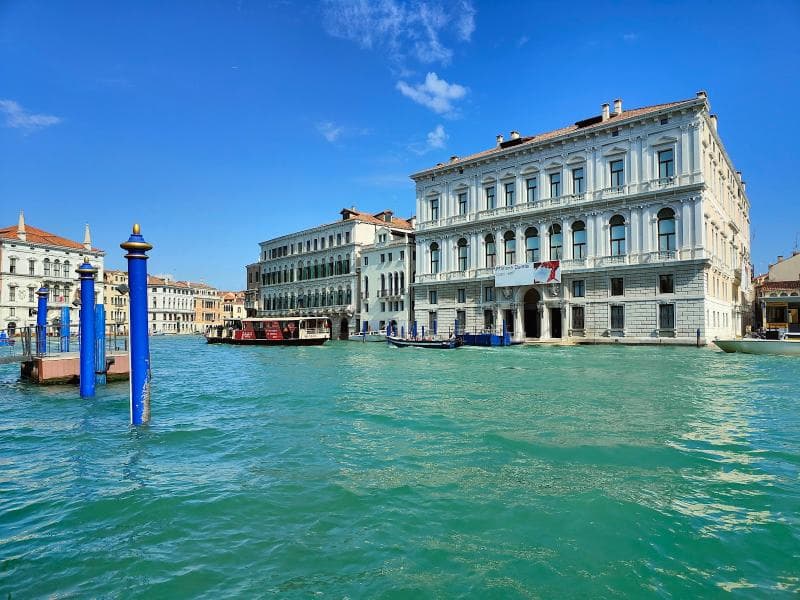
Explore Palazzo Grassi on Venice's Grand Canal, an 18th-century neoclassical palace now home to the Pinault Collection's contemporary art in Italy.
Overview
Nestled elegantly along the iconic Grand Canal in Venice, Italy, Palazzo Grassi stands as a captivating testament to the city's rich architectural heritage and its vibrant contemporary art scene. This magnificent 18th-century palace, known for its distinguished Venetian Classical style, offers a unique juxtaposition of historical grandeur and avant-garde artistic expression. Today, it serves as one of the prominent exhibition venues for the renowned Pinault Collection, presenting thought-provoking contemporary art shows in a setting steeped in centuries of history.
Its position on the Grand Canal makes it not just a landmark but a living part of Venice's intricate aquatic tapestry, inviting curious travelers to delve into a space where the past and present converge in a visually stunning dialogue.
History & Cultural Background
The history of Palazzo Grassi is as layered and intriguing as Venice itself. The palace we see today was designed by the esteemed architect Giorgio Massari and constructed between 1748 and 1772 for the noble Grassi family, one of Venice's most influential mercantile families. It holds the distinction of being the last grand patrician palace built on the Grand Canal before the fall of the Venetian Republic.
Over the centuries, Palazzo Grassi changed hands numerous times after the Grassi family sold it in 1840 due to financial challenges. In the mid-20th century, specifically from 1951 to 1983, it transformed into the International Centre of Arts and Costume, hosting various cultural events and fashion shows. The Fiat Group acquired the palace in 1983, undertaking a significant restoration under architect Gae Aulenti, with the vision of creating a major exhibition space for visual arts. In 2005, a new chapter began when French businessman and art collector François Pinault purchased the palazzo. He commissioned Japanese architect Tadao Ando to oversee its renovation, transforming it into the premier contemporary art museum it is today, reopening its doors in 2006.
What Makes It Special
Palazzo Grassi's distinction lies in its unique architectural character and its modern purpose. Unlike the predominantly Byzantine Romanesque and Baroque palaces lining the Grand Canal, Palazzo Grassi exhibits an academic classical or neoclassical style with a formal, white marble façade, designed to reflect the Grassi family's status and prestige. Its symmetrical structure and less ornamented approach differentiate it from its older Venetian counterparts.
As a key venue for the Pinault Collection, it showcases contemporary art within an 18th-century palace, creating a powerful dialogue between historical settings and modern artistic expression. This fusion offers visitors a rare opportunity to experience cutting-edge art installations against a backdrop of ornate frescoes, grand staircases, and historic Venetian architecture. Furthermore, its close association with Punta della Dogana, another Pinault Collection venue, establishes a significant cultural hub for contemporary art in Venice.
Stories, Fun Facts & Local Details
Beyond its official narrative, Palazzo Grassi is woven into the fabric of Venetian lore. It was the largest-sited palace on the Grand Canal built just before the Republic's demise, representing the final architectural statement of an era. Inside, the grand main stairwell is adorned with impressive frescoes by Michelangelo Morlaiter and Francesco Zanchi, while artists Giambattista Canal and Christian Griepenkerl decorated the ceilings, adding layers of artistic detail to its interiors. What was once an open courtyard has been transformed into an imposing, covered entrance hall, showcasing the adaptive reuse of this historic space.
Adjacent to the main palazzo, the Teatrino di Palazzo Grassi, also redesigned by Tadao Ando, is a modern 225-seat auditorium that hosts a rich cultural program including film screenings, concerts, and lectures, enriching the museum's offerings. There's even a local tale that the palace is haunted by the ghost of a young girl, adding a touch of mystique to its grand halls.
Visitor Perspective
Visiting Palazzo Grassi offers a profound journey through time and art. Travelers can immerse themselves in the interplay of neoclassical architecture and bold contemporary installations, where the splendor of Venice's past embraces the innovations of its artistic present. The experience is designed to be thought-provoking, inviting personal interpretation and engagement with diverse themes explored by renowned artists from around the globe. Whether you are an avid art enthusiast or simply a curious traveler, the palazzo's ability to blend its historical grandeur with the dynamic world of modern art provides an enriching and unforgettable cultural encounter in the heart of Venice.
Coordinates: 12.32795, 45.43376
View on Google Maps💬 How Travelers Describe This Place
Based on community votes
Interesting
953Beautiful
695Photogenic
658Must See
396Unique
22
Traveler Stories
Discover memorable experiences shared by travelers who have visited this place.
No traveler stories yet.
Be the first traveler to share what made this place memorable.

Tour
By
Spot
Discover amazing places around the world. Your journey starts here.
Explore
© 2026 TourBySpot. All rights reserved.