Palace Gardens
Warsaw, Poland
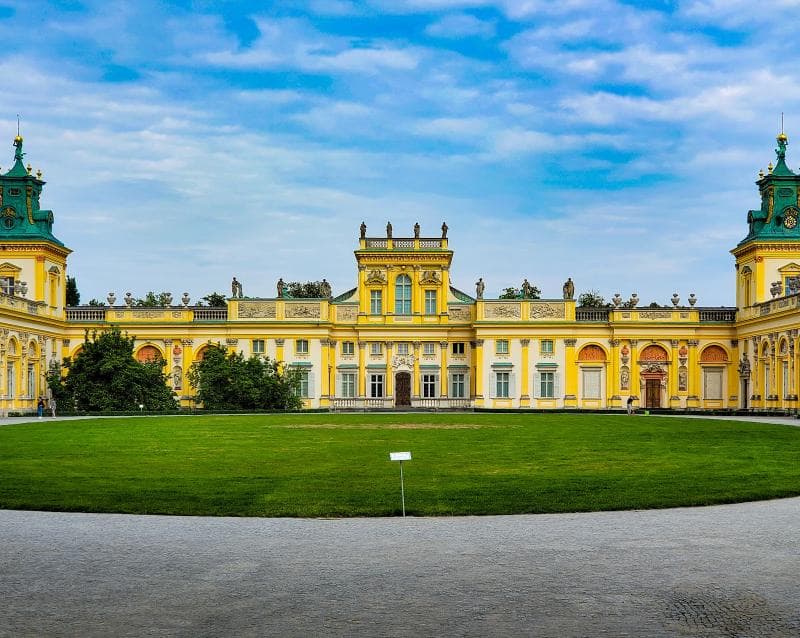
Explore the historic Palace Gardens of Wilanów Palace in Warsaw, Poland. Discover diverse Baroque, French, and English landscape designs, rich history, and seasonal beauty.
Overview
Nestled within the magnificent Wilanów Palace complex in Warsaw, Poland, lie the enchanting Palace Gardens. These historic gardens are far more than mere landscaping; they represent a living testament to centuries of changing tastes in garden design, royal ambitions, and the enduring beauty of nature expertly sculpted by human hands. Spanning an expansive area, the gardens offer a diverse array of styles, from formal Baroque parterres to romantic English landscape parks, each telling a piece of Poland's rich cultural narrative. They were meticulously planned to complement the Baroque architecture of the palace, creating a harmonious and aesthetically pleasing whole, an 'entre cour et jardin' residential premise that integrates the court, palace, and garden seamlessly.
Visitors to the Palace Gardens can expect a journey through meticulously maintained green spaces, adorned with sculptural elements, fountains, and a variety of flora that shift with the seasons. The gardens invite curious travelers to explore their hidden corners, discover their historical layers, and appreciate the artistry involved in their creation and preservation. Today, the Royal Gardens cover an area of more than 90 hectares, offering ample space for exploration and tranquility.
History & Cultural Background
The origins of the Wilanów Palace Gardens date back to the late 17th century, specifically between 1677 and 1694, when King John III Sobieski commissioned the palace and its surrounding grounds. Initially, the garden embraced the Baroque Italian style, characterized by its geometric precision and ornamental design, featuring a semicircular form around the eastern side of the palace. This early design included an upper garden terrace with two arbors and a lower garden area.
Over the centuries, the gardens underwent significant transformations under subsequent owners, each leaving their mark in accordance with the prevailing fashions of their time. Elżbieta Sieniawska, who purchased the property in 1720, further enlarged the palace and gardens. Later, the Duchess Izabela Lubomirska transformed parts of the 17th-century garden, and at the turn of the 18th and 19th centuries, Stanisław Kostka Potocki introduced elements of the English landscape park style. This evolution resulted in a unique blend of Italian Baroque, French, and English landscape influences, creating the diverse and eclectic gardens seen today. The gardens, alongside the palace, survived both World Wars, standing as a symbol of Polish resilience and cultural heritage.
What Makes It Special
The Wilanów Palace Gardens are distinguished by their layered history and the unique blend of various gardening styles. The upper Baroque garden, a highlight, features exquisite 'parterres en broderie' – flat flower beds designed to resemble intricate embroidery patterns, often highlighted with low hedges against gravel or sand. These geometric parterres were inspired by André Le Nôtre's French designs and even incorporated King Jan III's coat of arms. Ornaments made of broken ceramics and marble further enhance their visual appeal.
Beyond the formal Baroque sections, visitors encounter areas like the romantic English-Chinese Garden, the Neo-Renaissance Flower Garden, the Northern Garden, and the Rose Garden, each with its own character and charm. The Rose Garden, for example, is filled with historic varieties of English and French roses, while the Orangery Garden showcases exotic plants like Canary date trees, palms, and figs during the summer months. A wide promenade along Wilanowskie Lake offers picturesque views, and the garden's layout includes interesting features such as linden bosquets and a grotto.
Stories, Fun Facts & Local Details
The gardens were not only a place of royal splendor but also served as a backdrop for the private life of King John III Sobieski and his beloved Queen Marie Casimire, affectionately known as Marysieńka. Their enduring love story is woven into the fabric of the palace and its grounds, adding a romantic dimension to every stroll.
A notable detail is the presence of hornbeam topiaries, once famously shaped into narrow pyramids, a characteristic feature in the 17th and 18th centuries. Another fascinating aspect is the 'Royal Garden of Light' (Królewski Ogród Światła), a spectacular open-air exhibition held annually from mid-October to late February. Thousands of diodes form illuminated tunnels, trees, and installations, accompanied by classical music and 3D mappings on the palace façade, transforming the gardens into a magical winter wonderland.
Visitor Perspective
Exploring the Wilanów Palace Gardens offers a truly immersive experience, inviting visitors to step back in time and appreciate the grandeur of Polish royal residences. The meticulously maintained pathways lead through diverse botanical landscapes, from the formal symmetry of the Baroque parterres to the sprawling tranquility of the English-style parks. The garden's design purposefully complements the palace's architecture, providing stunning vistas from various points.
Whether you're admiring the sculptural figures, listening to the gentle sounds of fountains, or simply finding a quiet spot among the fragrant flowers, the gardens provide a peaceful retreat from the bustling city. The blend of carefully manicured hedges, ornamental flowerbeds, and serene water features creates an atmosphere of harmony and tranquility. During the cooler months, the 'Royal Garden of Light' provides a spectacular reason to visit, offering a unique nighttime perspective on this historical gem.
Coordinates: 21.090278, 52.165278
View on Google Maps💬 How Travelers Describe This Place
Based on community votes
Beautiful
551Must See
547Photogenic
421Unique
298Interesting
212
Traveler Stories
Discover memorable experiences shared by travelers who have visited this place.
No traveler stories yet.
Be the first traveler to share what made this place memorable.

Tour
By
Spot
Discover amazing places around the world. Your journey starts here.
Explore
© 2026 TourBySpot. All rights reserved.