Palace Gardens
Edinburgh, United Kingdom
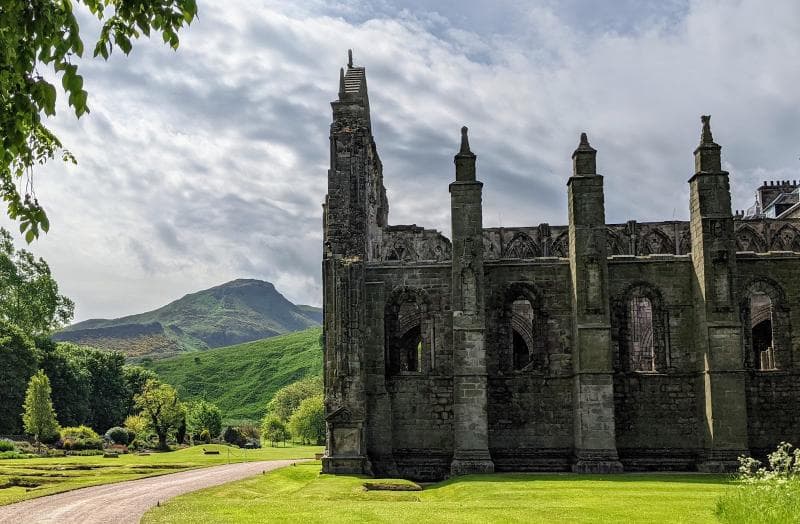
Explore the historic Palace Gardens at Holyroodhouse in Edinburgh, United Kingdom. Discover centuries of royal history, tranquil landscapes, and fascinating stories.
Overview
Nestled beside the historic Palace of Holyroodhouse in Edinburgh, United Kingdom, the Palace Gardens offer a tranquil and historically rich escape from the bustling city. These beautifully maintained gardens provide a striking contrast to the dramatic backdrop of Arthur's Seat and the ancient Holyrood Abbey ruins. They invite visitors to step into a landscape steeped in centuries of royal history and natural beauty, presenting a peaceful haven that has evolved from monastic grounds to a meticulously designed royal garden.
Today, the gardens cover approximately 6 acres, offering a mix of woodland beds, formal plantings, and expansive lawns. They are an integral part of the royal residence, contributing to the Palace's aesthetic and historical significance.
History & Cultural Background
The origins of the Palace Gardens trace back to the medieval period, initially cared for by the monks of Holyrood Abbey, which was founded in 1128 by King David I. These early monastic gardens were used to cultivate plants and medicinal herbs for the infirmary.
With the construction of the first royal palace by James IV in 1503, the gardens transformed into a vibrant setting for royal leisure and entertainment. During this era, they hosted tournaments, hunting, hawking, and archery, and even boasted a tennis court and a menagerie featuring exotic animals like lions, tigers, and bears.
Mary, Queen of Scots, who resided at the Palace in the 16th century, frequently utilized the gardens for archery, hawking, hunting (reportedly with wild boars brought from France), bowls, and tennis. Her private Privy Garden was a notable feature of the time.
A significant development occurred in 1670 with the establishment of a small physic garden. This garden, Scotland's first of its kind, was created to educate students about medicinal plants and supply fresh materials for pharmacists. It marked the beginnings of what would later become Edinburgh's Royal Botanic Garden.
In the 19th century, during Queen Victoria's reign, the gardens underwent rejuvenation, with Prince Albert taking a keen interest in their redesign, including the creation of a new carriage drive. In 2020, a new public Physic Garden was opened, drawing inspiration from the site's original historical gardens.
What Makes It Special
What sets the Palace Gardens apart is their unique blend of historical layers and living tranquility. Visitors can wander through areas that once served as monastic grounds, where the ruins of Holyrood Abbey stand as a testament to centuries past.
A notable feature is the elaborate 17th-century multi-faceted sundial, crafted in 1633 by John Mylne. This intriguing timepiece, with its various hollows and unique gnomons, was originally intended for the Scottish coronation of Charles I and is considered one of Scotland's most interesting sundials. Though it has been moved and restored over time, it continues to fascinate.
The serene pathways and meticulously landscaped grounds offer a peaceful retreat. The presence of Queen Mary's Bath House, a small 16th-century building, adds to the historical intrigue, even though its original purpose as a bathhouse is debated.
Stories, Fun Facts & Local Details
The gardens are rich with stories, offering a tangible connection to Scotland's royal past. Imagine Mary, Queen of Scots, practicing archery within these very grounds, or the monks tending to their medicinal herbs centuries before.
A fun fact is that the small physic garden established in 1670 was so influential that it eventually relocated and expanded to become the renowned Royal Botanic Garden Edinburgh, a world leader in plant science and horticulture.
The Palace Gardens also play host to the annual Royal Garden Parties, a tradition initiated by King George V and Queen Mary. These events see around 8,000 guests from various walks of Scottish life being invited to the Palace, consuming thousands of cups of tea, strawberry tarts, and sandwiches.
Even the name 'Holyrood' itself is rooted in legend. It derives from 'Haly Ruid,' meaning 'holy cross,' a reference to King David I's miraculous escape from a charging stag when a crucifix appeared between its antlers.
Visitor Perspective
For the curious traveler, visiting the Palace Gardens is an immersive experience. As you stroll through the manicured lawns and vibrant flower beds, you're not just observing nature; you're walking through living history. The tranquility of the gardens provides a reflective space, allowing you to contemplate the lives of the monarchs and historical figures who once graced these grounds.
The gardens offer a dramatic contrast to the solemn ruins of Holyrood Abbey, inviting exploration and contemplation. It's a place where history feels alive, and every path seems to whisper tales of royal intrigue and daily life. The sense of peace, combined with the profound historical context, makes for a truly memorable visit, connecting you to the heart of Scotland's royal heritage.
Coordinates: -3.1725, 55.9525
View on Google Maps💬 How Travelers Describe This Place
Based on community votes
Unique
551Beautiful
547Must See
336Interesting
298Photogenic
212
Traveler Stories
Discover memorable experiences shared by travelers who have visited this place.
No traveler stories yet.
Be the first traveler to share what made this place memorable.

Tour
By
Spot
Discover amazing places around the world. Your journey starts here.
Explore
© 2026 TourBySpot. All rights reserved.