Palace Gardens
Tallinn, Estonia
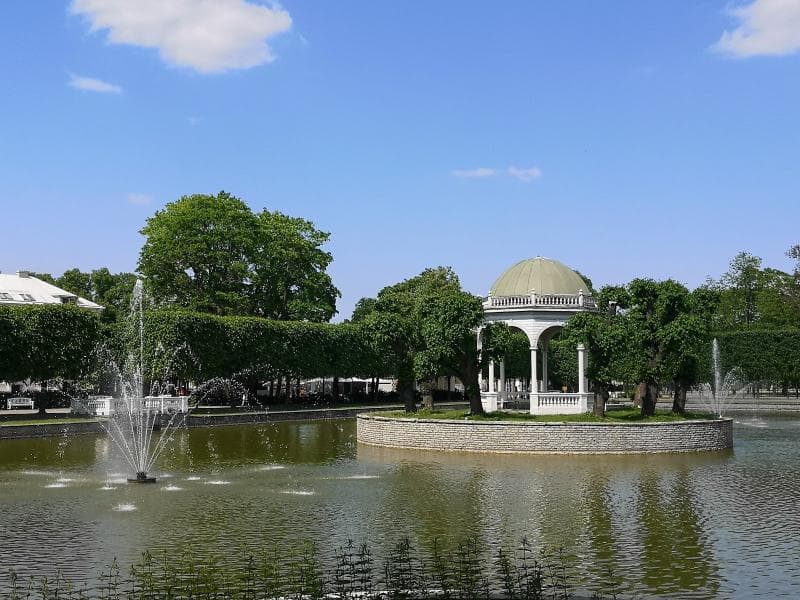
Explore the majestic Palace Gardens at Kadriorg Palace in Tallinn, Estonia. Discover Baroque design, tranquil Japanese gardens, and rich history.
Overview
Nestled within the vibrant Kadriorg district of Tallinn, Estonia, the Palace Gardens are an exquisite testament to Baroque landscape design, encircling the magnificent Kadriorg Palace. This sprawling 70-hectare park seamlessly blends formal European Baroque aesthetics with more informal English-style gardens and even a serene Japanese garden, offering a diverse and captivating experience for every visitor. It is widely considered the most outstanding palatial park in Estonia.
The gardens, a jewel of Tallinn's cultural landscape, are not merely a backdrop to the palace but an integral part of the ensemble, designed to complement its grandeur and provide both stately promenades and tranquil retreats. They represent centuries of horticultural artistry, reflecting various design techniques from the 18th, 19th, and 20th centuries.
History & Cultural Background
The story of the Palace Gardens begins in 1718, when Russian Tsar Peter the Great commissioned the construction of Kadriorg Palace as a grand summer residence for his wife, Catherine I. The name 'Kadriorg' itself, meaning 'Catherine's Valley' in Estonian (from the German 'Katharinenthal'), honors her. Italian architect Nicola Michetti was brought from Saint Petersburg to oversee the planning of this ambitious project, which included a three-level Italian park ensemble.
The initial design of the Regular Park, or formal gardens, incorporated a fascinating blend of European influences: Italian terraces, Dutch canals, and a French-style axially symmetrical road network with parterres. Peter the Great himself was present when construction began. Over time, the park evolved, with additions like the English-style landscape park in the 19th century and a modern Japanese garden in the 21st century, showcasing a continuous layers of history and design philosophies.
What Makes It Special
The Palace Gardens are distinguished by their diverse zones, each offering a unique character. The heart of the formal garden is the stunning Baroque Flower Garden, also known as the Upper Garden, located directly behind the palace. This area is a feast for the senses, featuring symmetrical parterres, neatly clipped hedges, and vibrant flowerbeds. Visitors can admire the intricate patterns of living flowers that were once designed to blend with the stone floral motifs inside the palace's main hall.
A notable feature is the Mirage Wall with its central cascade and water-spewing mascarons, adding a dramatic flair. Though the original Baroque Mirage Pond was later re-designed into the President's Rose Garden, the essence of its grandeur remains. Beyond the formal areas, the park transitions into naturalistic forest groves with meandering paths, characteristic of English landscape design. The serene Japanese Garden, a more recent addition from 2011, provides a tranquil space for contemplation with its stone bridges and ponds.
Stories, Fun Facts & Local Details
Peter the Great's vision was so inclusive that, from its very beginning, the royal park was open to the public, a progressive idea for its time. Imagine the early residents of Tallinn strolling through these magnificent grounds, mingling with the imperial entourage. A specific detail that connects visitors to this rich history is an oak tree planted in the Upper Garden by King Gustav V of Sweden in 1929; its memorial stone, once lost, was rediscovered during garden reconstruction.
The Kadriorg Palace and its gardens have witnessed many transformations, even serving as the residence for the Head of State of the Republic of Estonia in the 1930s. Today, the Swan Pond, a popular spot within the park, features a charming gazebo and is surrounded by colorful flower beds, making it a beloved destination for a leisurely stroll.
Visitor Perspective
Exploring the Palace Gardens offers a truly immersive experience. The paths, a mix of gravel and lawns, invite leisurely strolls, though comfortable shoes are recommended. The formal gardens, with their symmetric box hedges and rose beds, are particularly stunning from June to September when flowers are in full bloom, but the palace's proportions and charm are evident in all seasons. The gardens are free to enter at any time, allowing visitors to enjoy their beauty at their own pace.
Many visitors choose to combine a walk through the gardens with a visit to the Kadriorg Art Museum inside the palace or the nearby Kumu Art Museum. Whether you're seeking a peaceful escape, a glimpse into imperial history, or simply a beautiful setting for a walk, the Palace Gardens in Kadriorg offer a memorable experience, feeling like a slice of 18th-century grandeur transported to modern Tallinn.
Coordinates: 24.788, 59.4365
View on Google Maps💬 How Travelers Describe This Place
Based on community votes
Photogenic
989Must See
791Interesting
613Beautiful
514Unique
207
Traveler Stories
Discover memorable experiences shared by travelers who have visited this place.
No traveler stories yet.
Be the first traveler to share what made this place memorable.

Tour
By
Spot
Discover amazing places around the world. Your journey starts here.
Explore
© 2026 TourBySpot. All rights reserved.