Palace Church
Bucharest, Romania
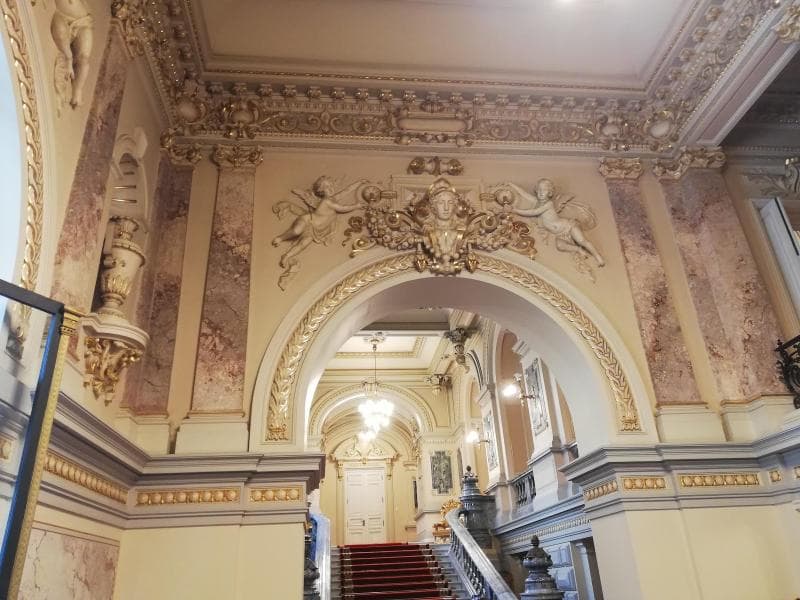
Explore the historic Palace Church within Cotroceni Palace, Bucharest, Romania. Discover its dramatic history, from 17th-century foundation to its communist-era demolition and subsequent rebuilding, now part of the Cotroceni National Museum.
Overview
Nestled within the grand Cotroceni Palace in Bucharest, Romania, lies the unassuming yet deeply significant Palace Church, also known as the Cotroceni Church. This sacred space stands as a testament to centuries of Romanian history, faith, and resilience. Originally conceived as the monastic church for the Cotroceni Monastery, founded in the late 17th century, it has witnessed the ebb and flow of empires, the rise and fall of royalty, and periods of both reverence and destruction. Today, it forms an integral part of the Cotroceni National Museum, offering visitors a unique blend of spiritual heritage and architectural beauty, intertwined with the nation's narrative. Dedicated to the Dormition of the Theotokos, or the Assumption of the Holy Virgin, the church continues to hold religious services while also serving as a captivating historical exhibit.
History & Cultural Background
The story of the Palace Church begins in 1679 when Prince Şerban Cantacuzino of Wallachia laid the foundation for the Cotroceni Monastery on a hill west of Bucharest. The monastery, including its central church, was completed swiftly between 1679 and 1682. The original church was noted for its Baroque architectural style, characteristic of Western European influences of the period, while also incorporating traditional elements similar to the Episcopal Church in Curtea de Argeș. Prince Şerban Cantacuzino, its founder, was eventually laid to rest in the crypt of this very church, establishing it as a necropolis for the Cantacuzino family.
Over the centuries, the Cotroceni ensemble, including the church, underwent numerous transformations and faced various challenges. It suffered significant damage during an earthquake in 1802, necessitating extensive rebuilding and repainting of its frescoes by 1806. Following King Michael's abdication in 1947 and the establishment of the communist regime, the church was closed to religious service in 1948, reflecting the ideological shift away from religious institutions. A more devastating blow came in 1977 when a major earthquake severely damaged the entire palace complex. However, the church's ultimate fate arrived in 1984 when, under the orders of Nicolae Ceaușescu, the communist dictator, the historic structure was controversially demolished. Ceaușescu reportedly found the church to be an obstruction to his view from the newly constructed presidential wing of the palace.
Miraculously, the Palace Church was not lost forever. After the fall of communism, a decision was made to reconstruct the church. Between 2003 and 2009, a meticulous reconstruction effort brought the church back to life as a faithful replica of the original. This monumental undertaking aimed to restore a crucial piece of Romania's spiritual and architectural heritage.
What Makes It Special
The Palace Church's story of demolition and rebirth is arguably its most profound distinction. Few historical buildings share such a dramatic narrative of being erased from the landscape only to be painstakingly rebuilt to reclaim their rightful place. This act of reconstruction between 2003 and 2009 symbolizes an enduring commitment to preserving national identity and spiritual heritage in the face of political upheaval. The church today serves as a tangible link to the Cotroceni Monastery, the very religious foundation upon which the later royal palace was built, anchoring the entire complex in its rich past.
Beyond its remarkable history, the church houses a precious collection of liturgical treasures. Following its rebuilding, many sacred objects – including silver artifacts, icons, and embroidered textiles – that had been rescued before the 1984 demolition and preserved in the National Art Museum of Romania were returned. These priceless pieces, after careful reconditioning, are now exhibited in the medieval rooms of the Cotroceni Palace, offering a profound glimpse into Romania's religious art and history. The church's architecture, while a modern reconstruction, faithfully replicates the traditional Romanian and Byzantine elements, including intricate carvings, that characterized the original monastic churches of Wallachia.
Stories, Fun Facts & Local Details
One of the most compelling, albeit somber, 'fun facts' associated with the Palace Church is its destruction at the whim of Nicolae Ceaușescu. The dictator's decision to demolish a centuries-old sacred monument because it 'obstructed his view' from a newly built presidential wing highlights the arbitrary nature of communist rule and the value placed on heritage in post-communist Romania. The founder, Prince Şerban Cantacuzino, was not only buried here but also dedicated the original Cotroceni monastery to the monastic community of Mount Athos, a significant center of Orthodox monasticism, with provisions for the abbot to be sent from the Holy Mountain itself.
The church's timeline is punctuated by periods of restoration following natural disasters, such as the 1802 earthquake that severely damaged it before the 1984 demolition. This history underscores the vulnerability of historical structures and the ongoing human effort required for their preservation. The Cotroceni complex itself, of which the church is the spiritual heart, has been a silent witness to pivotal moments in Romanian history, including housing rebel leaders during peasant uprisings and being the site for significant treaties, solidifying its place in the national consciousness.
Visitor Perspective
For the curious traveler, visiting the Palace Church offers a unique and contemplative experience. The church is typically accessed as part of a guided tour of the Cotroceni National Museum, which occupies a significant portion of the palace. This guided format ensures visitors gain a comprehensive understanding of its history and significance. Visitors must present a valid identification document and are often required to book their tour in advance, especially for English-language options.
While entry to the full museum tour usually requires a ticket, the palace's gardens, inner courtyard, and sometimes the church itself are occasionally accessible for free on weekends, offering a chance to appreciate the exterior and peaceful surroundings. A visit here is not merely about admiring architecture; it's an opportunity to connect with a powerful narrative of faith, loss, and restoration that is deeply embedded in the heart of Bucharest's Cotroceni Palace. Exploring the church and its associated religious art collection provides a serene contrast to the opulent secular spaces of the palace, enriching the overall understanding of Romania's multifaceted heritage.
Coordinates: 26.06194, 44.43389
View on Google Maps💬 How Travelers Describe This Place
Based on community votes
Unique
836Interesting
797Photogenic
286Beautiful
255Must See
86
Traveler Stories
Discover memorable experiences shared by travelers who have visited this place.
No traveler stories yet.
Be the first traveler to share what made this place memorable.

Tour
By
Spot
Discover amazing places around the world. Your journey starts here.
Explore
© 2026 TourBySpot. All rights reserved.